
Idea 1
The Spirit of the Modern Warrior
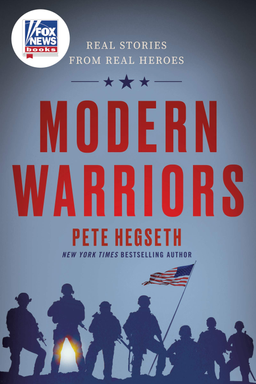
What does it mean to be a modern warrior in a divided and distracted world? In Modern Warriors, combat veteran and television host Pete Hegseth explores that question through the stories of fifteen men and women who wore the American uniform in the post-9/11 era. Each chapter profiles a service member—from Navy SEALs to Army Rangers, fighter pilots to marines—and reveals how the battlefield forged their principles, their leadership, and their perspective on life after war. Hegseth argues that modern warriors embody what America most needs today: courage, humility, purpose, and unity across difference.
Drawing on extensive interviews from his Fox Nation series, Hegseth lets these veterans speak in their own voices about what they saw, did, and learned. Their reflections are raw and unfiltered. They speak about the highs of brotherhood and the lows of loss, about guilt and grace, fear and fulfillment. As a reader, you are drawn into the living room or patrol base to hear stories that challenge simple political narratives about war. What emerges is not an argument for or against the wars the U.S. fought, but a meditation on service itself—why we fight, what we learn, and how we continue to serve afterward.
A Generation at War
Hegseth opens with his own experience of helplessness while watching ISIS retake Iraqi cities he had once patrolled. That moment, in 2014, became a call to preserve the legacy and lessons of the post-9/11 generation. These were men and women who volunteered during two decades of constant war, many knowing they would deploy repeatedly into combat. The book introduces readers to this small 1 percent of Americans who bore the burdens of war while the rest of the country moved on. Hegseth reminds us that their sacrifices—of body, mind, and family—purchased the freedoms civilians often take for granted.
From Army Sergeant Major Eric Geressy’s narrow survival in Baghdad to Navy SEAL Jocko Willink’s leadership lessons from Ramadi, these stories show different faces of courage. They also show that modern warfare does not end when the gunfire stops. Many warriors struggle to adapt to civilian life, and Hegseth’s project aims to bridge that growing divide between those who serve and those who are served. By sharing their voices, he hopes America will listen more deeply to the men and women who understand duty not as a slogan, but as daily discipline.
The Meaning of Brotherhood and Sacrifice
At the heart of Modern Warriors lies a paradox: war reveals humanity’s darkest instincts and its noblest virtues at once. In the accounts of the veterans, battle becomes both horrific and illuminating. It exposes what Jocko Willink calls the “dichotomy of war”—that combat can be the worst and best experience of one’s life. Sergeant Nick Irving, the Ranger sniper nicknamed “The Reaper,” describes the psychological burden of taking lives and the humility of leading teams built on total trust. Captain Sean Parnell recalls how his multicultural platoon’s brotherhood—of Black, white, Muslim, and Latino soldiers—was their most potent weapon in Afghanistan. These tales cut through the stereotypes of soldiers as machines or victims and instead portray complex people defined by choice, not circumstance.
Their tributes to fallen comrades, such as Jocko Willink standing beside the remains of his teammate Marc Lee or Chad Fleming describing the eerie déjà vu of returning to the city where he’d lost his leg, force readers to confront the cost of service. Yet these moments are not presented for pity; they show how pain transforms into purpose. For modern warriors, the death of friends does not end the mission—it deepens it.
From Battlefield Lessons to Civilian Life
Why does any of this matter to those who have never worn the uniform? Hegseth and the veterans insist that the lessons of war apply far beyond the military. The discipline to act under pressure, the humility to follow orders, the courage to speak truth to authority—these virtues are needed in every community. Lieutenant Morgan Luttrell, twin brother of Lone Survivor’s Marcus Luttrell, illustrates this principle through his recovery from a severe brain injury. His rehabilitation and later work in neuroscience research became his new “mission.” Likewise, Jocko Willink’s leadership company and podcast teach civilians how the same principles that guide special operations—ownership, decentralized command, humility—can improve business and family life (a theme also central to his book Extreme Ownership).
Ultimately, Modern Warriors argues that America’s warriors are not simply fighters—they are teachers. The moral and spiritual wisdom they earned under fire can guide a nation struggling with division, apathy, and entitlement. The book challenges you to ask: where in your own life can you show that sense of duty, integrity, and gratitude? In telling their stories, Hegseth gives readers a call to arms—not to take up rifles, but to live with the courage and clarity of those who have.