
Idea 1
The Hidden Logic of Incentives and Signals
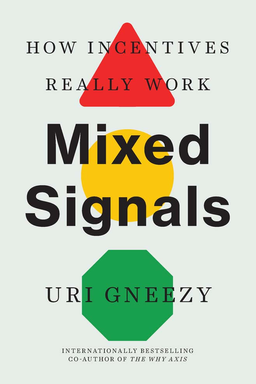
Why do people act against their stated values? Why do incentives sometimes fail—or worse, backfire? Uri Gneezy’s work reveals that beneath every decision lies a web of signals and incentives shaping how people perceive motives, identity, and cost. You don’t just respond to rewards; you respond to what those rewards say about you and others. The book connects economics, psychology, and practical field experiments to show how smart incentive design can direct behavior without distorting meaning.
The central argument is that you can’t separate what you pay from what you tell people. Incentives send messages—about trust, effort, identity, and reputation. A bonus, a scholarship, or a product choice all act as signals. The credibility of these signals depends on their cost, visibility, and alignment with identity. From paying students to exercise to rewarding Maasai communities for protecting lions, Gneezy builds a unified framework explaining how human choices emerge from incentive structure and social meaning.
Signals: When actions speak louder than words
You constantly rely on signals to gauge truth—from credentials and tattoos to product choices and professional behavior. A credible signal is costly enough that only genuine holders of a trait will bear it. A Prius buyer sacrifices performance for visibility, an expensive education reveals competence, and a Navy SEAL badge conveys grit because it is earned through hardship. Credibility comes from differential cost: pretenders find it hard to mimic, believers find it worthwhile. (Michael Spence’s signaling theory in labor economics underpins this logic.)
Incentives rewrite stories
Every incentive changes not just behavior but meaning. Paying for blood donations or volunteer work can crowd out altruism by replacing the social signal of generosity with the financial signal of transaction. Conversely, visible acts—like the Der Wiener Deewan pay-what-you-want restaurant—can amplify self-signaling when private actions reflect personal integrity. You pay more when nobody is watching because the act defines who you are, not how others judge you. Mixing these forms of signaling—social versus self—requires delicate balance.
Designing effective incentives
Gneezy argues that most failures come from designing incentives that contradict the intended message. Paying per call signals speed; paying per hour signals thoroughness. Paying per mile of railroad track, as the Union Pacific did, produced winding, inefficient routes. The cure is consistent messages: incentives must reward what you truly value. In health care, fee-for-service promotes quantity of procedures, not quality of outcomes—a classic case of mixed signals.
Testing, framing, and diagnosing
Incentives are diagnostic tools. They reveal whether poor performance stems from lack of ability, effort, or perception. When Gneezy offered American students immediate loss-framed rewards on a math test, scores rose sharply—showing that underperformance came from disengagement, not incapacity. Similarly, donor experiments proved that “overhead-free” framing restored perceived impact and boosted giving. Incentives can clarify motivation when designed as truth tests.
From markets to morals
The same logic scales from individuals to cultures. Maasai communities stopped killing lions when elders were compensated for losses and young warriors earned prestige by protecting rather than hunting. Shifting payoffs and respecting social identity rewrote the cultural narrative. Likewise, scholarship programs designed to prevent female genital mutilation offer economic and status alternatives that make non-cutting the rational and respected choice. These stories demonstrate that lasting change comes from changing incentives around meaning, not just money.
The thread connecting it all
Across examples—from teachers responding to loss-framed bonuses, to employees revealing commitment through “Pay to Quit” offers, to exercisers sustaining habits after short-term incentives—the insight is consistent: design the environment so good actions signal the right story. Whether you’re managing a firm, running a charity, or designing public policy, the power lies not in paying more but in aligning payoff, perception, and purpose. As Gneezy’s research emphasizes, the smartest incentive is the one that makes doing the right thing its own signal.
Bottom line: Incentives and signals are two sides of the same coin. They work when they reinforce each other, fail when they conflict. Money motivates behavior only when the story it tells fits the values, identity, and credibility of the actor. Understanding this hidden logic lets you design systems that make honesty, effort, and cooperation the most rewarding—and believable—choices.