
Idea 1
The Power and Potential of the Misfit Economy
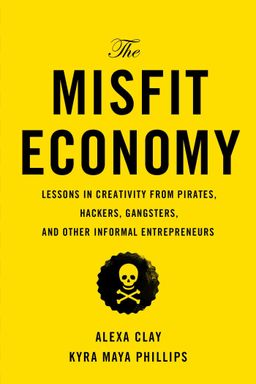
Have you ever felt like you don’t quite fit the mold—like your ideas or methods challenge what others consider normal work or success? The Misfit Economy by Alexa Clay and Kyra Maya Phillips offers a persuasive answer: the world needs people like you. Rather than seeing misfits as outsiders or troublemakers, the authors contend that these unconventional thinkers are vital engines of innovation. From prisoners learning legal skills behind bars to hackers rebuilding systems for the good, each story reveals that resourcefulness, resilience, and rebellion are the hidden ingredients behind progress in both the underground and formal economies.
Clay and Phillips argue that “misfits”—pirates, hackers, hustlers, gang leaders, and unconventional entrepreneurs—are not only symbols of defiance but also teachers of creativity. Their book blends anthropology, business strategy, and storytelling to uncover how people operating outside traditional systems unlock ingenuity and drive social change. The authors contend that to thrive in a changing economy, you must learn to embody their mindset—to hustle, copy, hack, provoke, and pivot.
Redefining Innovation
The book’s central argument is that the formal economy doesn’t hold a monopoly on innovation. True creativity often occurs on society’s fringes, where scarcity and necessity force invention. From Somali pirates turning small, desperate acts into organized enterprises, to prison inmates transforming survival tactics into entrepreneurial ventures, each chapter demonstrates how constraints breed unconventional brilliance. Instead of worshiping sleek corporate founders like Steve Jobs, the authors invite us to see ingenuity in an inmate like Fabian Ruiz, who escaped poverty and imprisonment by converting desperation into a sustainable business model.
Five Misfit Principles
The book is structured around five principles—Hustle, Copy, Hack, Provoke, and Pivot—each representing a distinct mode of misfit innovation. “Hustle” explores how making something out of nothing builds resilience and opportunity. “Copy” turns imitation into a creative art, showing how entrepreneurs improve ideas rather than simply steal them. “Hack” celebrates the art of breaking and remaking systems, from computer networks to social structures. “Provoke” challenges norms and invites new cultural conversations through activism and art. Finally, “Pivot” explores how embracing disruption transforms personal and organizational identities.
Why Misfits Matter
The authors situate this philosophy within a larger context of global change. As technology decentralizes power and economies become less stable, traditional career and business models are breaking down. Jobs that once offered security now demand adaptability. Misfits thrive in this chaos because they know how to create value without clear rules or resources. The street hustler’s mentality—learning fast, improvising, and trading what you have for what you need—is becoming essential for everyone navigating the future of work.
This isn’t just a call for rebellion; it’s a toolkit for survival. Clay and Phillips weave research with story, illustrating how misfits innovate under pressure: Fabian Ruiz finds freedom through legal education in prison; Catherine Hoke reimagines rehabilitation with Defy Ventures; hackers expose vulnerabilities in global corporations; and rural entrepreneurs in Ohio transform community despair into collective action. You come away believing that misfit innovation isn’t a phase—it’s the future of creativity.
A Manifesto for the Disenchanted
Ultimately, The Misfit Economy challenges readers to adopt the rebel’s mindset. It’s not a celebration of crime or chaos, but an invitation to reclaim humanity’s lost resourcefulness. In our world of regulation and specialization, the authors remind us that disruptive thinking—often born from outsiders—is what keeps society alive. By learning from hustle, copying smartly, hacking creatively, provoking boldly, and pivoting courageously, you participate in an economy of imagination. The misfit, they argue, doesn’t destroy systems; the misfit rebuilds them in better, more humane ways. That’s the path to the new kind of progress this book wants you to walk.