
Idea 1
The Power and Pain of Minor Feelings
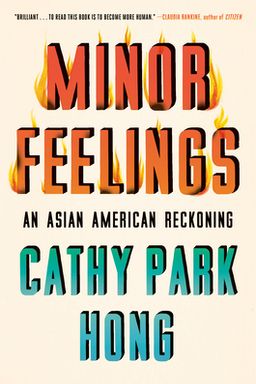
What happens when your emotions are treated as invisible—when your confusion, anger, or shame about race are dismissed as being all in your head? In Minor Feelings: An Asian American Reckoning, poet and essayist Cathy Park Hong confronts this question with searing honesty, redefining how we talk about race, identity, and belonging in America. She argues that Asian Americans live in a state of emotional dissonance, caught between being invisible and hyper-visible, praised as the so-called “model minority” while enduring microaggressions that invalidate their reality.
Hong calls this condition minor feelings—the cognitive dissonance that comes from being told by the dominant culture that you’re accepted, while every experience says otherwise. It’s a mix of shame, irritation, melancholy, and paranoia that exposes the gap between what America promises and what it delivers. Through essays that blend memoir, cultural criticism, and political manifesto, Hong turns these minor feelings into a theory of art and awareness—one that forces both herself and her readers to face uncomfortable truths about race and emotion.
Redefining the Asian American Condition
Hong challenges the myth of the passive, hardworking Asian American. She describes how Asian Americans are often seen as interchangeable and devoid of individuality—“the carpenter ants of the service industry,” as she puts it. This stereotype not only invalidates their humanity but pits them against other racial groups. The book’s title captures the emotional toll of this false neutrality: Asian Americans aren’t “minorities” in the typical sense, but they live within a network of minor feelings that stem from persistent exclusion.
By excavating her own lived experiences—from childhood in Los Angeles to graduate school in Iowa—Hong intertwines personal narrative with broader history. She examines the trauma of immigration, the pressure of assimilation, and the corrosive impact of “racial self-hatred.” The result is both intimate and political, exploring how internalized racism becomes a survival mechanism in a society designed to erase difference.
Speaking Through Shame
Shame, for Hong, is both a poison and a prism. She recalls her mother dressing her unknowingly in a Playboy T-shirt at age seven, a moment that crystallized the wordless shame of visibility. Later, she connects this feeling to larger systems of domination. To look Asian in America is to be seen through stereotypes that disfigure perception. She writes, “Shame squats over my face and sits,” describing how this emotion colonizes the body itself.
Yet shame can also become illumination. By dissecting it, Hong transforms it into testimony—the very act of speaking minor feelings aloud resists their erasure. As she notes, “Our feelings are overreactions because our lived experiences of structural inequity are not commensurate with their deluded reality.” In that gap between perception and reality, art and truth emerge.
History, Art, and Reckoning
Throughout Minor Feelings, Hong situates her personal history within collective ones: the Chinese Exclusion Act, Japanese internment, the 1992 L.A. Riots, the murder of Vietnamese doctor David Dao by United Airlines security officers. Each story sharpens her argument that America’s racial narrative erases Asians—sometimes as victims, sometimes as perpetrators, but always as peripheral.
Hong also reclaims art as a weapon of truth-telling. Drawing from comedians like Richard Pryor, artists like Theresa Hak Kyung Cha, and poets like Myung Mi Kim, she reveals how marginalized creators channel rage, humor, and linguistic experimentation to expose society’s blind spots. Like Pryor’s raw comedy, Hong’s prose flays niceties to reveal the violence behind politeness.
Why It Matters
Hong’s reckoning arrives in a time when many Americans still imagine race as black and white. Her book gives language to Asian American experiences that have been flattened by stereotypes of hard work or silence. She insists that to be fully human, you must allow minor feelings to surface—to speak them, write them, and inhabit them without apology.
“To read this book is to become more human,” Claudia Rankine said of Minor Feelings. Hong’s essays realize that promise—not through comfort, but confrontation. By examining the contradictions of pride and shame, anger and laughter, she gives readers a vocabulary for feelings that can no longer stay minor.