
Idea 1
The Power of Ownership Stories
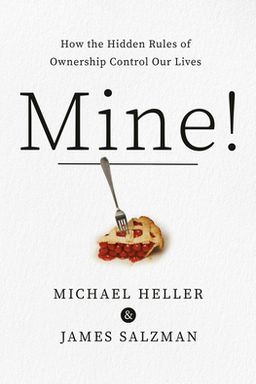
Why do you believe something is "yours"? In Mine! How the Hidden Rules of Ownership Control Our Lives, Michael Heller and James Salzman reveal that ownership is not a static right or moral absolute—it’s a dynamic storytelling competition that shapes everything from airplane etiquette to internet privacy. The authors argue that modern life is built around six folk stories of ownership: First come, first served; Possession; Labor; Sanctity of the home; Self-ownership; and Public priority. Each story feels intuitively fair, but their coexistence fuels constant conflict—and savvy owners deliberately choose which story to tell because the story itself determines who wins.
Ownership as storytelling
Ownership begins with language: “mine.” Toddlers shout it instinctively; adults litigate it subtly. The authors illustrate that what feels like a natural rule is actually a narrative lens. Airlines use “possession” stories (“my space”) to let passengers quarrel, while keeping reclining-seat rules ambiguous to sell costly upgrades later. Likewise, streaming services such as HBO tolerate password sharing because their chosen ownership story—shared access as future marketing—offers long-term advantage. These examples show that ownership isn't about who deserves what in the abstract; it's about who designs the rule and how that rule directs behavior downstream.
The six stories in tension
The authors decode the six classic ownership maxims that structure your moral gut reactions:
- First in time—whoever gets there first wins (think camping out for concert tickets or staking a land claim).
- Possession—physical control equals ownership (“finders keepers”).
- Labor—mixing work with nature earns rights (“you reap what you sow”).
- Sanctity of the home—the privacy and control story (“my home is my castle”).
- Self-ownership—your body and identity belong to you (“our bodies, ourselves”).
- Public priority—society’s common good can override private claims (“the meek shall inherit the earth”).
Each story highlights different values—fairness, effort, control, compassion—but conflicts emerge when stories collide. A person’s castle may block sunlight to a neighbor’s solar panels; a patient’s bodily rights may slow critical research. Ownership law doesn’t just resolve these clashes; it frames what questions we even ask.
From maxims to mechanisms
Heller and Salzman show that ownership stories become tools of design, guiding wealth, access, and innovation. Disney replaces “first come” with “pay first” through FastPass+ and VIP tours, reshaping fairness into profit. Water rights, drone airspace, genetic data, and streaming licenses all turn on similar hidden choices. Once you see ownership as a story you can rewrite, power dynamics come into focus: these narratives justify who holds the remote control—whether that’s you, a corporation, or the public at large.
Ownership is a policy instrument, not a fact
When someone says “it’s mine,” they’re asserting a political stance as much as a claim. Each ownership story encodes values, power, and choices about how society should function.
The dimmer, not the switch
The book’s signature metaphor—the dimmer switch—invites you to replace binary thinking (“off-limits” vs. “commercial”) with adjustable calibration. Whether the issue is body parts, digital goods, or land, ownership degrees can balance competing interests. Egg donation markets, regulated kidney exchanges in Iran, and genetic data licensing all occupy midpoints rather than absolutes. Seen this way, ownership becomes flexible—a design choice that reflects where society wants the dial set between dignity and efficiency.
Seeing the hidden levers
By the end, you realize ownership design works like a remote control for human behavior. Who holds the control determines incentives, conflicts, and moral norms. You can’t escape these stories; you can only learn to read and shape them. Whether deciding who can recline their seat, who owns the fox, or who profits from digital DNA, understanding ownership as storytelling makes you a more conscious, empowered participant in the social system around you.
That’s the book’s central message: ownership is up for grabs, but only if you can see the stories you’ve been told. Once you do, you can choose the story that builds the kind of world you actually want to live in.