
Idea 1
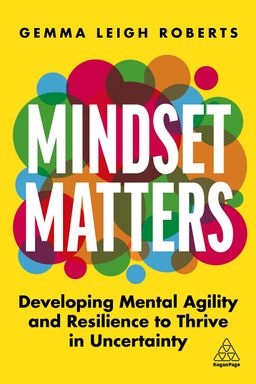
Mindset Matters: Thriving in Uncertainty
How do some people seem to thrive when everything around them feels uncertain? In Mindset Matters: Developing Mental Agility and Resilience to Thrive in Uncertainty, chartered psychologist Gemma Leigh Roberts argues that thriving in turbulence isn’t about luck or talent—it’s about mindset. She contends that the beliefs, thoughts, and emotional habits that shape how you interpret challenges determine whether you stagnate, survive, or succeed when facing change.
At its heart, this book is a coaching toolkit for navigating today’s volatile, uncertain, complex, and ambiguous (VUCA) world. Roberts blends research from psychology, neuroscience, and organizational performance with real-world examples—from Netflix’s reinvention to Sheryl Sandberg’s resilience—to show that adaptability and emotional intelligence aren’t innate traits but skills you can cultivate.
Why Mindset Matters Now
Roberts points out that the rapid pace of change—from global crises to technological disruption—demands a new mental skill set. Gone are the days when stability defined success. As industries pivot, careers evolve, and uncertainty becomes the norm, psychological agility is paramount. Those who cling to fixed thinking risk becoming obsolete (as Kodak famously did), while those who learn to reframe change as opportunity rise to the challenge.
Drawing from her coaching with CEOs, entrepreneurs, and teams worldwide, Roberts emphasizes that thriving means learning to master the mental game of adaptation. You can’t control uncertainty, but you can control how you respond to it—whether with resilience, curiosity, or fear.
The Five Mindset Skills for the New World of Work
The book explores five essential pillars required to thrive in today’s world:
- Resilience – learning to recover, adapt, and grow from adversity rather than merely bouncing back.
- Cognitive Flexibility – developing the ability to shift perspectives and process information creatively.
- Growth Mindset – believing that talents and abilities can be developed through dedication and learning.
- Emotional Intelligence – managing emotions and relationships effectively in a fast-changing environment.
- Connection – cultivating relationships and meaning at work to build psychological safety and collaboration.
Each of these skills is paired with practical coaching exercises that translate psychology into daily action—helping you not just understand the theory but apply it. From reflection tools to gratitude practice, Roberts makes mindset development tangible.
Building a Coaching Mindset
Roberts encourages readers to see personal development as an experiment. Instead of looking for perfect answers, test strategies, reflect, and adjust—similar to the scientific method. She calls this an “experimental mindset.” Rather than chasing the illusion of certainty, learn to thrive within ambiguity by continuously refining your approach.
“Treat life as a laboratory,” Roberts writes. “Test strategies, gather feedback, reflect on results, and make tweaks. Resilience isn’t static—it’s dynamic.”
Why You’ll Want This Toolkit
By the end of the book, readers realize that mental agility isn’t a distant ideal—it’s a muscle built through daily habits. Each technique, whether journaling gratitude or mapping supportive relationships, contributes to a reliable internal system for thriving under pressure. The book becomes a “mindset manual,” guiding you through change with evidence-based psychological tools.
Ultimately, Roberts doesn’t just teach survival mechanisms; she defines what it means to lead with confidence in uncertain times. Her message is clear: you can’t predict the future—but with the right mindset, you can shape how you experience it.