
Idea 1
The Power of Mindset
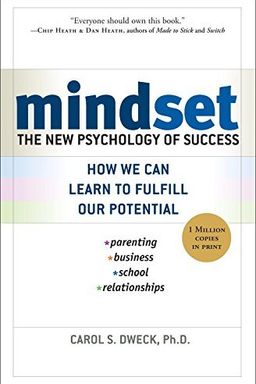
Why do some people thrive after setbacks while others shrink? Carol Dweck’s Mindset answers with one deceptively simple idea: what you believe about your abilities—whether they’re fixed or developable—shapes everything from success to happiness. Across schools, companies, teams, and relationships, Dweck finds that adopting a growth mindset (the belief you can improve through effort and learning) leads to resilience and mastery, while a fixed mindset (believing qualities are static) locks people into fear, avoidance, and self-judgment.
Two Worlds of Meaning
Dweck’s research divides the psychological world into two interpretive frames. If you live in the fixed-mindset world, every test or challenge feels like a verdict on your identity—smart or stupid, gifted or not. You avoid risk because failure threatens your self-image. If you live in the growth-mindset world, every challenge is a chance to stretch, every mistake a signal to refine your approach. Believing that qualities can grow makes effort meaningful, not shameful.
Dweck’s sixth-grade teacher, who rewarded only top students based on IQ, taught children to preserve the image of being smart rather than to enjoy learning. By contrast, teachers like Marva Collins and Rafe Esquith tell struggling children they can learn anything with work—creating classrooms of transformation.
Interpreting Failure and Effort
The meaning you give to failure and effort reveals your mindset. Bernard Loiseau, a French chef, treated a drop in ratings as personal annihilation. His tragedy contrasts sharply with Jim Marshall, the football player who ran the wrong way and turned his blunder into growth. Fixed-minded people interpret failure as identity; growth-minded people treat it as information. The same applies to effort: a fixed lens sees hard work as proof of inadequacy, while a growth lens views it as the route to mastery. Violinist Nadja Salerno-Sonnenberg transformed her career only after embracing disciplined practice over raw talent.
The Human Reach of Mindset
Mindset isn’t limited to school performance—it colors your relationships, leadership, sports, and self-talk. In love, fixed-minded people expect effortless compatibility and treat conflict as fatal flaws; growth-minded partners see effort as normal and communication as learnable. In organizations, fixed cultures worship “genius” and hide mistakes (as at Enron), while growth cultures reward learning and candor (as at IBM under Gerstner). In sports, champions like Michael Jordan, Muhammad Ali, and Wilma Rudolph exemplify growth—they use practice, setbacks, and study as fuel. Even creativity and talent myths collapse under Dweck’s lens: Edison, Darwin, Pollock—all succeeded through iterative work, not divine flashes.
Changing Your Own Mindset
The book ends practically: you can shift your mindset. Awareness is the first step—notice when your “fixed persona” appears (perhaps under criticism). Name it, study its triggers, and train it to support your goals. Use implementation intentions—small planned actions—to override paralysis. Programs like Brainology teach students how brains grow with learning; workplaces use similar workshops to train leaders in feedback and development. These tools make growth visible and habitual.
Core insight
Mindset transforms meaning. It turns failure into feedback, effort into progress, and identity into potential. The world does not divide into the talented and the untalented—it divides into those who believe abilities can grow and those who do not. You can learn to join the first group.