
Idea 1
Finding Peace in a Frantic World Through Mindfulness
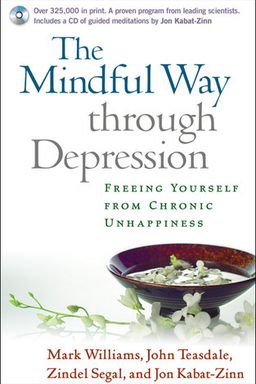
When was the last time you truly felt present—utterly here, unburdened by worries of tomorrow or regrets of yesterday? In Mindfulness: An Eight-Week Plan for Finding Peace in a Frantic World, psychologists Mark Williams and journalist Danny Penman argue that nearly all our modern suffering—stress, anxiety, exhaustion, and even depression—arises from one simple misunderstanding: we mistake our thoughts for reality. When we learn to observe these thoughts with kindness rather than fight them, we rediscover a deep wellspring of peace inherent in each moment.
Williams and Penman build their program upon Mindfulness-Based Cognitive Therapy (MBCT), which combines traditional Buddhist meditation with cognitive science. Originally developed at Oxford and the University of Cambridge to help chronic depression patients, MBCT evolved into a universal eight-week training for reclaiming calm and clarity in everyday life. The authors argue that mindfulness is not a fad or exotic spiritual ritual but a practical mental training that transforms how we relate to our experiences—and ultimately to ourselves.
The Modern Mind Trap
Williams begins with the familiar scene: lying awake, flooded by thoughts that refuse to stop. This mental spinning—what he calls the “chasing your tail effect”—is the hallmark of modern living. Whenever life feels chaotic, we react by thinking harder, analyzing more, trying to fix our unhappiness through the mind’s Doing mode, whose job is to narrow the gap between where we are and where we want to be. But when we use this problem-solving mode on emotions, it backfires. The harder we think our way out of sadness, the deeper we sink into it. “It’s like fighting quicksand—the more you struggle, the further you descend,” he writes.
Instead, mindfulness introduces an alternate mental gear—the Being mode. Unlike Doing mode, Being mode does not seek to fix or change the present moment; it simply inhabits it. From this stance of awareness, thoughts and emotions lose their grip. You begin to see that feelings of anxiety or failure are transient mental events, not absolute truths. Slowly, you rediscover an inner stability untouched by outer turbulence.
The Science of Mindfulness
Grounded in thirty years of research, Williams and Penman demonstrate that mindfulness changes the brain at a biological level. Pioneering studies by Richard Davidson and Jon Kabat-Zinn show that a person’s emotional “thermostat”—measured by neural activity between the brain’s left and right hemispheres—shifts toward greater positivity after just eight weeks of practice. Later research revealed that mindfulness strengthens the insula, the part of the brain responsible for empathy and emotional balance, and enhances immune function. In short, mindfulness reshapes both the structure and chemistry of the brain, making happiness more sustainable rather than situational.
What’s revolutionary here is accessibility. The authors emphasize that mindfulness requires no religion, ritual, or contortion. It can be practiced anywhere—on a bus, in a meeting, even brushing your teeth. The training consists of simple meditations like focusing on the breath, doing body-scan exercises, and cultivating awareness during daily routines. Each week introduces small steps: noticing autopilot behaviors, reconnecting with the body, approaching thoughts as transient, and finally integrating compassion and acceptance into life.
Why Mindfulness Matters Now
The authors contend that mindfulness offers a direct response to what they call a “frantic world”—an environment of speed, distraction, and relentless striving. We have become so accustomed to busyness that silence feels threatening. Yet beneath the noise lies a form of peace that does not depend on circumstances but on awareness itself. Meditation is not about withdrawing from the world—it’s about reengaging with it more skillfully. By learning to pause, we step out of the fast lane of autopilot reactions and into intentional choice.
The book also insists that mindfulness is not about blissful escapism. Pain, loss, and stress remain inevitable. But when experienced mindfully, they soften. “It’s okay to feel this,” teaches the core practice. That simple phrase embodies the spirit of mindfulness—an invitation to respond with curiosity, not judgment. Over time, your relationship with difficulty changes; suffering becomes teacher rather than tyrant.
A Blueprint for Calm Living
Through stories like Lucy, the overworked buyer, and Jason, the tense driving instructor, Williams and Penman show ordinary people learning to untangle themselves from anxiety, exhaustion, and overthinking. These examples make mindfulness tangible: a moment of awareness amid chaos, the release of control in favor of curiosity, the gentleness of befriending your own mind. As Jon Kabat-Zinn writes in the foreword, mindfulness is “a radical act of trust in yourself.”
By the end of the eight weeks, readers learn a skill more valuable than temporary relaxation: the ability to inhabit each moment, fully awake. The reward is profound but simple—peace in a world that rarely slows down. Or as the poet Roger Keyes declares in the book’s closing chapter: “It matters that you care. It matters that you notice. It matters that life lives through you.”