
Idea 1
Transform Your Thinking, Transform Your Life
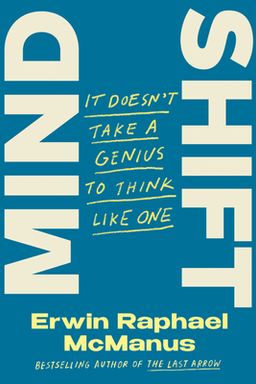
Have you ever felt like you’re living just beneath your potential—as though something unseen is holding you back from the life you could be living? In Mind Shift, Erwin Raphael McManus argues that every limitation you experience begins not in circumstance, but in your thinking. The book’s central contention is strikingly simple yet transformative: to change your life, you must first change your mind. McManus contends that success and failure both originate in mental architecture—deeply embedded belief systems that either liberate you or constrain you. Through a series of twelve “mind shifts,” he offers ways to redesign that interior landscape so you can transcend self-sabotage and live fully alive.
This is not a quick-fix productivity guide or a tidy list of rules. McManus, a longtime pastor, coach, entrepreneur, and artist, pulls from decades of mentoring leaders, creatives, and executives to show how inner change precedes any outer transformation. At sixty-four, he writes not as a theorist but as a practitioner who has faced failure, reinvention, and even near-death experiences. Whether you’re an entrepreneur, creator, or someone simply seeking clarity and fulfillment, Mind Shift functions like an architectural manual for the mind, reconstructing it from the inside out.
The Structures of the Mind
McManus introduces his argument through an electrifying story about boxer Buster Douglas—the underdog who famously defeated Mike Tyson only to lose his title months later because he was psychologically unprepared for success. The tragedy, McManus notes, wasn’t Douglas’s loss in the ring but his inability to confront his own mental framework. “Some people are simply structured for failure,” a commentator once said, and those words haunted McManus for decades. Yet if it’s possible to be structured for failure, it’s equally possible to be structured for success. This is the cornerstone of Mind Shift: You can rewire the beliefs that dictate your reality.
Throughout the twelve shifts, McManus explores themes like rejecting the need for validation (“You Don’t Need an Audience”), releasing toxic relationships (“You Can’t Take Everyone with You”), embracing action over approval (“They Won’t Get It Until You Do It”), and mastering responsibility (“You Are Your Own Ceiling”). Each chapter is a mental blueprint designed to help you reimagine identity, purpose, and human connection. The most powerful transformation begins not with doing but with seeing differently.
Why Mental Architecture Matters
McManus positions mindset as the foundation of mental health, toughness, and agility. He likens our thinking patterns to architectural frameworks—preloaded designs that determine how we handle challenge, failure, and success. These invisible structures filter what we perceive as possible. Change them, and everything else changes. His background as a “mind architect,” coaching high-level entrepreneurs and community leaders, allows him to connect personal reinvention to organizational transformation: the same mental models that limit individuals can cripple teams and cultures.
He contrasts “existing” with “living,” warning that most people settle for survival because they fear failure more than they desire growth. Like in The Walking Dead, McManus says, many have become “the living dead,” going through motions but missing meaning. The heart of the book calls you to awaken to life itself—to choose full participation over safety. You are always one decision away from a radically different future.
Beyond Existence: Living Whole
The book’s structure mimics a journey from inner reconstruction to outward flourishing. The first half examines the mind’s hidden assumptions—why people crave approval, avoid risk, or let others define their pace. The latter half turns toward mastery: how to steward success without breaking under its weight, how to transform bitterness into forgiveness, and how to live in what McManus calls “limitless abundance” of hope, kindness, and ambition. Each shift forms part of an integrated philosophy: that wholeness is not balance but alignment between thought, purpose, and action.
In contrast to purely analytical works like Carol Dweck’s Mindset or James Clear’s Atomic Habits, McManus frames transformation as a spiritual and philosophical act as much as a psychological one. He grounds his principles in narrative—boxing matches, business boardrooms, film sets, and faith journeys—to remind readers that thought patterns are lived out in ordinary moments. Where some authors offer abstract slogans, he offers stories of people who refused to let failure write their final story.
The Call to the Mind Architect
McManus describes his role not as a preacher or teacher, but as a “mind architect,” inviting you to become the same. To build new mental structures requires vision and discipline: identifying limiting beliefs, dismantling them, and replacing them with frameworks that foster growth. The book’s recurring promise—“Transform your thinking. Transform your life.”—is not motivational hyperbole. It’s a literal description of the process. Whether you’re an athlete fighting complacency, an artist seeking creativity, or a leader seeking clarity, the work begins in your mind.
Key Message
There are no external ceilings—only those constructed in the mind. Once you learn to redesign your internal architecture, your environment becomes a reflection of your renewed inner space.
By the end of Mind Shift, McManus has guided you through twelve transformative designs: from re-centering relationships and rejecting the applause of crowds, to trusting your uniqueness and forgiving the unforgivable. His final declaration echoes through every chapter: “We are the ones who live.” It’s a manifesto for the awake, the resilient, and the hopeful—a reminder that human transformation always starts with how you think.