
Idea 1
The Psychology of Money: How It Shapes Mind and Behavior
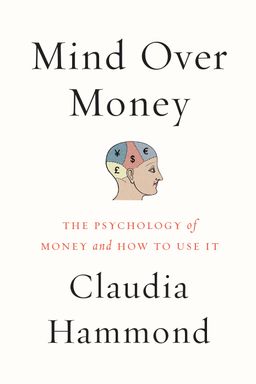
Money is not just a medium of exchange — it is one of the most potent psychological forces in your life. Across research, history, and everyday stories, the book argues that money touches nearly every human motive: pleasure, security, trust, identity, envy, and the fear of death. You react to money both as a tangible reward and as an abstract promise that organizes the future. The book’s central claim is that understanding money as a psychological system — not merely an economic tool — grants you control over it rather than leaving you controlled by it.
The narrative unfolds through core themes: how your brain rewards you for gaining money like a drug, how the form and context of currency modify perception, why losses and regret loom larger than gains, how prices manipulate judgment, how incentives and social norms interact, and how scarcity changes cognition itself. It also explores personal differences — your money personality, attitudes toward wealth, generosity and envy, and ways to spend or save that genuinely improve well-being.
Money as Drug and Trust
Neuroscience shows that money acts as both an immediate reward and a symbolic tool for planning. When you win or receive cash, your limbic system lights up like it does for sweet food; you experience a dopamine surge. But if you only hear a promise of money, different regions activate — meaning tangible tokens of value excite visceral pleasure. Historical events like the KLF’s burning of £1 million dramatize this duality: destroying notes feels sacrilegious because it annihilates future possibilities built on collective trust. As Yuval Noah Harari noted, money is humanity’s most efficient system of mutual trust — a way to exchange promises with strangers.
Form, Identity, and the Illusion of Value
You don’t respond to money equally in all formats. Crisp notes, heavy coins, and national symbols evoke emotion and identity. Experiments by Stephen Lea and Paul Webley show people spend coins faster than notes because coins feel less significant. Design changes, such as the removal of historical figures from banknotes, ignite social reactions because currency carries symbolic meaning beyond price. Likewise, people exaggerate the size of valuable coins or feel wealthier when switching to new currency systems — classic perceptual illusions that prove value is partly psychological form, not just numeric substance.
Mental Accounting and Emotional Moneybags
You don’t just keep one balance sheet in your head. Instead, you divide money into purposeful mental accounts — one for entertainment, one for bills, another for holidays or emergencies. Richard Thaler’s concept of mental accounting helps explain why people refuse to rebuy lost theatre tickets (the entertainment account feels closed) or why solicitor fees during a house purchase seem trivial next to the total mortgage. Mental accounting protects self-control but also breeds irrationality: small bargains attract outsized effort while big, repeating costs go ignored. Knowing this lets you relabel your accounts and design spending buckets that reinforce the behaviors you actually want.
Loss, Ownership, and Regret
Losses sting more powerfully than equivalent gains please you. Kahneman and Tversky’s prospect theory, validated by experiments on humans and capuchin monkeys, shows that loss aversion is deeply rooted — you act to avoid pain even at the cost of potential improvement. Once you own something, the endowment effect makes you overvalue it. You also fear regret, often over-insuring or avoiding trades that might make you feel foolish later. Recognizing when you pay merely to avoid regret empowers smarter, calmer decisions.
Price, Anchors, and Perception
Price tells stories, not just numbers. You taste wine differently when told it’s expensive (Plassmann’s fMRI study proved this), and arbitrary anchors distort judgments — from dice rolls influencing valuations to high-priced products making mid-range ones look reasonable. Understanding anchoring and quality priming exposes how marketing shapes perception. Creating your own anchors — deciding fair value independently before viewing prices — restores autonomy in decisions.
Scarcity and Cognitive Bandwidth
When you’re broke, your mind tunnels around immediate needs. Mullainathan and Shafir’s work with Tamil Nadu sugarcane farmers showed IQ-like test scores rose 9–10 points after payday. Scarcity overloads working memory and shrinks decision horizons. That’s why poverty traps can persist even among hardworking people: the mental load leaves little bandwidth for long-term planning. Designing systems that lighten cognitive strain — automatic savings, stable schedules, or simple financial products — helps free attention for smarter choices.
Wealth, Happiness, and Adaptation
Money can buy options and comfort, but its link to happiness fades via hedonic adaptation. Classic studies on lottery winners show joy peaks then normalizes. The Belgian chocolate study revealed that thinking about money reduces savoring — abundance dulls everyday pleasure. The Easterlin paradox reminds you that wealth matters less than how you spend it. Experiences and giving tend to yield lasting well-being, while materialism seeking status or self-worth often erodes it.
Money and Social Motives
Money primes independence and entitlement. Kathleen Vohs and Paul Piff’s experiments demonstrate that reminders of money make people less helpful and more assertive. Rich players in rigged games hoarded pretzels and ignored social norms; richer drivers were less likely to stop for pedestrians. Yet, context matters — some wealthy participants gave generously in structured conditions. These findings underline how subtle cues about wealth or status change how you treat others.
Personality, Incentives, and Motivation
Your relationship with money reflects personality traits more than income. Conscientious people tend to save; extraverts spend freely; and emotional intelligence reduces money fixation. Your locus of control — belief in shaping your life — predicts entrepreneurial risk-taking. Motivation research, from Deci’s Soma puzzles to Gneezy’s Haifa nursery, shows that payment can crowd out intrinsic drive, while praise strengthens it. Use money intentionally for routine tasks but rely on recognition and purpose for creative or moral ones.
Saving and Spending for Well-Being
Saving succeeds when you work with, not against, your psychology: automatic enrollment (Thaler’s SMarT), visible goals, limited withdrawal accounts and simple structures grow discipline. Meanwhile, spending mindfully — on experiences, time, and small generosity — enhances happiness. Tony Holmes, the Skint Foodie, found joy through deliberate thrift on one valued pleasure: cooking well. The lesson throughout the book is simple but transformative: money is not the enemy of happiness, but the medium through which psychological insights must flow if you want lasting control and satisfaction.
Key insight
To master money, learn its psychology: understand how form, scarcity, reward, and identity influence your mind, then design your habits and environments so financial decisions align with what truly matters.