
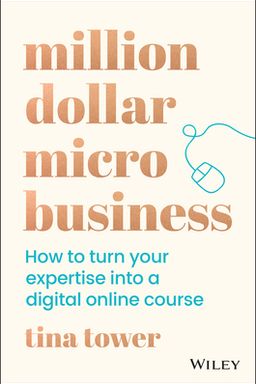
Million Dollar Micro Business cover

Million Dollar Micro Business

by Tina Tower

Million Dollar Micro Business is a dynamic guide to building your own online course empire. Transform your expertise into engaging content, achieve financial success, and enjoy a balanced life. This book offers the tools to create courses that captivate audiences and generate sustainable income.

Turn Expertise into Freedom and Impact

Have you ever dreamed of turning what you know—your hard-earned expertise—into something that not only makes a living but changes lives? In Million Dollar Micro Business, Australian entrepreneur Tina Tower argues that anyone with valuable knowledge or skills can transform them into a thriving online course business that offers freedom, wealth, and meaningful impact. Tower contends that we live in a transformational age where digital education has democratized entrepreneurship: instead of needing huge teams or massive capital, you can build what she calls a “micro business”—a lean, profitable online model able to earn seven figures while being run by a tiny team or even solo.

At the core of Tower’s message is the conviction that online courses represent the most accessible, scalable form of business ownership available today. They let you package your knowledge once, automate the delivery, and sell it endlessly—liberating you from the exhausting cycle of trading time for money. Yet, as Tower insists, there’s no true “passive income” here: success demands clarity, commitment, creativity, and emotional courage. The journey isn't easy, but it's astonishingly achievable. Through clear frameworks, storytelling, and inspiration from successful course creators, she shows readers how to step out of fear, organize their ideas, build their brand, and use technology intelligently—all while designing life their way.

A New Way to Work and Live

Tower’s argument springs from her own entrepreneurial evolution—from founding and franchising Begin Bright tutoring centers to discovering the digital freedom of online courses. After selling her traditional business, she traveled the world with her family while running a new online company from a laptop, and soon realized that her smaller, digital venture had more revenue and impact than her brick-and-mortar empire. The result was a revelation: scale, impact, and personal freedom no longer require physical infrastructure—they require leveraged systems, personal branding, and thoughtful content.

Her experience mirrors the shift that countless entrepreneurs are now embracing. In the digital economy, the old model—endless hours, high overheads, and large teams—is giving way to smaller, smarter operations that focus on intellectual assets. Tower sees this transformation not just as smart business strategy, but also as an act of personal empowerment. Especially for women, she argues, online enterprises offer a path to wealth and autonomy unconstrained by traditional roles or locations. Her goal is ambitious yet simple: help 100 women build $1 million businesses by 2025.

What Makes a Million Dollar Micro Business

Tower breaks down the anatomy of this “micro” model across five parts: how it begins, creating your first idea, launching it, growing it, and embracing the new world of freedom and impact. The process starts small—with a single clear idea, the courage to overcome fear, and the discipline to turn expertise into structured learning. Then comes the construction of signature courses, identifying your point of difference, and designing a brand that reflects your authentic personality rather than corporate polish. Finally, she moves through growth pillars: automation, systemization, micro teams, and mindset mastery.

Her teaching approach combines action steps and motivational storytelling. Every stage includes concrete frameworks—like fear-setting (from Tim Ferriss), validation exercises, and the magnetic offer template—paired with vivid success stories such as James Wedmore, Kayse Morris, Tracy Harris, Clint Salter, and Denise Duffield-Thomas. These case studies demonstrate that micro businesses can thrive across industries—from teacher resources to dance studios—when founders connect their skills to clear transformation promises for their audience.

Why It Matters Now

The book arrives in a world reshaped by technology and pandemic-induced digital acceleration. As education moves online, individuals have unprecedented access to tools—Kajabi, Stripe, Canva, Zoom—that make it possible to build a global course business from a home office. Yet, Tower emphasizes that technology is only the vehicle; authenticity, clarity, and emotional resilience drive success. Her own stories reveal how fear, overthinking, and guilt often sabotage progress, and she equips readers with strategies to overcome them, from batching tasks to ditching perfectionism.

Ultimately, Million Dollar Micro Business is about designing a life rather than just a business. It challenges the cultural narrative of “hustle” and replaces it with leverage and joy. Tower’s philosophy echoes authors like Tim Ferriss (The 4-Hour Workweek) and Denise Duffield-Thomas (Chillpreneur), but she presents it through a distinctly educational lens. She champions simplicity, urging you to start small, launch imperfectly, learn through iteration, and build systems that sustain freedom, profit, and meaning.

“Revenue is for vanity, profit is for sanity.” Tower reminds you that chasing size or fame misses the point—success is about quality of life, impact, and sustainable profit. A million-dollar micro business isn't just an income goal; it’s a philosophy of doing meaningful work your way while helping others thrive.

By the end, Tower leaves readers not only with a roadmap to a scalable digital venture but also with a mindset shift: that abundance doesn’t come from hustle but from alignment. When you design a business that reflects who you are and automate what you can, you create space for creativity, family, and contribution. She wants you to finish her book ready to package your expertise, launch it boldly, and proclaim, “Holy guacamole—it actually works!”


Start Small and Conquer Fear

Tower begins with a deceptively simple truth: the biggest obstacle to starting is overcomplication. Too many aspiring entrepreneurs get stuck trying to perfect their idea or build a vast empire before taking the first step. Her advice is to start small. Pick one idea, one audience, one course, and launch imperfectly. Like her first digital experiment in Thailand—where she sold eleven course seats at $997 in ten days—small beginnings can quickly snowball into scalable success once the foundation is right.

The Myth of Instant Success

Tower dismantles the illusion of overnight triumph that social media often glamorizes. When she launched her first product, she didn’t reach hundreds—she reached eleven. Yet that modest start proved the model worked and could scale. Success online compounds like interest: when you show up consistently, your reputation grows and so does your revenue. Her advice echoes James Wedmore’s insight (“Sell it before you build it”)—momentum matters more than preparation.

Mastering Fear with “Fear Setting”

Fear, Tower writes, is the silent killer of dreams. She borrows Tim Ferriss’s concept of “fear setting,” a structured reflection where you list every fear, imagine the worst-case outcome, and brainstorm how you’d recover. Once you realize that even failure only costs temporary discomfort, fear loses its grip. For Tower, overcoming emotional paralysis is the real work—not learning Kajabi or building a website. Business is, above all, a mind game.

“You either win or learn,” she insists. Every launch, whether small or huge, is an experiment that teaches resilience and mastery.

Turning Fear into Action

Tower reframes fear as energy for creation. Her “action beats analysis” mantra aligns with Ferriss’s pragmatism and echoes authors like Brené Brown on vulnerability: courage is about acting while afraid. She urges you to batch time, minimize distractions, and treat creative sessions like sacred appointments. By scheduling short, focused sprints and protecting that time fiercely, you make progress even while scared.

Examples throughout the book—such as teacher Kayse Morris launching her course while seven months pregnant—illustrate how imperfect timing is irrelevant if commitment is genuine. Fear gives way to faith when the mission is clear: help others by teaching what you know. Tower’s challenge is not just technical but emotional—can you step into the spotlight, own your expertise, and let your personality lead your brand? Once you do, customers connect with authenticity, and confidence replaces anxiety.

Start Small, Think Big

Starting small doesn’t mean thinking small. Each mini-course or project is an iterative building block toward mastery and scalability. “A digital business gains traction and compounds fast,” Tower explains, because every piece of content builds your network and reputation. Whether 10 sales or 1000, genuine delivery fuels growth. Her advice to first-time course creators: celebrate every student—they’re proof you’ve turned knowledge into impact.

By grounding lofty goals in manageable first steps, Tower transforms anxiety into agency. Start small, launch fast, learn, iterate—and you’ll discover that courage compounds faster than capital.


Build a Personal Brand that Shines

In the digital marketplace, anonymity is the biggest barrier to trust. Tower argues that your most valuable asset isn’t just your business name—it’s you. People buy from people, not faceless brands. Building a personal brand means showing your face, your story, and your quirks so customers can connect and trust you. Yet, this requires vulnerability. She shares how she once hid behind corporate professionalism, wearing suits and high heels that made her miserable until she realized that authenticity—not image—builds magnetism.

Authenticity Over Appearance

Modern entrepreneurship favors relatability over polish. Like Jenna Kutcher or Jasmine Star (whom Tower cites as influences), success comes from being genuine, not perfect. When she ditched the heels and embraced colorful outfits that reflected her personality, her audience multiplied. The lesson: your vibe attracts your tribe. She encourages you to choose comfort and confidence over conformity—because nothing repels customers faster than self-consciousness.

Setting Boundaries with Purpose

Personal branding doesn’t mean overexposing your private life. Tower distinguishes between professional authenticity and personal intimacy. After suffering from a cyberstalker, she learned to define what she shares publicly and what she keeps private. Her rule of thumb: show what’s relevant to your work and mission, not what’s irrelevant to your audience. Clients buy outcomes, not family details. This balance mirrors advice from Denise Duffield-Thomas, who also blends honesty with boundaries in her communications.

Clarity Builds Connection

To help others recommend or follow you, define who you serve and what transformation you offer. Tower suggests crafting your brand so that when someone mentions you, your core promise is instantly recognizable (“She helps women package their expertise into online courses”). This clarity streamlines referrals and builds long-term brand equity. In her words, “What do people say about you when you’re not in the room?” Whatever that answer is—make it intentional.

Authenticity accelerates trust. You don't need a massive following; you need aligned followers who love your vibe because it’s genuine.

Personal branding in Tower’s universe isn’t vanity—it’s visibility. The clearer and more authentic you become, the more effortlessly you attract clients who resonate with your story and values.


Clarify and Validate Your Big Idea

Before diving into creation, Tower insists you must get crystal clear on your idea. Clarity saves you time, money, and emotional bandwidth. A million-dollar micro business starts with a simple but powerful intersection—what you love, what you’re good at, and what people will pay for. This “sweet spot” framework mirrors the Japanese concept of ikigai and aligns with other entrepreneurial thinkers like Simon Sinek (Start With Why).

Finding Your Course’s Sweet Spot

Tower walks you through identifying what feels effortless rather than merely easy. By listing your strengths, passions, and what others ask you about, you discover content that’s second nature to you but challenging for others. This zone of ease and expertise becomes your ideal course foundation. She illustrates with quirky success stories—from eyebrow tutorials earning half a million dollars to flower-arch making courses—proving every niche can thrive if positioned around transformation.

Validate Before You Build

Overthinking kills momentum, so Tower teaches quick validation exercises rather than long analysis. Use free tools like AnswerThePublic and Amazon reviews to gauge demand; study competitors’ opt-ins and offerings, but focus on identifying market gaps rather than copying. Her example of airline customers who said they wanted legroom but actually cared most about price drives home a key point: understand what people truly want to solve, not just what they say they want.

Create Your Vision and Values

A clear mission and values ground your new venture. Tower suggests defining your transformation promise—how you’ll take clients from point A to point B—and setting personal and business goals. Her own mission (“to accelerate empowered, successful women building online empires”) gives her compass-like clarity. By defining values such as kindness or integrity, decision-making becomes easier and your culture clearer.

Clarity is the foundation of confidence. When you know your why and who, your what becomes obvious—and your business grows from conviction, not confusion.


Design and Launch Your Signature Course

Once clarity is achieved, Tower moves into creation. Your first signature course, she explains, is the building block of your empire. It’s the product that encapsulates your transformation promise—the journey you guide your students through. But rather than chasing perfection, she urges practical progress: map modules and lessons, plan deliverables, and record simply.

Course Design Foundations

A signature course should solve one clear problem, not everything under the sun. Start with six to eight weeks of structured content, broken into modules and bite-sized lessons. Each lesson should focus on action steps so students see immediate results. Tower highlights the importance of community: “People come for the course but stay for the community.” Whether through a Kajabi group or Facebook, accountability and connection improve retention.

Progress Over Perfection

Her mantra—“progress beats perfection”—is illustrated by dozens of examples. She recounts how fear of being judged, from physical insecurities to self-doubt, delays progress. Her antidote is batching work, recording authentically, and focusing on delivering value rather than image. She laughs about a listener who critiqued her giggle on her podcast: “He’s not my audience.” Authenticity wins over polish.

Equipment and Simplicity

Avoid the trap of overinvesting early. Your phone and laptop can be enough to start. She lists minimalist tools—Canon M3, Rode mics, Logitech webcams—but reminds you: production values don’t equal value delivery. Students care about clarity and enthusiasm more than 4K lighting. In this way, Tower echoes Marie Forleo’s belief that imperfection is part of charm and relatability.

“You can refilm when you’re rich,” she quips. The world needs your course now, not later.

Her structured process—map, record, upload, engage—turns creation into a repeatable system. Once done, you can sell it over and over, proving digital leverage is real, not a myth.


Automate, Systemize, and Build Your Micro Team

Growth, Tower insists, comes not from more hustle but from smarter systems. After initial success, entrepreneurs need to embrace technology and team leverage. In chapters on automation and systems, she earns her “systems nerd” badge, celebrating tools like Monday.com, Canva, and Kajabi as engines of freedom. Automation is how you scale impact without multiplying effort.

Automation as Leverage

Software, she writes, is your silent workforce. Stripe handles payments, Quaderno taxes, StreamYard lives, and Later schedules posts. Each tool saves time for higher-value thinking. But automation should serve humanity, not replace it. “You can’t automate care,” she reminds—every system must enhance your student’s experience, not dehumanize it.

Become a Systems Nerd

Document every repeatable process—from webinar setup to onboarding emails. Systems prevent burnout, free brain space for creativity, and enable delegation. Tower describes her confetti-loving joy upon ticking completed tasks in Monday.com—a metaphor for celebrating organized progress. Systems give stability to scale.

The Micro Team Mindset

Micro doesn’t mean solo forever. Tower encourages hiring small but mighty teams, starting with an assistant who complements your skills. Her own balance shifted after burnout managing 120 staff in her franchise days; now she values local, flexible teams focused on outcomes rather than hours. As Clint Salter’s success story shows, even multimillion-dollar online businesses thrive with teams of five when roles are clearly defined and culture prioritizes joy.

Automation and systems don’t strip creativity—they free it. When you stop drowning in tasks, you have time to innovate, lead, and live.


Protect Energy and Design Life Your Way

Tower closes her playbook with a philosophy of sustainability: business success means nothing without energy, joy, and freedom. “By slowing down,” she writes, “you actually speed up.” Entrepreneurs burn out chasing every opportunity; her antidote is strategic rest and purposeful ‘no’s. She teaches how to reclaim time, protect boundaries, and build work around life—not the other way around.

The Power of Saying No

When you start, every ‘yes’ builds momentum; later, every unnecessary ‘yes’ drains energy. Tower presents graceful scripts for saying no to unpaid work, discounts, or boundary-pushing clients (“Out of respect for my private clients…”). This isn’t coldness—it’s integrity. Self-protection reflects valuing your impact. The most fulfilled entrepreneurs, she argues, operate from abundance rather than exhaustion.

Designing from Flow, Not Hustle

Her vision of success defies the old 9-to-5 model. Work doesn’t have to mean confinement; she records podcasts from pink cottages and coaching calls from the Gobi Desert. The key is flexibility: batch focused work in blocks, protect rest, and recalibrate around creativity. Echoing The 4-Hour Work Week, she calls it “life by design”—freedom with purpose, not laziness.

Ditching Guilt and Embracing Ease

Many women, she observes, struggle with guilt over success or ease, shaped by generations taught that hard work equals virtue. Tower reframes wealth as a channel for generosity: more money means more scholarships, freedom, and philanthropy. Clint Salter’s story of giving team bonuses and funding schools in Kenya illustrates this balance between prosperity and service. Success with soul is the ultimate goal.

“Success comes from creating opportunities and leveraging them,” Tower reminds. “When you do good in the world, you deserve your wins.”

Her final image—the moment she overcomes her fear of water-skiing after years of hesitation—symbolizes the book’s essence: courage celebrated leads to momentum. Life by design is earned through intentional choices. Say no often, rest enough, and work only in alignment with joy—and the micro business becomes not just an enterprise but a gateway to a beautifully lived life.

Dig Deeper

Get personalized prompts to apply these lessons to your life and deepen your understanding.

Go Deeper

Get the Full Experience

Download Insight Books for AI-powered reflections, quizzes, and more.