
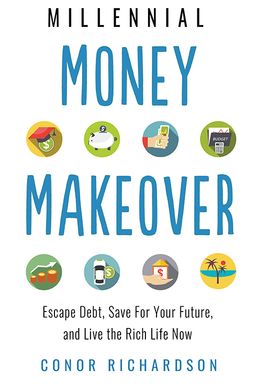
Millennial Money Makeover cover

Millennial Money Makeover

by Conor Richardson

Millennial Money Makeover empowers millennials to conquer financial challenges with confidence. Conor Richardson provides practical solutions for escaping debt, saving for the future, and living a rich life now, all tailored for today''s unique economic landscape.

The Millennial Money Revolution

How can you stop living paycheck to paycheck and start truly mastering your finances? In Millennial Money Makeover, CPA Conor Richardson dives into this urgent question and makes an audacious claim: managing money doesn’t require luck, privilege, or advanced degrees—it requires a mindset shift and a systematic approach to transforming your financial life. Richardson argues that Millennials face unique economic challenges—stagnant wages, soaring student debt, and social media that glorifies consumption—but also possess unprecedented access to information, technology, and opportunity. The key is turning that potential into disciplined financial action.

Richardson structures his book around a six-step money makeover framework. It begins with making a rich decision—a conscious choice to become financially literate and professional with your money. Then it moves through paying off debt, budgeting based on passion rather than deprivation, optimizing big purchases, investing and saving intelligently, and finally automating your financial system to create lifelong wealth. Each step builds momentum toward what Richardson calls the rich life—a state where money serves your purpose instead of controlling you.

Millennials in Crisis and the New Normal

Richardson opens with sobering statistics: 76% of Millennials are financially illiterate, 64% have no retirement account, and more than half are worried about debt. These realities reflect a generation caught between massive student loans and cultural pressure to "live the filtered life"—where wealth is imagined as consumption. But as he reminds readers, most millionaires don’t flaunt luxury; they build quiet stability through frugality and long-term focus (referencing Thomas Stanley and William Danko’s The Millionaire Next Door). For Millennials, the old success sequence—marriage, mortgage, lifelong career—has collapsed. In its place, a new normal of instability has emerged, and Richardson calls for practical optimism: reject economic fatalism, take control, and change the road you’re on.

The Psychology of Turning Professional

At the heart of Richardson’s philosophy is the idea of “turning professional with your money.” Drawing inspiration from Steven Pressfield’s Turning Pro, he urges readers to treat financial management like a profession—not an afterthought. It’s not about cutting lattes but about building systems, discipline, and awareness. This transformation starts with a decision. Once you decide, Richardson says, the trajectory of your life changes. He compares his own awakening—sitting in a Brooklyn apartment, realizing his finances were a “wreck”—to the moment readers stop pretending and start building autonomy, mastery, and purpose. These three pillars, borrowed from Daniel Pink’s Drive, make financial action sustainable because they link money to fulfillment, not fear.

Why This Book Matters

Unlike generic personal-finance guides, Millennial Money Makeover focuses on behavioral design. It argues that the problem isn’t knowledge but application—the “illusion of knowledge” Stephen Hawking warned about. Richardson dismantles common excuses (like “nobody taught me this” or “money isn’t my thing”) and shows how small behavior changes compound into big wins. He introduces the concept of the J-Curve, noting that efforts to learn and practice new financial habits may feel discouraging at first before producing exponential results. By reframing the struggle as “investment in loss,” drawn from chess champion Josh Waitzkin, Richardson reframes the learning curve as a crucial phase toward mastery.

A Blueprint for the Rich Life

Richardson’s six principles—One rich decision wins the day, Thinking big makes you win big, Cash is forever king, Education is continuous, Debt is not a necessary evil, Learning from experience is too slow, Investing means you are winning, Time is always on your side, Technology is meant to be leveraged, and The rich life is about more than money—frame the entire book. Each principle guides financial behavior, like focusing on big wins, delaying gratification, and harnessing technology (later explored through robo-advisors). Collectively, they form not only a financial plan but a self-improvement manifesto built on momentum and automation.

In short, Millennial Money Makeover is about turning anxiety into action, confusion into clarity, and consumption into creation. It teaches Millennials that the path from broke to rich isn’t paved with luck—it’s paved with structure, confidence, and purpose. And Richardson’s voice—equal parts coach, friend, and accountant—makes the journey approachable. By the end, readers aren’t just fixing their finances; they’re rewriting their future.


The Power of One Rich Decision

Richardson begins the six-step transformation with what he calls a Rich Decision: the conscious choice to take control of your financial life. This, he insists, is the ultimate pivot point between chaos and order. Drawing inspiration from Tony Robbins’s mantra that “decision is the ultimate power,” Richardson recounts his own turning point—when he finally sat down in his cramped Brooklyn apartment to examine his finances for the first time. That night, he realized that despite being an accountant in New York City, his life was financially unstable. The realization sparked a vow: to go pro with his money and stop living on the financial edge.

Turning Professional with Your Money

Going professional with your money means shifting from reactive to proactive decisions. Instead of chasing bills, you begin designing systems. Instead of consuming, you focus on creating wealth. Richardson likens this transformation to Pressfield’s “before and after” moment in Turning Pro: the life before professionalism is filled with avoidance; the life after is guided by purpose. The first step is ownership—stop blaming circumstance, education, or bad luck, and start treating your finances like a business.

Overcoming Fear Through Confidence

What holds most people back is fear: fear of mistakes, fear of being wrong, and fear of change. Richardson introduces “confidence as a commodity” that can be mined over time. He gives readers practical confidence-building exercises, encouraging them to rewrite negative financial beliefs into positive affirmations (“I can learn; I will start now; mistakes are tuition, not failure”). This reframing turns fear into fuel. He connects fear to financial paralysis—the tendency to stall decisions like paying bills or checking balances—and calls confidence the antidote to procrastination.

Autonomy, Mastery, and Purpose

To reinforce lasting motivation, Richardson borrows Daniel Pink’s framework from Drive: autonomy (freedom from paycheck dependence), mastery (competence in money management), and purpose (using money to pursue meaningful goals). Autonomy begins with freedom from debt; mastery grows through learning practical tools; purpose gives your money emotional direction. Richardson connects this triad to ancient Stoic ideals—quoting Epictetus, “Only the educated are free.” As you master your finances, you reclaim freedom of choice, trade anxiety for agency, and build confidence toward larger life purpose.

Breaking Habits and Setting Goals

Once the decision is made, Richardson guides readers through habit reform. Drawing upon Charles Duhigg’s The Power of Habit, he maps how poor financial routines form loops of cue, routine, and reward. He replaces avoidance with proactive routines—talking openly about money, analyzing expenses, and celebrating small wins. Then comes goal-setting. Using the Olympic mindset of Michael Phelps, Richardson urges readers to aim high and quantify their progress. He provides sample timelines—from paying off credit cards in six months to saving one year’s income in five years—and introduces “thinking big makes you win big” as his second principle.

In the end, the “Rich Decision” isn’t about spreadsheets—it’s about identity. Once you decide to take control, you begin to see yourself as capable of wealth. You stop deferring success to someday and start shaping it daily. That moment of full decision marks the true beginning of the Millennial Money Makeover.


Red to Black: Escaping Debt Forever

The second step of Richardson’s program confronts the plague of modern finance: debt. He compares credit card and student loan debt to an unwanted roommate that overstays its welcome. The solution, he says, isn’t negotiation—it’s eviction. Through relatable scenarios and humor, Richardson turns debt elimination into an attainable challenge—one driven by focus and behavior rather than pure math.

The Psychology of Debt

Debt feels deceptively harmless when acquired but suffocating when repaid. People forget about interest—the “silent killer”—and underestimate total cost. Richardson uses simple stories like Lisa, who buys a MacBook for $2,000 and delays credit card payments until her $2,000 computer becomes a $2,260 nightmare. He reminds readers that interest balloons quietly, converting comfort into captivity. Quoting writer Steven Pressfield, he calls resistance—the inner voice of rationalization—the enemy within.

How to Eliminate Credit Card Debt

Richardson lays out a seven-step process: acknowledge your debt, list balances smallest to largest, create a flash budget, “snowball” your payments, pay with cash, celebrate wins, and share success. His approach blends behavioral science from Northwestern University’s Kellogg School with classic financial discipline. The key is momentum: paying off small debts first builds confidence and psychological reward. Cash reinforces the pain of spending, restoring friction to transactions that credit cards remove.

Beating Credit Card Companies at Their Game

Richardson even includes practical scripts for calling credit card companies to waive annual or interest fees—modeled after advice from Ramit Sethi’s I Will Teach You To Be Rich. The act of calling, he notes, rewires confidence and forces financial assertiveness. The principle “Cash is forever king” becomes a guiding mantra. Instead of juggling cards and rewards, he advises closing accounts gradually and keeping one emergency credit card only after debt-free status.

Student Loan Mastery

Nearly every Millennial deals with the “educated beast” of student loans. Richardson presents stories of entrepreneurs like Pete Wylie of Gradible, who created platforms to help borrowers reduce debt faster. He reinforces the payoff principle: small balances first, pay more than minimums, earn side income, and reward progress. He even suggests lifestyle changes—moving back with parents, selling expensive cars, and adopting a buddy system. His SMART method (Small balances, Minimum payments, Always find more money, Reward yourself, Timeline) reframes loan repayment as project management.

Ultimately, crossing from red to black isn’t just a financial milestone—it’s emotional liberation. Richardson encourages readers to declare their debt-free intent publicly, setting timelines and sharing wins online. Once you say goodbye to debt, you join a growing community of empowered Millennials rewriting their financial futures.


Passion Budgeting: Spending with Purpose

The third stage of the money makeover redefines budgeting—not as austerity but as alignment. Richardson’s “passion budgeting” method helps you spend intentionally on what brings genuine joy and cut ruthlessly on everything else. He challenges the tired image of budgeting as deprivation and reframes it as a creative design process similar to Marie Kondo’s decluttering philosophy: if an expense doesn’t spark passion, eliminate it.

From Dull Spreadsheets to Life Design

Richardson reminds readers that budgeting isn’t about memorizing numbers—it’s about seeing where your money lives. Just as companies like Apple or Nike create operating budgets to drive strategy, individuals should map their cash flow to their ambitions. He introduces the Pareto Principle (the 80/20 rule): 80% of effects come from 20% of causes. Applied to personal finance, limiting waste and amplifying passions can create disproportionate happiness.

The Four Steps of Passion Budgeting

  • Investigate your expenses:
  • Print your last three months’ statements and highlight purchases that sparked joy (like dinners with friends or gym memberships that energize you). Circle everything else—the clutter. This visual audit reveals how much you spend on things you barely care about.

  • Analyze your passion categories:
  • Group highlighted items by themes—food, travel, health, fun—and rank them by importance. Then calculate your total circled waste. Even cutting $200 monthly on nonessential spending frees $2,400 annually for debt payoff or savings.

  • Prioritize for budgeting:
  • Focus spending on your top three passion areas while reducing the rest. Budgeting becomes joyful when it mirrors your values, not guilt.

  • Build a passionate income:
  • Find meaning in earning—through side hustles, freelancing, or jobs that ignite purpose. Richardson showcases figures like Philip “PT Money” Taylor, Nick Loper of Side Hustle Nation, and Nicole Lapin, who turned passion into profit. Their stories prove that joy and productivity can coexist.

Rules and Happiness in Spending

Drawing on research by Elizabeth Dunn and Michael Norton’s Happy Money, Richardson outlines five ways to spend smarter: buy experiences, make treats rare, buy time, prepay and savor anticipation, and invest in others. These happiness principles transform spending into value creation. He also challenges traditional “rules of thumb”—for example, keep housing below 20% of take-home pay (not 30%), and aim to save 30% (not 15%). The goal is to live purposefully, not comfortably.

Passion budgeting dismantles shame around money. It invites readers to live below their means intentionally, cultivate joy, and design a lifestyle where every dollar expresses who you are. In doing so, you reclaim power from habit and build an authentic map toward wealth.


The Magic of Winning Big Purchases

Richardson’s fourth step tackles the “big-ticket” financial decisions that define early adulthood—cars, rings, weddings, and homes. He begins with a story about psychologists at the University of Richmond who discovered that people misjudge the scale of large numbers. This cognitive bias makes buyers underestimate costs and overextend themselves. Richardson teaches readers how to convert abstract sums into relatable metrics (e.g., measure a $45,000 car as nine times your $5,000 savings). Suddenly, extravagance becomes tangible.

Cars: Don’t Get Trapped in Depreciation

Buying a car is the first major temptation. Richardson recounts his own near-mistake of buying a $40,000 luxury vehicle, only to realize it would erase a year’s savings. He teaches the marshmallow test story from Walter Mischel at Stanford: adults, like children, must learn to delay gratification through distraction. Focus on purpose, not impulse. His rules: never buy new (cars lose 10% immediately), never lease (short-term affordability masks long-term waste), and always pay with cash to avoid financing traps. Cars should be four or five years old—where depreciation plateaus—and practical over flashy (even wealthy people drive Toyotas).

Love and Money: Defining Financial Relationships

Richardson points out that relationships thrive on financial transparency. He cites Erin Lowry’s concept of “getting financially naked,” recommending couples discuss savings, debt, retirement, and income before engagement. His five questions—how much savings? what’s your debt? are you saving for retirement? what’s your ideal income? can you be poor with me?—help partners test compatibility. He calls this the “Define the Financial Relationship” talk, a preventive tool against future conflict.

Rings and Weddings: Rejecting the Fairy Tales

Modern marketing equates love with spending. Richardson debunks the De Beers myth that two months’ salary equals devotion, citing Emory University research showing higher divorce rates among couples who spend more on rings and weddings. He encourages scaling down and prioritizing intimacy over extravagance. His advice on weddings: share your budget, find rising-star vendors, and use registries strategically. A meaningful celebration doesn’t need to cripple your finances.

Homes: Only When You’re Ready

Finally, Richardson tackles homeownership—the sacred American milestone. His contrarian stance: buying a house too early is one of Millennials’ biggest financial mistakes. With job mobility high and costs soaring, renting offers flexibility. He instructs readers to avoid buying until they’ve saved one to two times their household income, have no other debts, and can put 20% down. He illustrates with Tom and Sarah—two fictional buyers of $362,000 homes. Tom buys with 5% down and ends up paying over $650,000; Sarah waits, saves, and pays only $448,000 total. Patience saves $200,000, or roughly four years of median income.

The magic of winning big is discipline. Large-ticket purchases should reflect long-term values, not momentary excitement. Richardson’s principle—“Learning from experience is too slow”—encourages readers to study others’ mistakes instead of repeating them. Mastering major purchases builds resilience and protects wealth long before investing begins.


Minting Momentum: Investing and Retirement

Once debt is gone and big purchases optimized, Richardson turns to the exciting part: making money work for you. “Minting momentum” means generating wealth through saving, investing, and retirement planning—the fifth stage of the makeover. He begins with a candid look at Millennial under-saving, noting that half of families have nothing in retirement accounts. The remedy is engineering savings habits intelligently and harnessing time as the ultimate asset.

Rewiring for Saving

Humans aren’t wired to save. Richardson cites psychologist Daniel Gilbert’s Stumbling on Happiness to explain that our brains overestimate imagined futures and underestimate actual effort. He describes experiments by Hal Hershfield showing that people who visualize their older selves save twice as much for retirement. His advice: imagine your future self at seventy, then take action now to honor that person.

Emergency and Slush Funds

Richardson’s roadmap begins with practical steps: save $3,000 for emergencies, then build a “slush fund” covering three to six months of expenses. He introduces the “covered ratio”—savings divided by monthly living cost—as a simple yet powerful health metric. A covered ratio above six offers freedom; above sixty months, it’s “FU money.” Financial peace, he argues, literally makes you look younger, citing research from Brandeis University showing that financial stress ages appearance.

Investing Means You’re Winning

Richardson then demystifies investing. He defines key terms—stocks, bonds, mutual funds, ETFs, compound interest—and emphasizes that starting is more important than strategy. Young investors, he says, benefit most from time; compound interest grows exponentially over decades. His principle “Investing means you are winning” captures the spirit of long-term optimism. He compares this to Burton Malkiel’s A Random Walk Down Wall Street: consistency beats cleverness.

The New Vision of Retirement

The book modernizes retirement itself. Millennials, Richardson notes, seek passion projects and semi-retirement rather than cessation. He instructs readers to define realistic goals—like travel or mentoring—and reverse-engineer them into savings plans. He outlines retirement accounts: Roth IRA (tax-free growth), Traditional IRA (tax-deductible contributions), and Traditional 401(k) with employer match. His comparison between "Compounding Colin" and "Lazy Larry" dramatizes the power of time; the disciplined saver outpaces the lazy boss by hundreds of thousands over thirty years.

Minting momentum means setting systems to accumulate wealth automatically. Saving early, investing consistently, and focusing on long time horizons transforms Millennials from paycheck survivors into future millionaires. Richardson ends with purpose: financial health isn’t the end—it’s the foundation for self-actualization.


The Power of Automation and the Rich Life

The final step in the Millennial Money Makeover is automation—transforming wealth-building into a self-running system. Richardson likens this state to sushi master Jiro Ono’s disciplined daily routine: mastery emerges through consistent structure. When applied to money, routine removes friction, emotion, and human error. Automation becomes the modern lever of wealth.

Design, Delegate, Defer

Richardson summarizes the automation model with his Triple D formula: Design your money flow system, Delegate management to automation, and Defer gratification by directing income to future goals. Start by designing a flowchart linking accounts—from checking to savings, emergency fund, slush fund, retirement accounts, and “happy money” for guilt-free spending. Then delegate transactions to technology, eliminating decision fatigue. Finally, defer consumption; automate savings and treat leftover cash as free spending money.

Leveraging Technology: Robo-Advisors

Richardson celebrates the rise of technology in personal finance. Robo-advisors like Betterment, Wealthfront, and Personal Capital democratize wealth management with low fees, automated rebalancing, and tax-loss harvesting. He explains how they reduce costs below 0.5% AUM—four times cheaper than traditional advisors—and make professional planning accessible to Millennials who value transparency and ease. Using algorithms to maintain balanced portfolios and optimize taxes embodies his principle: “Technology is meant to be leveraged.”

The Hybrid Approach

While automation rules efficiency, Richardson also advocates combining digital tools with human guidance. He calls this modern money management—the synergy of robo-advisors and personal interaction. The hybrid model allows customization and emotional support while maintaining precision. He reminds readers that wealth isn’t solely numeric; it’s about living purposefully. His last principle, “The rich life is about more than money,” reframes financial success as the capacity to pursue freedom, creativity, and generosity.

Automation transforms behavior into architecture. Through deliberate design, Millennials can stop managing crises and start managing growth. The book closes by urging readers to win the long game: consistency beats complexity. Once your system runs smoothly, your focus shifts from surviving financially to thriving personally—the true meaning of the rich life.

Dig Deeper

Get personalized prompts to apply these lessons to your life and deepen your understanding.

Go Deeper

Get the Full Experience

Download Insight Books for AI-powered reflections, quizzes, and more.