
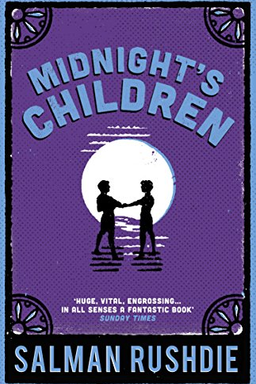
Midnight''s Children cover

Midnight''s Children

by Salman Rushdie

Midnight’s Children is a captivating tale of Saleem Sinai, born at India''s independence. His life, intertwined with the nation’s destiny, unveils a magical world where personal and political histories collide, exploring themes of identity, memory, and power.

A Nation Born Within a Body

How can you read a nation through a single man’s body? In Midnight’s Children, Salman Rushdie invites you to imagine that India itself is incarnated inside Saleem Sinai, a boy born at the stroke of midnight on August 15, 1947—the precise second of Independence. This audacious idea transforms biography into allegory: every crowd, rumor, riot, and affair becomes a physical echo in Saleem’s breath or bloodstream. What appears as family chronicle expands into a vast meditation on history, politics, and identity.

Private life fused with public history

You start with Saleem’s birth in Doctor Narlikar’s Nursing Home, accompanied by fireworks and an independence speech. Newspapers photograph the baby, Nehru writes him a letter, and the infant becomes an emblem before he can speak. Rushdie teaches you how history intrudes into domestic life—the clock’s hands clasp as Saleem’s fate. Personal accidents, like a father’s broken toe, mirror national fractures. From this point onward, every private experience is synchronized with a public one. Saleem reminds you that he is “handcuffed to history,” and through him Rushdie dramatizes the entanglement between autobiography and nationhood.

Storytelling, memory, and the oral imagination

Rushdie builds the narration as talk, not text: digressive, chatty, prone to jokes and apologies. Saleem speaks directly to Padma—you as listener—using rhythm and exaggeration borrowed from Indian oral storytelling. He confesses errors and contradictions, and by admitting his unreliability, he reveals a deeper truth: memory itself is fiction. You never get bare history; you get a song of history performed for belief. That voice is alive, uncertain, and therefore honest in its ambiguity. (Note: This technique connects Rushdie to Dickens’s populist narration and to the endless self-correcting tales of Scheherazade.)

Fragmentation and the perforated world

Before Saleem enters the stage, his grandfather Aadam Aziz falls in love through a bedsheet with a seven-inch hole—the iconic “perforated sheet.” That object institutionalizes partial vision: people learn to love and know one another in fragments. The sheet passes through generations and becomes metaphor for all storytelling here. Saleem’s own memory works by fragments; he invites you to assemble meaning from gaps. Rushdie turns cultural concealment into aesthetic principle—societies and selves formed through selective sight.

Magic realism and prophecy as truth

Everyday life in the novel leaks the miraculous. Ramram Seth’s prophecies, Lifafa Das’s peepshow, Doctor Schaapsteker’s venom treatments—all blur magic and realism. You realize that the fantastic isn’t escape but explanation: miracle gives form to uncertainty. Prophecies create action; belief alters cause and effect. Saleem’s telepathy and later his sense of smell continue the same logic: extraordinary perception interprets ordinary chaos.

Politics rendered domestic

Rushdie never separates the macro from the micro. Aadam Aziz’s nose twitches amid gunfire at Jallianwala Bagh; Ahmed Sinai’s bank freeze chills his marriage bed. Partition, riots, and emergency raids become household ailments. You come to see how political orders shape childbirth, debt, and love. National events reveal themselves through bruises, rumors, and bills—the book insists that politics is intimate.

Metamorphosis of powers and voices

Saleem’s telepathic “radio” connects five hundred and eighty-one children—a mental Parliament where ideas of India struggle. His power later dies in a sinus surgery during the Sino-Indian war, a chilling allegory of drained imagination. When his ear’s antenna closes, his nose’s sensitivity blossoms: he “smells” morality. This transference of faculties narrates the nation’s own evolution—from hearing many voices to enforcing purity. The same transformation happens in Jamila Singer, his sister, whose public veil turns private art into national propaganda.

Violence and purification

Bombs and surgery punctuate Saleem’s life. In 1965, a moonlit spittoon thrown by blast hits him, erasing memory and guilt. As “the buddha,” he becomes the obedient tracker during the Bangladesh war—a man emptied of conscience, rebuilt as instrument. Rushdie turns military obedience into moral allegory: the loss of personal history enables atrocity. When memory resurfaces, shame floods in; survival means carrying sin forward as evidence.

Magic, birth, and emergency

Parvati—the witch who ferries Saleem invisibly back to India—marries him and gives birth to Aadam at midnight on June 25, 1975, the start of Indira Gandhi’s Emergency. The cycle repeats: a new child tied to a new regime. The state sterilizes the gifted children, performing symbolic sperectomies to excise possibility from history. Saleem ends the novel making pickles—bottling time, flavor, and witness. You realize that preserving memory through spice and story is the only resistance left.

The lasting pattern

Rushdie’s novel teaches you to see how one life mirrors collective fate, how storytelling reconstructs broken truth, and how imagination sustains moral vision when official history erases voices.


Fragmented Vision and the Perforated Sheet

Rushdie begins his symbolic architecture with the perforated sheet—a curtain of partial sight that defines how people in conservative households navigate love and knowledge. Doctor Aadam Aziz examines Naseem through it, falling in love with dismembered glimpses. The metaphor multiplies: seeing in parts becomes the novel’s way of knowing. You confront a world where intimacy and understanding happen through fragments.

From medical tool to emotional code

The seven-inch hole transforms from purdah device to blueprint for emotional life. Aadam’s tentative glimpses teach patience; later, Amina learns to love Ahmed one piece at a time—a ritual of partial devotion copied from her father’s romance. Saleem inherits the logic too: his own storytelling is perforated, full of gaps and self-corrections. You must read him as a quilter assembling a self from scattered cloths.

Seeing, hiding, and power

Visibility here is moral. Ghani controls the hole, granting sight selectively; knowledge is always managed by someone. The motif becomes sociological: societies structure what may be seen and known. In Rushdie’s India, revelation and concealment overlap—a form of visual hierarchy mirrored later in Jamila Singer’s perforated veil. The novel insists that modern publicity and ancient purdah share roots in power.

Core idea

Partial sight shapes emotional truth. You love, govern, and remember through apertures. To understand Saleem, you must become the physician peering through Rushdie’s sheet, assembling wholeness from fragments.


Hearing a Nation: The Radio Mind

Saleem’s miraculous gift—to hear the thoughts of others—begins in a comic domestic accident and grows into a cosmic metaphor. At age nine, hiding in a washing-chest, he inhales a blast of mucus that opens his head to voices. The child becomes a radio for India’s consciousness. Rushdie fuses biology and nationhood: a sneeze produces history.

Mechanics and morality of telepathy

Saleem can tune languages, regions, and moods—an invisible, democratic meeting inside one brain. Yet the miracle feels invasive: he hears family secrets and erotic fantasies, misuses knowledge, cheats exams. Power without responsibility turns corrosive. Rushdie implies that knowing without consent leads not to wisdom but alienation. Saleem hides his ability, punished when he confesses it, mirroring a nation that suppresses its plural voices.

The Midnight Children’s Conference

Through this telepathic network, Saleem summons five hundred and eighty-one midnight-born children, each with extraordinary faculties. Within his mind they debate ideologies—Shiva’s pragmatism versus Saleem’s utopian pluralism—and reenact adult politics. Their commune collapses under prejudice, ambition, and war. The Conference’s failure warns you that brilliance without trust cannot build community. When surgery during wartime silences Saleem’s inner ear, the dream of unity dissolves, paralleling India’s own fracturing.

Takeaway

Hearing everyone is not enough; listening requires ethics. Rushdie transforms telepathy into metaphor for democracy—diverse signals must be tuned, sustained, and believed.


From Smell to Moral Knowing

After the loss of telepathy, Saleem’s nose becomes instrument of truth. His “science of nasal ethics” classifies smells by color, weight, geometry and sanctity. You watch him convert sensory detail into moral reasoning, mapping Karachi and Pakistan through odors. This invention replaces failed communication with visceral interpretation.

Olfactory categories and value

Saleem ranks smells as sacred (mosques, veils, devotion) or profane (alcohol, Western records). His taxonomy reproduces and critiques the nation’s purity ideologies. Yet his curiosity leads him to gutter fumes and hashish winds—drawn toward what society rejects. In smell, he senses hypocrisies: holiness often stinks of power, while truth hides in the city’s refuse.

Tai Bibi’s revelation

The old prostitute Tai Bibi exposes the perverse side of smell. By mimicking scents, she conjures memories Saleem cannot name until she reproduces the odor of his sister Jamila—a confession of incestuous desire through olfaction. The scene fuses science, shame, and taboo, collapsing moral categories. Smell uncovers what speech conceals. You realize this sensory epistemology brings both insight and peril.

Lesson

Knowing through the body can reveal moral complexity. Rushdie’s sensory metaphors teach that truth carries odor—sometimes unbearable, sometimes cleansing.


Publicity, Shame and the Veiled Voice

Rushdie recycles the logic of the perforated sheet in modern form through Jamila Singer’s fame. Jamila’s transformation from mischievous sister to “Pakistan’s Angel” dramatizes how publicity manufactures icons and imprisons individuals. Major Latif (“Uncle Puffs”) creates her chadar with a golden hole, an emblem combining national modesty and commercial spectacle.

The invention of purity

A rumor of disfigurement and the shining veil make Jamila desirable as legend; she performs for Ayub Khan and broadcasts patriotic hymns. Her private body disappears behind a symbolic aperture; she becomes voice without face. Publicity becomes purdah: the more visible she is, the less she exists personally. Rushdie argues that nationalism often sanctifies women as emblem, erasing their agency.

Family and moral inversion

The Singer’s profits transform the family’s morality—Ahmed brands towels, Amina thrives in commerce, Saleem sinks into obsession. Fame displaces human connection. The novel uses Jamila’s perforated veil to show how purity narratives both elevate and wound: what is hidden commands worship, but that worship destroys intimacy. Her story echoes the sheet’s lessons about seeing and not seeing.

Key insight

Public morality is often built on controlled visibility. Jamila’s veil and fame reveal how nations craft sacred icons by sacrificing individual depth.


War, Ruin and Rebirth

War repeatedly reshapes Saleem’s world—from the Sino-Indian conflict that drains imagination to the 1965 Indo-Pak war that annihilates his family. On September 22, 1965, bombs fall over Karachi, killing Ahmed and Amina Sinai; a silver spittoon strikes Saleem’s head and purges his memory. Rushdie stages devastation as purification: destruction burns away illusion but also erases selfhood.

Amnesia and the Buddha persona

After the spittoon’s blow, Saleem forgets his past and drifts as “the buddha”—a silent, obedient man drafted into CUTIA, a tracking unit deployed during the Bangladesh war. His nose leads soldiers to victims. Rushdie’s irony bites: the man once tuned to plural voices becomes a mechanical instrument for state violence. Amnesia turns purity into complicity.

Memory’s return and guilt

In the Sundarbans, snake venom revives Saleem’s memory; he collapses under guilt for raids and killings. The jungle becomes psychedelic tribunal—dreamlike restitution for moral numbness. Through this, Rushdie insists that remembrance is painful but necessary: conscience begins when memory revives.

Idea to hold

National wars replay private losses. Forgetting can enable cruelty; only painful remembering can restore humanity.


Magic, Birth and the Emergency

Parvati-the-witch offers magic’s last refuge. Her invisible basket ferries Saleem back to India and shelters him in the magicians’ ghetto—a community of illusionists surviving poverty. When Parvati becomes pregnant by Shiva, she orchestrates marriage to Saleem, fusing enchantment, shame, and social ritual. At midnight on June 25, 1975, their son Aadam is born—the hour Indira Gandhi declares Emergency. Rushdie binds magical birth to political clampdown.

Aadam’s symbolic body

Aadam’s enlarged ears and silence make him emblem of listening without speech. He personifies India’s next generation—able to hear injustice but powerless to speak under censorship. Through the child, Rushdie transforms heredity into prophecy: every birth recycles the original pact between body and nation.

Sperectomy and preservation

During the Emergency, the regime sterilizes citizens and erases dissent; the mutilation of the midnight children is described as “sperectomy,” the removal of hope itself. Saleem survives this horror and ends his tale bottling Braganza Pickles with Mary Pereira. Each jar stores a fragment of history; each flavor recalls memory. In this culinary finale, preservation replaces prophecy—memory becomes edible resistance.

Closing reflection

Even amid censorship and cruelty, the act of storytelling—like pickling—saves what power seeks to erase. Flavor becomes survival, and narrative becomes history’s conscience.

Dig Deeper

Get personalized prompts to apply these lessons to your life and deepen your understanding.

Go Deeper

Get the Full Experience

Download Insight Books for AI-powered reflections, quizzes, and more.