
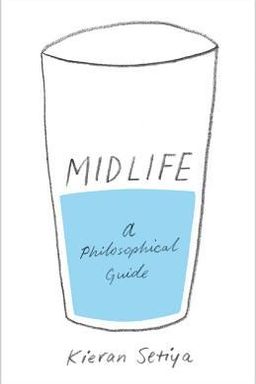
Midlife cover

Midlife

by Kieran Setiya

Midlife by Kieran Setiya is a profound guide that transforms the challenges of middle age into opportunities for growth. Drawing on centuries of philosophical wisdom, it provides solace and practical insights for navigating life''s complex middle years and finding fulfillment.

Philosophy as a Guide Through the Midlife Maze

What happens when the life you’ve worked so hard to build begins to feel empty? When your career, relationships, and routine—once meaningful—seem repetitive, claustrophobic, and finite? In Midlife, philosopher Kieran Setiya faces this question head-on, arguing that your forties and fifties don’t have to be defined by crisis. Instead, they can become a philosophical pilgrimage—an opportunity to rethink how you understand time, happiness, and meaning itself.

Setiya blends the accessibility of self-help with the rigor of philosophy, channeling thinkers from Aristotle to Schopenhauer, Mill to Beauvoir, to unpack what the midlife crisis really is. His aim isn’t to tell you to buy a sports car or move to Bali—it’s to help you confront the existential questions beneath these impulses: What’s the purpose of striving if it ends in boredom and death? How should we cope with the roads not taken and the irreversible choices behind us? And how do we find meaning in projects that repeat or end?

The Crisis Beneath the Crisis

The book opens with Setiya’s own reckoning. At thirty-five, he finds his life professionally and personally secure—a tenured professor, a loving partner, a child—and yet hollow. He realizes that his despair isn’t just personal: it stems from the structure of human life itself, from the irreversibility of time and the tension between our ambitions and the certainty of decline. Midlife, in his view, is where fundamental questions of value, identity, and mortality become impossible to ignore.

Setiya traces this crisis back to Elliott Jaques’s 1965 coining of the term “midlife crisis” and explores how the concept evolved from psychoanalytic drama into cultural mythology. Through research such as the MIDUS Study, he shows that midlife isn’t always crisis—it’s a measurable dip, the “bottom of a U-curve” in wellbeing. The difference is in how we face that dip: with existential reflection or emotional turmoil.

Applied Philosophy Meets Self-Help

Setiya’s project resurrects philosophy’s original purpose: helping people live well. Before the modern separation between ethics and psychology, philosophers saw reflection as therapy. Setiya takes this tradition seriously, building each chapter around a type of midlife struggle—over work, lost opportunities, regret, death, and repetition—and treating it with philosophical tools rather than clichés.

In doing so, he introduces readers to concepts such as the paradox of egoism (you can’t be happy by chasing happiness directly), the difference between ameliorative and existential value (what fixes problems versus what makes life worthwhile), and the distinction between telic and atelic activities (projects that end versus processes that never run out). The cure to midlife, he suggests, lies in learning to live meaningfully within limits—focusing not on self-help transformation, but on understanding what life’s structure entails.

Why Philosophy Matters at Forty

The book argues that the questions you face at midlife aren’t merely emotional—they’re philosophical. You’re dealing with time’s asymmetry (you’ve done more living than you have left), moral finitude (you can’t do everything good), and epistemic loss (you can no longer imagine your life as open). These ideas might seem abstract, but they touch the heart of everyday unease—the regret for past paths, the dread of death, the exhaustion of repetition. Philosophy, Setiya insists, offers tools to transform these paradoxes into understanding, and even peace.

An Invitation to Think—and Feel—Differently

Across its six chapters, Midlife is both mirror and map: a mirror showing your existential condition in detail, and a map for navigating it. You’ll learn how Mill’s nervous breakdown reveals the limits of self-sacrifice; how nostalgia for youth masks an unrealistic longing for ignorance; how Virginia Woolf’s choice not to have children transforms into creative affirmation; how Simone de Beauvoir’s dread of death expresses our attachment to existence; and how Schopenhauer’s pendulum of desire teaches that happiness lies not in achievement, but in presence.

Ultimately, Setiya’s claim is revolutionary yet simple: the midlife crisis isn’t something to fix—it’s something to understand. Through philosophy, you can cultivate a balance between striving and serenity, learn to value processes rather than outcomes, and live fully in the moment without denying the inevitability of time. The solution isn’t escape—it’s awareness. And as the book closes, Setiya’s advice is both humble and profound: learn to care about things other than yourself, make room for existential meaning, forgive your past, and live in the halo of the present. In doing so, midlife becomes not a crisis—but a new kind of awakening.


Rule One: Care About More Than Yourself

When John Stuart Mill suffered his existential collapse at twenty, he realized something many of us discover at forty: chasing happiness doesn’t make you happy. His crisis, described in chapter two of Midlife, begins when he asks, “What if everything I wanted came true?” The answer—depressingly—was indifference. Mill saw that he had devoted his life to one goal, maximizing human happiness, but lost a sense of immediate meaning in his own.

The Paradox of Egoism

Mill’s realization birthed the paradox of egoism: the pursuit of happiness as an end defeats itself. Those who fixate on happiness rarely find it. You must focus instead on causes outside yourself—helping others, pursuing art, or savoring philosophy for its own sake. Like the Greek philosopher Joseph Butler before him, Mill understood that self-centered living turns inward and implodes. Happiness comes by the way, as a companion to purpose.

“Those only are happy who have their minds fixed on some object other than their own happiness.” – John Stuart Mill

Beyond Altruism: The Paradox of Caring Too Much

Ironically, Mill’s problem wasn’t selfishness but its opposite: he cared only about humanity’s happiness, not his own fulfillment. Setiya calls this the paradox of altruism. If you value only helping others, life itself loses meaning—since those others must have independent value first. Altruism without intrinsic meaning leads to an empty kind of moral perfectionism (as seen in W. H. Auden’s joke about the social worker who helps others but can’t say what they’re here for).

Existential Value: Doing What’s Worth Doing

The cure for Mill’s dilemma—and your own midlife emptiness—is to rediscover existential value: doing what’s worthwhile apart from need or improvement. Inspired by Aristotle’s concept of leisure and contemplation, Setiya shows that fulfillment comes not from solving problems but from engaging in meaningful, self-contained acts—reading poetry, playing music, cooking, building, philosophizing. These aren’t just respite from duty; they’re ways of being fully alive.

In everyday life, this translates to finding joy in what you don’t need to do. Take time for what makes life more than survival—conversation, play, creativity. In doing so, you make yourself “immortal in moments,” participating in the divine leisure Aristotle imagined. As Setiya writes, the challenge isn’t to do more, but to cherish doing what’s not required.


Rule Two: Make Room for Existential Meaning

Meaning isn’t just avoiding suffering; it’s creating joy beyond purpose. Following Mill’s recovery, Setiya distinguishes between ameliorative value—actions that fix pain or fill need—and existential value—actions that make life positively good. This difference defines the second rule of midlife: don’t let your life be consumed only by what has to be done.

Amelioration vs. Existence

Ameliorative acts—raising children, paying bills, ending injustices—are essential yet endless. They cure what’s wrong but don’t reveal why life is right. Existential acts—music, love, beauty, laughter—are complete in themselves. They make life worth living, not just less bad. Without them, as Mill discovered through Wordsworth’s poetry, living becomes nothing but repair.

A Life Worth Having

This distinction filters down to daily experience. If every task feels like a battle—something to fix, finish, or win—you risk losing sight of being. Setiya’s advice? Find activities not tied to achievement’s end-state. Painting a room for beauty, not necessity; learning for curiosity, not career. These acts are existential—they remind you that life’s value isn’t deferred, it’s here.

Aristotle’s gods, Setiya jokes, have no use for war or virtue; they dwell in contemplation. You don’t need to be divine—but you can imitate their attitude. Existential value is doing what you’d do even in paradise. And at midlife, paradise means rediscovering things that are good not for progress, but for presence.


Missing Out Is the Price of Living Fully

Feeling like you’ve wasted potential? Setiya’s third chapter tackles the emotional core of midlife: missing out. When the lives you didn’t live begin to haunt the one you did, philosophy offers not justification, but reconciliation.

The Drama of Incommensurable Values

Setiya explains that life’s richness is also its source of pain. You can’t do everything because values are incommensurable—you can’t weigh love against knowledge or art against family on a single scale. Choosing one path inevitably “misses” another. To wish otherwise is to wish for the life of a mollusk, not a human.

The Myth of Choice

Through characters like Joshua Ferris’s dentist and David Nobbs’s Reggie Perrin, Setiya shows the delusion of valuing options themselves. We fetishize freedom—the possibility to change course—even when we wouldn’t use it. Midlife nostalgia often idealizes youth for its openness, but the real longing is for ignorance: the time before we knew what we were losing.

Embracing Loss Without Regret

Setiya’s remedy is cognitive therapy through logic: remind yourself that missing out is proof of abundance. Only a world bursting with good things can make you feel loss. You can’t escape it without deforming your humanity. Midlife becomes an homage to the plurality of life—to the richness of what you couldn’t have, and the meaning of the very limits that define being alive.


Learning to Live With Regret

By the time you reach midlife, regret feels inevitable: choices you made, chances you missed, things you can’t undo. In chapter four, Setiya asks—can you look back without wishing to rewrite your story? His answer combines realism with compassion.

Mistake vs. Regret

Setiya distinguishes making a mistake (doing what was wrong at the time) from regretting it later (wishing it hadn’t happened). Sometimes you should have acted differently—but that doesn’t mean you should regret it now. The key is to see how your past connects to what you love in the present.

Rebuilding Meaning

Using examples from Virginia Woolf and R. Jay Wallace, Setiya shows that what redeems regret is attachment—whether to a child born from a rash choice or a creation born from sacrifice. If those you love wouldn’t exist without your errors, you can’t wish them away. Loving the outcome changes the value of the cause.

Risk and Particulars

For mistakes without children, he offers two strategies. First, risk aversion: in hindsight, choosing a certain good beats gambling for better ones. Second, particularity: appreciate what’s uniquely beautiful about your actual life—the details impossible to replicate elsewhere. It’s not denial; it’s rediscovery. By focusing on what makes your history vividly yours, you may find reason, not regret, in its shape.


Facing Death Without Despair

How do you look forward when the road leads to death? Chapter five turns to mortality—the ultimate horizon of midlife. Rather than romanticize death’s shadow, Setiya dissects its philosophical anatomy: fear, attachment, and perspective.

The Mirror of Nonexistence

Borrowing Lucretius’s metaphor, Setiya imagines death as the mirror of the time before birth. You weren’t anxious about the centuries before your existence—so why dread those after? Accepting this “symmetry” can diminish irrational fear. But our bias toward the future keeps death terrifying; we crave what’s to come more than what’s gone.

Redefining Immortality

Setiya explores why the desire for eternal life may be misguided. Like craving superpowers, longing for immortality exceeds human scale. By realizing that finitude defines our condition, you moderate expectation without self-pity. Yet the deepest fear isn’t missing out on experience—it’s attachment to being. We want not just pleasure but presence: ourselves and those we love to continue.

Learning to Let Go

Through Buddhist ideas of detachment and Kant’s dignity of human life, Setiya finds a bittersweet balance: acknowledge love’s value but accept its end. To let go isn’t to stop caring—it’s to care fully without clinging. Death’s acceptance, then, is learning love without possession: a mindfulness big enough for goodbye.


Breaking Free from the Tyranny of Goals

Why do achievements often feel hollow once they’re complete? Setiya’s final chapter explains this paradox through philosopher Arthur Schopenhauer and the distinction between telic (goal-driven) and atelic (process-driven) activities. The cure for midlife malaise, he concludes, lies in changing how we engage with what we do—not necessarily what we do itself.

The Pendulum of Desire

Schopenhauer saw life as swinging between pain (wanting) and boredom (having). Setiya refines this: our project-driven culture makes meaning self-defeating—each success erases its purpose. You finish the book, the project, the milestone, and lose what once animated you. Midlife reveals the absurdity of living only for completion.

Telic vs. Atelic Life

Telic activities have endpoints—writing a report, finishing a marathon. Atelic ones—walking, thinking, parenting, loving—never end. They offer fulfillment in the moment, not just later. To escape the treadmill of striving, you must learn to value the process alongside the project.

Living in the Present

The solution isn’t quitting your job or running away—it’s mindfulness, in the philosophical sense. Whether cooking, teaching, or driving, shift your attention from the outcome to the act itself. This atelic awareness, akin to Buddhist practice, reveals meaning that doesn’t exhaust itself. In living fully in the now, you reconcile ambition with serenity—the heart of Setiya’s closing wisdom.

Dig Deeper

Get personalized prompts to apply these lessons to your life and deepen your understanding.

Go Deeper

Get the Full Experience

Download Insight Books for AI-powered reflections, quizzes, and more.