
Idea 1
Metropolis and the Human Experiment
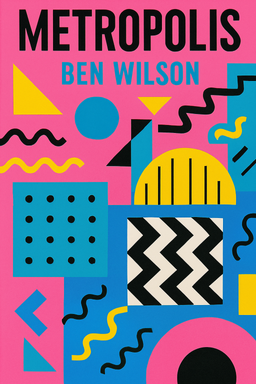
What makes a city more than a cluster of buildings? In Metropolis, Ben Wilson argues that cities are humanity’s most enduring experiment—machines for cooperation, creativity, power, and survival. From the first temple platforms in Uruk to Lagos’s sprawling megacity networks, each phase in urban history reveals how humans convert scarcity and chaos into order and invention. The city is both a stage and a catalyst: it amplifies intelligence, mediates trade, concentrates ideas, and tests resilience.
Cities as Accelerators of Knowledge
Wilson begins with ancient Mesopotamia, where administrative needs—tracking grain, recording trade—forced the creation of writing itself. From Uruk’s cuneiform to Alexandria’s Library and Baghdad’s House of Wisdom, the urban network becomes an information processor: recording, comparing, and recombining fragments of knowledge from distant cultures. You see the same pattern later in Amsterdam’s stock exchange or London’s newspaper coffee houses, where financial and informational flows intertwine.
The City as Cooperation Machine
Early cities emerged where nature demanded coordination—deltaic wetlands, shifting river networks, or monsoon-plagued plains. Shared belief and ritual gave people a language to organise irrigation and labour. Temples at Eridu and Uruk not only unified worship but managed canals, stored harvests, and issued ration records. Wilson calls ideology a form of social technology: it allows cooperation at scale without constant coercion. (Note: this echo of Yuval Harari’s argument about “imagined orders” helps you see belief as infrastructure.)
Urban Dualities: Utopia and Vice
The city’s moral complexity is omnipresent. Harappa’s well-planned sanitation and equal housing suggest civic utopia; Babylon’s spectacle and sexual commerce became enduring metaphor for sin. Wilson shows that density breeds both progress and moral panic. The same concentration that inspires art and science also fuels exploitation, crime, and disease. From antiquity to Songdo’s algorithmic design, efforts to control urban chaos often end up sterilising creativity. The challenge, then, is not purity but balance: designing spaces that tolerate mess while safeguarding dignity.
Power, Networks and Resilience
Cities extend beyond walls. Urban power radiates into politics (Uruk’s Lugal, Rome’s imperial spectacle, Venice’s armed commerce) and connects into global trade webs—from the Indian Ocean bazaars to the VOC’s monopolies. Such connectivity brings prosperity and vulnerability alike: when rivers fail, when routes shift, or when empires fall, cities collapse. The Akkadian drought, Harappan monsoon change, and Mongol sack of Baghdad all remind you that resilience depends on adaptability—the ability to reinvent function and identity.
Modern Transformations
Industrialisation turned human concentration into sensory shock. Manchester and Chicago reveal urban acceleration at painful scale—factories, disease, slums—and yet they also bred cooperative solutions: friendly societies, immigrant clubs, women reformers like Jane Addams, and working-class leisure. Paris’s Haussmannisation brought order and beauty but introduced alienation and commodified spectatorship; New York’s skyscrapers signalled new vertical ambitions and zoning’s inventive constraints. War shattered the twentieth-century metropolis, but reconstruction—Warsaw’s rebirth, Tokyo’s metabolic rebuild—proved that resilience lies in shared memory and improvisation.
The Planetary City
Today, Lagos, São Paulo, and Shanghai demonstrate a final shift: the megacity as ecological organism. Informal economies knit survival into innovation; nature itself adapts—falcons nest on towers, crows learn traffic strategies. Wilson closes by urging you to see informality and ecology not as problems, but as assets: lessons in flexibility for a world where most humans will be urban. The city remains humanity’s most complex invention—an unfinished experiment in how to coexist creatively amid density, diversity and constant change.
Central insight
Throughout history, you see the city as the crucible of human invention and contradiction—simultaneously productive and perilous, ordered and anarchic, artificial and organic. Understanding cities means understanding how humanity learns, fails, and continually reinvents itself.