
Idea 1
Consciousness as the Source of Reality
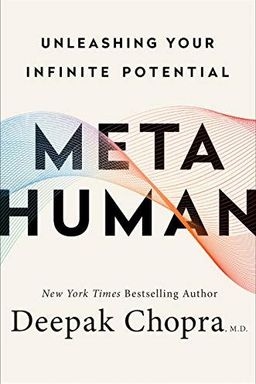
What if the physical world you see, touch, and measure is not the starting point of existence, but its expression? Deepak Chopra’s central argument is that consciousness is the primary reality—the ground from which everything else arises. Rather than the brain producing awareness, awareness manifests the brain; rather than atoms assembling minds, minds interpret atoms into being. The book reorients science, psychology, and spiritual practice around this single principle: you live inside a mind-made simulation created by consciousness itself.
To appreciate this reversal, you must let go of the assumption that perception reports a fixed world. Just as a smartphone displays photos vastly different in scale though the pixels are uniform, your brain assembles sensory ‘clicks’ of photons and vibrations into a coherent movie called reality. Max Planck’s observation—'I regard consciousness as fundamental. I regard matter as derivative from consciousness'—anchors this view, echoed by Heisenberg’s statement that what we observe depends on our method of questioning. Every choice of attention, every interpretive frame, selects the world you inhabit.
The construct called 'I'
But consciousness also builds another illusion: the sense of a personal 'I' who sees, thinks, and acts. This self-model, as philosophers Thomas Metzinger and neuroscientist Olaf Blanke describe, is a virtual construct proven by out-of-body experiments—altering brain stimulation can 'move' your point of self-location outside the body. Chopra uses this evidence to show that the 'I' you defend emotionally is not an essence but a function. It evolved as a navigation tool, a narrator keeping your story consistent. Yet when you mistake the narrative for reality, you live confined by its protective edits. The same mechanism that helps you survive can also limit freedom and creativity.
Recognizing the self-model as flexible allows you to experiment. Cultivating the 'watcher'—the awareness that observes your thoughts—loosens the habitual 'I'. The Upanishadic image of two birds, one eating and the other watching, captures this inner architecture: you can remain as the witnessing bird while the acting bird lives its daily play. Over time, this discovery leads beyond mere self-observation to what Chopra calls metareality: the source dimension where consciousness directly authors experience.
Mind, matter, and creation
Physics and biology, once thought to secure materialism, now hint at the same truth. Quantum mechanics erases the clean boundary between observer and observed; a measurement determines a particle’s form. The human senses, capable of detecting photons and molecular vibrations on quantum scales, participate directly in creation. Meanwhile, genetics and neuroscience show that genes and brains operate as interfaces of consciousness. DNA responds to beliefs (as demonstrated by placebo-like genomic studies at Stanford), and neural pathways rewire through attention and intention. Rather than explaining the mind, these systems obey it.
Chopra interprets evolution and biology through this lens: intelligence was not imported into matter by chance mutations but has always been implicit in the field of awareness. Cells display self-organizing behavior; epigenetics reveals that environment and perception influence gene expression. Seen this way, life is consciousness learning to express itself more fully, from atomic vibrations to human agency.
The purpose of awakening
Accepting consciousness as origin changes how you live. It empowers you to reshape your perceived world through attention, meaning, and inner state. Two people in identical circumstances—childbirth, a traffic jam, or illness—may inhabit entirely different realities because their minds assign different meanings. Observation becomes participation: to change what you see, change the consciousness that sees.
This realization, however, risks staying abstract without direct experience. Chopra’s framework progresses from concept to practice: first see perception as constructed, then notice the constructing 'I', and finally return to the awareness behind both. From this awareness, creativity, healing, and freedom arise naturally. It’s not escapism; it’s direct authorship of experience grounded in what physics, biology, and mysticism now hint at together—that the universe is consciousness in motion.
Core realization
You don’t live in the world; the world lives in you. Recognizing this is not philosophy but a shift in being—the first step toward metahuman awareness.
Once you see that consciousness precedes matter, identity, and time, the rest of Chopra’s method unfolds logically: wake up from the self-model, free the body into awareness, discover the timeless source within, and live from that wholeness through choiceless awareness. The next key ideas map this journey from virtual reality to metareality—an internal revolution that has both personal and planetary consequences.