
Idea 1
The Machinery of Manufactured Doubt
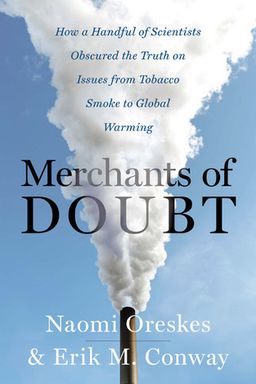
How do powerful institutions turn scientific uncertainty into political paralysis? In Merchants of Doubt, Naomi Oreskes and Erik Conway reveal how a small circle of influential scientists and industry-backed organizations manufactured confusion over issues from tobacco smoke and acid rain to the ozone hole and climate change. Their argument is stark: the same rhetorical and structural playbook used to protect cigarettes from regulation became the template for defending fossil fuels and resisting environmental reform.
The Playbook’s Core Technique
The heart of the strategy was never about disproving the science—it was about delaying the acceptance of it. Tobacco executives coined the slogan “doubt is our product,” realizing that public uncertainty equals regulatory inaction. The tactic evolved through research committees, PR campaigns, and selective funding that produced plausible alternative explanations—stress, genetics, volcanoes—that muddied causal links. If a problem seemed disputed, government officials could postpone action, and corporations could protect profits.
From Tobacco to Environmental Battles
The same figures reappear across issues. Physicists Frederick Seitz, S. Fred Singer, Robert Jastrow, and William Nierenberg—all Cold War veterans—transitioned from national defense projects to public advocacy, casting themselves as scientific dissidents against environmental consensus. Their reputations lent authority to skeptical claims that appeared balanced but were ideologically driven. (Note: journalists’ adherence to “fairness” and the Fairness Doctrine unintentionally amplified these voices, equating fringe positions with expert consensus.)
The Cold War Ideology Beneath the Science
Many of these scientists saw regulation as existential threat—an intrusion of government reminiscent of socialism. Their worldview blended anti-Communism with faith in technological salvation (“technofideism”). Environmental limits appeared politically suspect, and skepticism about acid rain or climate warming masked fear of losing free-market control. This ideological link explains why attacks on environmental science were sustained not merely by data disputes but by broader calls to defend liberty and progress.
Why It Worked: Media and Institutions
Journalists, trained to present balance, often provided equal airtime to fringe views. Think tanks like the George C. Marshall Institute, Heritage Foundation, and Competitive Enterprise Institute created Potemkin science—white papers, op-eds, and petitions designed to mimic legitimate peer review. Corporate funding (Philip Morris, ExxonMobil, Scaife, Olin) financed these efforts, ensuring repetition across multiple channels until “scientists disagree” became a national refrain.
Consequences and Moral Weight
Each campaign carried real-world costs: delayed regulation of tobacco led to millions of premature deaths; acid rain controls were postponed for years; climate treaties stalled; and scientists like Ben Santer and Justin Lancaster faced personal attacks and silence through intimidation. The authors show how public trust in science erodes when authority is repurposed as political weaponry. The damage is cumulative and global—ecological decline and distorted democracy.
Core Insight:<\/strong> Manufactured doubt does not seek truth; it seeks delay. The moment uncertainty becomes product, science becomes political instrument.
Across chapters you watch variations on one method: fund selective research; recruit credentialed allies; exploit journalistic fairness; dispute process rather than results; and attack scientists themselves. The pattern’s endurance explains much of today’s environmental policy gridlock. Understanding this machinery enables you to recognize engineered doubt before it masquerades as debate.