
Idea 1
Creating Mentally Healthy Workplaces Where People Thrive
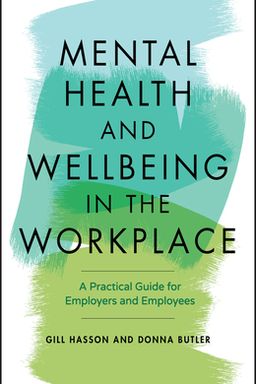
How can we transform our workplaces into environments where people genuinely thrive, rather than merely survive? In Mental Health and Wellbeing in the Workplace, Gill Hasson and Donna Butler present a compelling call to action for employers, managers, and employees alike: work should be a source of growth, meaning, and health, not stress and harm. Drawing on decades of research and practical experience—including UK government reviews, NHS case studies, and insights from mental health leaders—they outline a comprehensive framework for cultivating wellbeing at work.
Understanding the Stakes: Why Workplace Wellbeing Matters
For most adults, work occupies about a quarter of our waking lives. The authors begin from a simple truth: good work can improve mental and physical health, while toxic workplaces can devastate it. Duncan Selbie, CEO of Public Health England, notes that work profoundly affects our health because it’s intertwined with our sense of autonomy, belonging, and security. Yet, too often, the modern workplace magnifies stress through overwork, unclear roles, or poor leadership.
Public Health England found that over 17 million working days are lost annually in the UK to stress, depression, and anxiety. The cost? Roughly £8 billion each year in lost productivity. But the cost to individuals is incalculable—burnout, stigma, and diminished quality of life. Hasson and Butler argue that creating mentally healthy workplaces isn’t just kind-hearted—it’s smart economics and good leadership. When employees feel valued and supported, organizations see improved engagement, loyalty, and innovation. When they don’t, absenteeism, high turnover, and low morale follow.
The Foundations of Mental Health and Wellbeing
The book begins by breaking down what mental wellbeing actually means. Drawing from the World Health Organization and the UK’s Mind foundation, the authors describe mental health as a dynamic balance—a state where you can cope with everyday stresses, work productively, and contribute meaningfully to your community. It’s not simply happiness or the absence of illness but the ability to adapt and recover. A central concept here is resilience—our capacity to bounce back from challenges. (This echoes similar ideas in Brené Brown’s The Gifts of Imperfection and Martin Seligman’s work on psychological flourishing.)
Hasson and Butler also emphasize interconnected dimensions of wellbeing: physical health (sleep, exercise, nutrition), social relationships, purpose, and even spirituality—a sense of connection to something beyond oneself. Ignoring any of these leaves people more vulnerable to stress and illness. They also remind readers that mental health is deeply subjective: people with chronic conditions can still live fulfilling lives, while others who appear well may feel deeply unwell.
The Role of Work in Wellbeing
Work, argue the authors, can be both medicine and poison. The 2006 review Is Work Good for Your Health and Wellbeing? concluded that employment usually supports mental health—but only if the job offers safety, fair conditions, control, and respect. The Health and Safety Executive (HSE) codified these factors in its six “Management Standards”: demands, control, support, relationships, role, and change. When companies neglect any of these, employees’ stress mounts—and so do mistakes, conflicts, and illness.
Subsequent reviews by Dame Carol Black and the Stevenson-Farmer Thriving at Work report pushed the agenda further, urging employers to treat mental health with the same seriousness as physical safety. Their framework of “core standards” calls for mental health plans, awareness training, open dialogue, healthy work–life balance, and strong people management.
Key Point
Employers should assess mental health risks just as they assess physical hazards, and they must equip managers to respond compassionately and effectively when employees struggle.
A Cultural Shift: From Stigma to Support
Hasson and Butler highlight that stigma remains one of the largest barriers to wellbeing at work. In a 2019 Time to Change survey, 60% of respondents said stigma was as damaging—or worse—than their symptoms. When leaders like NHS executive Deborah Lee publicly discuss burnout, it sends a transformative message: mental health issues aren’t personal failures; they’re human experiences. Leaders must “set the tone for leadership more generally,” Lee says, by modeling openness and compassion.
The book repeatedly returns to this principle: conversation is the cornerstone of support. Whether a manager notices a struggling employee or an employee fears speaking up, breaking the silence is pivotal. Avoidance worsens isolation, while genuine dialogue can open doors to help, from simple check-ins to structured Wellness Action Plans (WAPs)—collaborative documents outlining what triggers anxiety or depression and what adjustments keep someone stable at work.
A Practical Roadmap for the Modern Workplace
The heart of the book lies in its pragmatism. Every chapter is filled with concrete strategies—for managers conducting sensitive conversations, supporting employees through illness and return to work, recognizing the signs of distress, and making “reasonable adjustments” under the Equality Act 2010. The authors illustrate these principles through case studies like Georgi’s—a transgender employee facing workplace discrimination—and Ahmed’s, whose anxiety improved through a thoughtful Wellness Action Plan. These narratives transform policy into empathy-driven practice.
Beyond individual cases, the book explores systemic resilience. When resources shrink—such as in UK public services—stress skyrockets. Hasson and Butler acknowledge that sometimes the system itself is broken, and managers must advocate for structural change even as they care for their teams. To sustain others, leaders must avoid the “empathy trap”—a state of emotional depletion from trying to please everyone. Self-care, emotional intelligence, and clear boundaries are indispensable leadership tools.
Why This Matters
“Healthy employees, healthy business” isn’t a slogan—it’s a strategy. In an era where mental ill-health is the leading cause of workplace absence, Hasson and Butler urge a culture of prevention and compassion. Their message transcends checklists: wellbeing is everyone’s responsibility, from boardroom to break room. Real change begins when conversations replace silence, stigma gives way to empathy, and organizations treat mental health not as an occasional campaign but as part of how they do business every day.
If you manage people, this book equips you to notice distress earlier, respond wisely, and build environments where authenticity and support replace fear. If you’re an employee, it reminds you that your wellbeing matters—and you have both the right and the tools to protect it. Through stories, science, and frameworks, Mental Health and Wellbeing in the Workplace delivers a persuasive and deeply humane blueprint for how we can all thrive at work.