
Idea 1
Love Powers a Movement
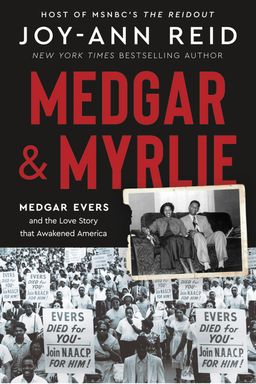
How do you turn private devotion into public courage that can withstand terror? In Medgar and Myrlie: A Love Story of the Civil Rights Movement, Joy-Ann Reid argues that love—marital, familial, and communal—is not background to the Mississippi movement; it is its motor. She contends that the Evers marriage becomes both covenant and political strategy: a source of legitimacy, stamina, and moral clarity that transforms a household into a headquarters and a private vow into public risk.
To see it, you must first understand Mississippi’s system of racial control; then trace Medgar’s formation from Omaha Beach to the Delta; then watch Myrlie evolve from pianist to partner-activist and, later, movement widow-turned-institutional leader. You’ll also learn how a single atrocity—the murder of Emmett Till—catalyzes a new strategic tempo; how inter-group tensions shape tactics; and how Medgar’s assassination becomes a hinge that shifts grief into mobilization, delayed justice, and enduring legacy.
Love as Covenant, Legitimacy, and Fuel
Reid opens by centering a love story: a 17-year-old Myrlie Beasley and a 25-year-old Medgar Evers marry on Christmas Eve, 1951. Their bond is practical and profound—protection in a hostile state, shared faith, and a joint moral project. Medgar frames his activism as a father’s duty—so his children can play in parks and attend integrated schools—and as a husband’s promise. That domestic framing humanizes his cause to skeptics and anchors him when public work demands private sacrifice.
A confessional truth
“I don’t know what to say, except that Medgar was the love of my life.” —Myrlie Evers
That line reframes martyrdom. If Medgar dies, it is not abstraction; it is the shattering of a family you’ve come to know. The book asks you to view courage as relational labor, not solitary heroism (compare to Coretta Scott King’s role in Taylor Branch’s trilogy).
The Battlefield: Mississippi’s Regime
Mississippi operates on three pillars—extra-legal terror, economic coercion, and legal barriers—enforced by the White Citizens’ Councils and the state-backed Sovereignty Commission. Lynchings, mortgage foreclosures, and rigged jury pools make politics life-or-death. Organizing here demands secrecy, safe havens like Mound Bayou, and constant improvisation. Tactics aren’t theory; they’re survival responses to a uniquely vicious ecology (Note: Reid underscores Mississippi’s extremity relative to other Deep South states).
Making of an Organizer
Medgar’s arc explains his method. War in Europe exposes a different racial climate; the humiliations on the bus home sour him on American hypocrisy. Alcorn A&M gives him intellectual direction (Du Bois, Jomo Kenyatta), and Mound Bayou under Dr. T. R. M. Howard teaches him the craft of door-to-door organizing and clandestine rescue networks. As NAACP field secretary after Brown v. Board, he blends law and logistics—13,000+ miles a year, youth councils, press strategy, and a trunk full of spare tires.
A Spark that Rewired Strategy
Emmett Till’s 1955 lynching becomes pedagogical brutality. Jet’s photos convert private grief into national outrage. Medgar leverages that moment—coaxing terrified witnesses like Willie Reed, partnering with Ruby Hurley, and building a narrative of Mississippi as a terror state. The acquittals deepen cynicism and radicalize youth, driving sit-ins, Freedom Rides, and voter drives that later converge in COFO.
Coalitions and Friction
The strategy debate—NAACP legalism versus SCLC/CORE/SNCC direct action—plays out in Mississippi. COFO becomes a pragmatic truce, coordinating bail funds, training, and fieldwork. Medgar straddles the divide: a legalist who believes in the street. That duality both amplifies power and increases risk, as New York worries about costs and optics while Jackson’s jails overflow after the Woolworth’s sit-in.
Assassination as Hinge
On June 12, 1963, a rifle round strikes Medgar in his own driveway. The scene—the living-room window blasted, neighbors sprinting, Dr. Britton battling hospital resistance—turns a house into a national altar. The funeral on Lynch Street becomes a flashpoint: mounted police, arrests, and near-riot quelled by DOJ’s John Doar. Grief hardens into resolve; Kennedy’s civil-rights bill gains urgency; Jackson’s movement revives.
From Widowhood to Leadership
Widowhood forces an invented public role. Life and Ebony stage photos; audiences demand composure. Privately, Myrlie miscarries and contemplates suicide; publicly, she fundraises, speaks, and manages security for her children. Decades later, she helps pry open the case against Byron De La Beckwith, and in 1995 she chairs the NAACP, stabilizing its finances and reforming its culture.
Justice Delayed, Memory Secured
Two 1964 mistrials expose how juries, judges, and state agencies protect white supremacists. But journalism (Jerry Mitchell), a persistent DA’s team (Bobby DeLaughter, Ed Peters), and new testimony converge in 1994 to convict Beckwith. Memorials—from Arlington to Jackson–Medgar Wiley Evers International Airport—cement legacy, but the deeper lesson is procedural: evidence plus moral pressure can eventually overcome captured institutions.
What you learn is both intimate and institutional: love sustains risk; systems shape tactics; coalition beats silo; violence can boomerang; and persistence, stewarded by survivors like Myrlie, can turn private loss into public power. If you organize today, this story gives you a template: anchor your cause in human stakes, master both courtroom and street, build coalitions, protect families, and play the long game on justice.