
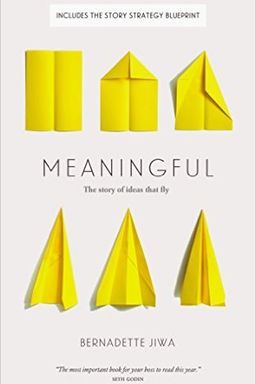
Idea 1
Creating Ideas That Fly Through Meaning
Have you ever wondered why some ideas soar effortlessly while others barely take off? In Meaningful: The Story of Ideas That Fly, Bernadette Jiwa argues that successful innovations and businesses don't start with a product—they start with a person. Jiwa contends that meaning, not marketing, is the ultimate fuel for ideas that catch fire. To create something that flies, you must begin by deeply understanding the customer’s story and designing with empathy, not ego.
Jiwa draws on stories from brands like Apple, Airbnb, Nike, GoPro, and Khan Academy to show that every great idea begins with seeing people clearly. When you understand not just what people do but how they feel and what they aspire to become, your innovation touches hearts, not just wallets. It's a shift from product-first thinking to meaning-first creation.
The Call to Care in Business
As Jiwa reminds us, the digital age has democratized innovation—the tools are everywhere, but empathy is still rare. Her message is powerful and simple: caring is your competitive advantage. In an era crowded with copycats, attention seekers, and viral gimmicks, the difference between forgettable and meaningful ideas lies in whether they make people feel seen. The companies that thrive today—like Airbnb, Patagonia, and Harry’s—don’t just create products; they build relationships grounded in purpose and relevance.
Starting With Stories, Not Data
For Jiwa, a story is not just something you tell—it’s something you build from. Traditional marketing starts with data and ends with advertising. Meaningful innovation flips that approach. It begins with listening to customers’ frustrations, desires, and imaginations. Jiwa’s Story Strategy Blueprint is her framework for doing exactly this: start with the customer’s story, gain insights about their world, design the product from those insights, and craft experiences that make people feel valued.
This approach moves businesses from persuading people to buy toward helping them become who they want to be. (Simon Sinek’s Start with Why echoes this sentiment—but Jiwa takes it further by showing how empathy can be operationalized into business design.)
Why Meaning Matters More Than Marketing
We live in an age overflowing with information, but starving for connection. Jiwa urges entrepreneurs and creators to stop chasing metrics and start chasing meaning. Marketing is not what makes an idea fly—human connection does. Whether you’re building an app or baking bread, your real work is helping people feel like they matter. Relevance is now the minimum requirement, and trust the ultimate differentiator.
Through the stories of innovators such as Nick Woodman of GoPro or Melanie Perkins of Canva, Jiwa illustrates how listening deeply—and designing from compassion—leads to scalable success. Every one of these founders saw a gap not in technology, but in human experience. They solved emotional, not functional, problems. That’s why their ideas endure.
The Revolution of Relevance
The heart of Jiwa’s book beats with one rallying cry: start with relevance, end with resonance. In her view, technology doesn’t change industries—people do. When innovation creates a meaningful shift in someone’s behavior or story, that’s when it truly disrupts. Jiwa calls this the Relevance Revolution—a movement toward human-first businesses that improve lives in measurable, heartfelt ways.
“Success is not what you make, but the difference that it makes in people’s lives.” — Bernadette Jiwa
This principle echoes through the book’s stories: from Mary Anderson spotting the