
Idea 1
The Hidden Foundations of Modern Life
You live in two overlapping realities. One is the ethereal world of software, services and clean screens—the world that seems frictionless and light. The other is the Material World, built on mines, refineries, furnaces and factories. Economist and journalist Ed Conway argues that this material world is invisible to most of us, yet it drives every modern convenience—from smartphones and clean water to renewable power and global trade. His central claim is simple but profound: our economy runs on atoms, not just bits, and if you fail to see those atoms, you misread economic power, environmental limits and future risk.
From invisible mines to fragile networks
Modern prosperity depends on supply chains so vast and interconnected that they are almost beyond imagination. Conway uses startling examples to make you look below the surface—gold bars that hide mountains of waste rock, glass vials that depend on quartz from one mine, and semiconductor shortages that ripple from Taiwan to Westminster. His message: behind every sleek app or digital service lies a chain of physical extraction, chemistry and logistics. Economists may measure value in dollars or GDP, but Conway insists importance lies in what happens when a material disappears. Lose steel, copper or sand, and civilisation grinds to a halt far faster than if a streaming service goes down.
Price ≠ importance and the illusion of dematerialisation
You are trained to think that rich economies have escaped heavy industry—that growth now comes from ideas and services. The book dismantles this illusion. The developed world has not dematerialised; it has outsourced material intensity to poorer nations. While Western GDP per tonne of material rises, total global extraction skyrockets. Our gadgets depend on Chinese smelters, Chilean mines and Australian refineries. Conway calls this the “dangerous illusion” of clean progress, warning that global resilience cannot be judged by software uptime but by mineral flow security.
A journey through humanity’s six pillars of matter
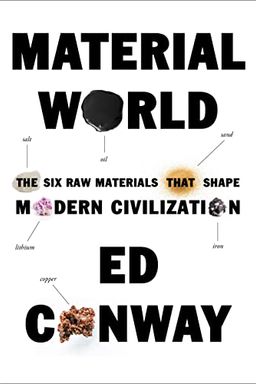
Conway structures his exploration around six elemental materials that made and sustain civilisation: sand, salt, iron, copper, oil and lithium. Each chapter moves from geology to geopolitics, weaving chemistry with history. Sand becomes the substrate for glass and chips; salt evolves from ancient taxation to modern chlorine chemistry; iron and steel form the skeleton of cities; copper wires the electrified world; oil births plastics and the petrochemical era; and lithium powers batteries and the renewable transition. In each case, he asks not only how we make these materials, but how they shape power structures, wars and the pursuit of “green” futures.
The paradox of progress
Conway’s in-person visits—from Chuquicamata’s copper pit to Wesseling’s refinery and the Salar de Atacama—show that progress and damage often march together. Materials that lift billions from poverty also generate carbon, waste and displacement. Building a wind turbine or an EV may require mountains of concrete, steel and lithium—the very processes environmentalists want to limit. The book’s insight is unsettling: the road to decarbonisation runs through intensified mining and manufacturing before relief arrives. Policy makers must grapple with the fact that a “clean” transition is materially messy.
What this means for you and for policy
To navigate the 21st century responsibly, you must think like a geologist and an engineer as much as an economist. Track who controls essential material bottlenecks—whether that’s ASML’s lithography machines, Lochaline’s sand, or China’s battery refining ecosystem. Recognise that environmental goals intersect with industrial ones. The world’s success will hinge on building resilience through supply diversification, recycling and smarter design—without succumbing to complacency that innovation alone fixes scarcity. Conway leaves you with a challenge: every click, construction and meal depends on unseen flows of matter; until you see them, you risk misunderstanding both how civilisation works and how fragile it truly is.