
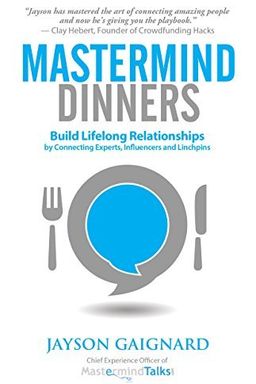
Mastermind Dinners cover

Mastermind Dinners

by Jayson Gaignard

Mastermind Dinners by Jayson Gaignard revolutionizes networking by demonstrating how to cultivate lasting relationships with influencers and experts over intimate dinner gatherings. This approach emphasizes authenticity, strategic guest selection, and attention to detail, offering readers a powerful tool for personal and professional growth.

Building Lifelong Relationships Through Mastermind Dinners

What if your next meal could change the trajectory of your life? In Mastermind Dinners: How to Build Lifelong Relationships by Connecting Experts, Linchpins and Influencers, Jayson Gaignard invites you to rethink how you build relationships — not as tactical networking or transactional exchanges, but as the foundation of genuine connection and lasting success. His message is simple but powerful: your network is your net worth, and meaningful connections will do more for you than any resume, marketing plan, or MBA ever could.

After losing everything — his business, his money, and his sense of purpose — Gaignard rebuilt his life by bringing people together for intimate dinners that sparked deep conversations and enduring friendships. These dinners evolved into MastermindTalks, one of the most exclusive entrepreneurial events in the world. Through these experiences, Gaignard learned a fundamental truth: when you invest in relationships with authenticity, vulnerability, and intention, the rewards ripple far beyond the dinner table.

From Transactional to Transformational

Gaignard contrasts two types of connection-building: transactional networking, where people seek short-term gains, and transformational relationship-building, where the goal is to give more than you take. At the core of his philosophy is a mindset shift — replacing scarcity with abundance. When you believe there is enough success to go around, you cheer others on instead of competing against them. This abundance mindset not only draws opportunities your way but also strengthens the ties that sustain you when life gets tough.

As he notes, money and happiness do not scale equally. True wealth lies not in possessions or status but in trust, generosity, and shared growth. Like Dale Carnegie in How to Win Friends and Influence People, Gaignard argues that you can build influence and fulfillment by being genuinely interested in others — but he brings a modern, entrepreneurial spin to it, rooted in transparency and social capital.

The Connection Economy and Rock Bottom

The book begins when Gaignard hits rock bottom. Once the founder of a multi-million-dollar company, he finds himself $250,000 in debt. His turning point comes at a Seth Godin event about the “connection economy.” Godin’s idea — that value comes from how well we connect and collaborate — triggers an epiphany. Seeing how entrepreneurs often work in isolation, Gaignard decides to host dinners to link people who should know each other. His first Mastermind Dinner is small, local, and nerve-wracking. Yet by the end, attendees are making new business partnerships and friendships. That night, Gaignard feels a clarity he hadn’t experienced in years: this is what he wants to do with his life.

“When you hit rock bottom, you’re left with two things: the integrity of your word, and your relationships.”

— Jayson Gaignard

This conviction drives every lesson in the book. Through stories of both failure and success, he shows that real connection isn’t about quantity but depth. A dozen hand-picked relationships built with authenticity can change your destiny more than ten thousand shallow contacts ever could.

From Mastermind Dinners to MastermindTalks

Over time, Gaignard turns simple dinners into an elite event — MastermindTalks, a curated gathering of entrepreneurs, investors, and thinkers. Speakers include Tim Ferriss, Ryan Holiday, and Guy Kawasaki. But what’s remarkable is not the celebrity lineup; it’s how deliberately Gaignard selects attendees. He asks himself one question after every call: “Would I want to have dinner with this person?” If the answer is no, he refunds their ticket. The result is a group bound by mutual trust and shared values, not prestige. That authenticity creates an atmosphere of vulnerability and generosity rare in the business world.

Why This Matters for You

In an era of social media “connections” and performative networking, Gaignard’s approach is refreshingly human. He argues that relationships should be built the same way diamonds are created — under pressure and with patience. Hosting a dinner is just one vehicle; the deeper principle is to become a connector who genuinely adds value, spots potential in others, and creates spaces where ideas and people can collide.

You’ll learn to cultivate the connector mindset — focusing not on what you can get, but on what you can give. You’ll explore how to approach “unreachable” people with creativity and care, how to host your own Mastermind Dinners (with practical logistics from table size to seating plans), and how to follow up afterward in ways that deepen trust instead of draining it. Above all, you’ll see that building a meaningful network isn’t about manipulation or advantage; it’s about building community and creating shared value.

A Blueprint for Authentic Connection

Ultimately, Mastermind Dinners is both a playbook and a personal manifesto. It combines hospitality, psychology, and philosophy into one guiding principle: the relationships you nurture today shape the opportunities you’ll have tomorrow. Whether you’re an entrepreneur, creative professional, or aspiring leader, Gaignard’s story offers a tangible reminder that who you surround yourself with determines who you become. By fostering deeper connections and creating environments that encourage authenticity and generosity, you can transform not just your network, but your entire life.


The Abundance Mindset: Connecting Through Generosity

At the heart of Gaignard’s philosophy is a radical reframe of how we view success: either as a finite pie or an ever-expanding table. The choice determines whether your relationships flourish or fracture. Those who live from a scarcity mindset see every win by someone else as a loss for themselves. In contrast, an abundance mindset — the belief that there’s more than enough opportunity to go around — fosters collaboration, goodwill, and genuine curiosity.

Scarcity vs. Abundance

Gaignard draws a clear distinction between transactional and transformational relationships. The scarcity mindset says: “If I do X for you, I expect Y in return.” The abundance mindset says: “I’ll help you because I want to, and I trust that the universe — or life — will balance it out eventually.” This mindset doesn’t mean being naive; it means shifting from short-term accounting to long-term investing. You light someone else’s candle without diminishing your own.

Surround Yourself with Batteries, Not Black Holes

A memorable image from the book: “You need to surround yourself with people who are batteries and not black holes.” Batteries give you energy, optimism, and fuel. Black holes drain it through gossip, cynicism, or envy. The best way to measure abundance in your life is to watch your reactions to others’ success. If someone else wins a big client or achieves a milestone and your gut reaction is resentment, you’ve told your subconscious that success is dangerous. But when you celebrate others, you train your brain to welcome achievement.

This insight echoes ideas from Stephen Covey’s 7 Habits of Highly Effective People, particularly his principle of the “abundance mentality.” Both Covey and Gaignard stress that generosity fuels influence. The more open you are to creating value for others, the greater your reach and credibility become.

The Ripple Effect of Abundance

Abundance isn’t just emotional — it’s strategic. When Gaignard invested hundreds of dollars he couldn’t afford to host dinners, those gatherings became the foundation of his future business empire. Every guest brought new energy and connections, which created opportunities that couldn’t have been predicted. Instead of hoarding resources, he multiplied them through relational generosity. As he puts it: “A candle loses nothing by lighting another candle.”

By fostering gratitude, generosity, and encouragement within your circle, you also make yourself magnetic to similar people. In today’s hyper-competitive climate, few things are rarer — or more powerful — than sincere enthusiasm for others’ success.


Honesty, Vulnerability, and Integrity: The Connection Formula

If there’s one formula for connection that Gaignard swears by, it’s this: honesty + vulnerability + integrity. Without these three, relationships stay at the surface level. With them, they deepen into mutual trust — the lifeblood of personal and professional growth. This triad underlies every Mastermind Dinner, from the initial invitation to the final follow-up.

Honesty

Honesty is the foundation of connection. Gaignard quotes Stephen Covey: “Trust is the glue of life.” Without trust, conversations become guarded. Leaders who admit mistakes — like Gaignard did when sharing his story of losing it all — open a space where others can do the same. When you tell the truth about your struggles, people see your humanity, not your façade. This breaks the toxic “highlight reel” culture common among entrepreneurs and influencers.

Vulnerability

Vulnerability is the gateway to empathy. People connect through shared imperfection, not shared perfection. At Mastermind Dinners, Gaignard encourages guests to move past posturing. One of his favorite exercises, “Thorns and Roses,” invites each person to share one success, one challenge, and one potential opportunity. This deliberate openness sets a tone of authenticity. As he often reminds guests, “Vulnerability is the key to deep connections.” (This echoes researcher Brené Brown’s findings in Daring Greatly — courage and vulnerability are inseparable.)

Integrity

Integrity — doing what you say you’ll do — is the long-term adhesive that keeps trust from crumbling. Gaignard reminds us of Warren Buffett’s line: “It takes twenty years to build a reputation and five minutes to ruin it.” In a world of empty promises and instant gratification, integrity stands out as rare currency. Whether it’s honoring small commitments (like showing up on time) or repaying debt — as Gaignard did with the $84,000 loan his friend fronted him for a Tim Ferriss partnership — integrity multiplies your credibility.

Together, honesty, vulnerability, and integrity form what Gaignard calls “expensive gifts.” Not everyone will reciprocate them — which is precisely why, when you offer them, you become unforgettable.


Stop Collecting and Start Connecting

In an age where people chase follower counts and LinkedIn endorsements, Gaignard urges a radical shift: stop collecting contacts and start connecting deeply. He likens a well-curated network to the Spartan army — small but mighty, powerful because of precision and cohesion rather than size.

Quality Over Quantity

Instead of aiming for mass reach, Gaignard embraces depth. He would rather have 150 people at an event who know one another well than 1,000 unfamiliar faces. This philosophy aligns with Kevin Kelly’s “1,000 True Fans” concept: you don’t need millions of supporters, just a small circle of people who trust and believe in you wholeheartedly. On Kickstarter, for example, most successful campaigns average only about 100 backers — proof that tight-knit, engaged communities drive success better than massive but passive audiences.

True Social Capital

Social capital — the goodwill, trust, and reciprocity you build — is far more valuable than social media metrics. Gaignard’s dinners prove that when you genuinely connect the right people, opportunities multiply organically. As he writes, “At the end of the day it’s not how many friends you can count, but how many friends you can count on.” When relationships are rooted in authenticity and mutual support, they yield better outcomes than any amount of self-promotion.

For you, this means identifying the “vital few” — the people whose integrity, inspiration, and energy align with your values — and intentionally deepening those bonds. Whether over dinner, a shared project, or regular calls, focus on quality interactions where ideas and empathy flow freely.


Becoming a Connector and Talent Scout

True connectors don’t chase the famous — they discover the unnoticed. Gaignard realized early that trying to befriend big names like Richard Branson or Elon Musk usually springs from ego, not purpose. Instead, he focuses on spotting rising stars — people with bold ideas and untapped potential — and helping them shine. Becoming a “talent scout” is both an art and an investment strategy for relationships.

Spotting Potential

Gaignard’s joy comes from identifying those on the cusp of greatness. When he invests his time, attention, and resources in these “diamonds in the rough,” he doesn’t just witness success; he becomes part of their story. The return on this kind of social investment — emotional, intellectual, and professional — is immense. This principle mirrors Adam Grant’s argument in Give and Take: givers who lift others ultimately end up at the top, not the bottom, of the success ladder.

Connections That Multiply

By helping two people connect — a mentor and a mentee, a founder and a marketer — you create exponential potential. Gaignard sees connectors as “primed to see solutions through networks.” They think in terms of synergy, not silos. For example, if one dinner guest is struggling with culture in their business, Gaignard seats them next to someone known for building strong company culture. The results often surpass anything a formal mentorship program could deliver.

When you act as a connector, your value becomes intrinsic — because helping others win ensures that your success becomes inevitable too.


Mastermind Dinners: The Art and Logistics

At the center of the book is a practical manual: how to host your own Mastermind Dinner. Gaignard walks through every detail, from choosing restaurants to structuring conversations. Hosting is more than logistics; it’s about cultivating intimacy, trust, and memorable experiences that turn acquaintances into allies.

Planning the Dinner

A successful dinner begins with clarity of purpose: are you reconnecting with old ties, introducing people who could benefit from knowing each other, or expanding your circle? Once you decide, pick guests who share at least one common thread — industry, values, or mindset — but avoid direct competitors. For intimacy, Gaignard recommends four to six guests per dinner (including the host). This size encourages everyone to participate without fragmenting the conversation.

He also emphasizes the importance of research. A networker studies companies; a relationship builder studies people. Knowing each guest’s interests, aspirations, and “uncommon commonalities” allows you to orchestrate serendipity. Simple touches — like thoughtful seating, relevant introductions, or shared icebreakers — transform small talk into meaningful dialogue.

Hosting the Dinner

On the night itself, Gaignard sets clear but friendly ground rules: confidentiality (what’s shared at the table stays there), no phones, and respect for everyone’s time. His favorite introductions include sharing a “thorn and rose” (a current struggle and a highlight) or an achievement they’re proud of. He always models vulnerability first — setting the emotional tone. He encourages laughter and presence, and he ensures quieter guests feel seen. The key isn’t perfection, but genuine care.

After the Dinner

The magic continues after the meal. Gaignard sends thank-you notes or group messages highlighting moments from the evening. When doing introductions later, he practices “double opt-in” — getting both parties’ consent before connecting them — to preserve trust. A year later, he follows up again to celebrate the “dinner anniversary,” rekindling relationships. The care in these details builds his reputation as a thoughtful, authentic connector whose events foster real impact.


Authentic Outreach and Reaching the Unreachable

Reaching influential or busy people isn’t about having status — it’s about standing out through effort, personalization, and empathy. Gaignard is living proof: he’s connected with names like Tim Ferriss, James Altucher, and Guy Kawasaki without any institutional backing. His secret? Authenticity and creativity.

Effort and Empathy

When reaching out to someone, Gaignard advises: put yourself in their shoes. What’s their life like? What do they need or value? Then ask yourself, “What’s in it for them?” Many people reach out selfishly, asking for time or favors. But if you tailor your message to their interests, offer genuine value, or reference shared connections, your odds of getting a response skyrocket. As he says, “The success of the outreach is in direct proportion to the effort you put in.”

Creative Communication

Gaignard often uses open-ended subject lines in his emails (“John, I’m in town Tuesday…”), or even short “nine-word” messages to elicit quick, conversational responses. Sometimes, he sends short personalized video messages instead of text — a bold move that shows sincerity and effort. This approach cuts through digital noise and makes people remember you. Out of 1100+ personalized videos he sent, Gaignard reports overwhelming success in response and engagement.

Persistence without Pressure

If someone doesn’t respond, resend politely or adjust your message; silence rarely means rejection. And if they say no, ask a simple question: “Under what circumstances would you say yes?” This turns rejection into feedback and opens future doors. Gaignard’s lesson mirrors other relationship experts like Keith Ferrazzi (Never Eat Alone): in a digital world, effort and humility still outshine exposure or algorithms.

Ultimately, every outreach — whether to a new acquaintance or a household name — comes down to care, creativity, and courage. It’s about being remembered as the person who went the extra mile.

Dig Deeper

Get personalized prompts to apply these lessons to your life and deepen your understanding.

Go Deeper

Get the Full Experience

Download Insight Books for AI-powered reflections, quizzes, and more.