
Idea 1
Thinking Like Sherlock Holmes
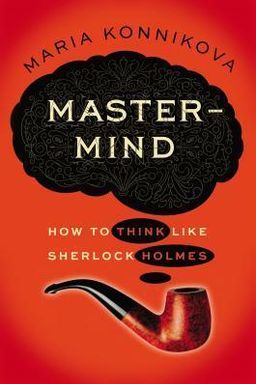
What separates ordinary perception from extraordinary insight? In Mastermind: How to Think Like Sherlock Holmes, Maria Konnikova argues that Holmes’s legendary reasoning isn’t magic—it’s mindfulness, method, and motivated practice applied to everyday thought. You already have Holmes’s mental equipment; the difference lies in how you use it. Most of us rush through life in "System Watson," our fast, trusting mode of thought. Holmes trains himself to engage "System Holmes," the slower, self-aware, and deliberate system that questions every impression before accepting it.
Konnikova blends psychology, neuroscience, and detective lore to teach you how to notice more, remember better, reason scientifically, and use imagination productively. Holmes’s habit of observation, his disciplined curiosity, and his reflective attention form the foundation of this approach. The book’s goal is practical: you can cultivate Holmes’s habits to think more clearly, make better decisions, and live with greater awareness.
From Seeing to Observing
Konnikova opens with the difference between seeing and observing. As Holmes tells Watson, “You see, but you do not observe.” Passive seeing fills your senses but leaves your mind asleep. Observation, by contrast, is active attention: you define a goal, select facts deliberately, and note relationships among them. This is mindfulness in action—attention directed with purpose. Modern research backs Holmes up: Ellen Langer’s mindfulness studies show that mindful awareness doesn’t just change how you notice—it shifts how you feel, decide, and remember.
The Two Minds Within You
Holmes and Watson personify the two systems of thought described by psychologists Daniel Kahneman and Keith Stanovich. System Watson is fast, emotional, and efficient—it helps you survive but also blinds you to nuance. System Holmes is slow and analytic; it double-checks first impressions and demands evidence. You must train System Watson through repeated feedback so that, under pressure, it increasingly acts like Holmes. Ericsson’s research on deliberate practice shows exactly this transformation: intuition is nothing mystical—it is the product of thousands of refined feedback cycles.
The Brain Attic: Managing Memory
Holmes’s “brain attic” is his metaphor for memory management. You can’t store every fact; you must curate and organize what matters. The attic has two parts—structure (how you encode and retrieve) and contents (what you store). Encoding is shaped by motivation: you remember what you care about in the moment. By labeling facts, linking them to what you know, and reviewing them through storytelling or explanation, you strengthen your attic’s organization. Retrieval is reconstructive, not photographic—every time you recall, you rebuild. Holmes’s attic stays usable because he maintains it daily, cleaning and indexing as he goes.
Attention as a Trainable Resource
Holmes’s sharp observation rests on scarce cognitive fuel: attention. Experiments by Ulric Neisser and Daniel Simons show that focus on one thing can make you blind to glaring changes (the famous “invisible gorilla”). Konnikova emphasizes training attention like a muscle—through meditation, deliberate observation, and rest cycles. Baumeister’s work on self-control parallels this: attention fatigues but can grow stronger with disciplined use. Holmes’s pipe or violin are not quirks—they are attentional resets that sustain his observation power.
Imagination, Distance, and Insight
After observing, Holmes allows imagination to recombine the facts. Konnikova insists this step is as scientific as reasoning itself: imagination generates hypotheses to test. Psychological distance—temporal, spatial, or emotional—opens mental space for creative connection. Holmes’s three-pipe problems dramatize incubation; while his conscious mind relaxes, associative networks continue working. Neuroscience confirms this rhythm: bursts in the right anterior temporal lobe precede “Aha!” moments, linking remote ideas into insight. Meditation, walking, or focused music encourage this incubation network, letting suppressed associations surface.
Bias, Priming, and Environmental Influence
Context quietly sculpts thought. Weather, accents, and even background cues prime emotional and cognitive responses without awareness. Konnikova cites studies where sunny weather increases optimism and physical warmth shapes social judgments. Holmes counters such priming by maintaining situational awareness: recognizing cues, questioning their relevance, and discounting or controlling for them. You can do the same. When you feel a strong impression, pause and ask if it stems from the object or the context. That single question curtails many biases.
A Scientific Method for Everyday Thinking
Holmes lives by a method. He gathers evidence first, generates multiple hypotheses, tests them, and updates his conclusions. In Arthur Conan Doyle’s real-world Edalji case, that discipline exposed a wrongful conviction. The process—observe, hypothesize, test, revise—is scientific reasoning applied to daily life. Observation begins every inquiry; imagination proposes; deduction checks. It’s not deductive theatrics, but a habit of structured curiosity that anyone can adopt.
Sustaining Expertise and Humility
Holmes’s mastery remains alive because he keeps learning and teaching. Practice turns deliberate steps into automatic habits—but automation invites boredom and blind spots. Overconfidence becomes the late-stage danger. Holmes himself admits this after his “Norbury” error. The safeguard is reflection: externalize your reasoning, teach others, and use accountability partners (your own Watson) to check hubris. Neuroplasticity guarantees that even late in life, you can sharpen your attic if you keep stretching.
Holmes’s Core Lesson
Thinking like Holmes means controlling attention, organizing memory, questioning context, and blending logic with imagination. The result isn’t detachment but awareness: a way of seeing the world with both precision and wonder.