
Idea 1
Mastering Executive Transitions in a High-Stakes World
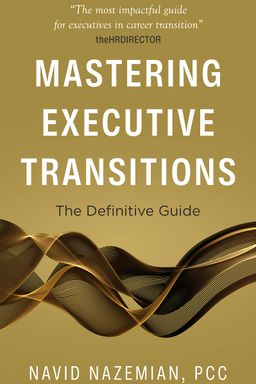
What happens when you finally land that top executive role you've dreamed about—and then discover the real challenge has just begun? In Mastering Executive Transitions, Navid Nazemian offers a compelling and deeply practical guide for leaders navigating the hidden turbulence of moving into or out of senior leadership roles. Drawing from two and a half decades of executive experience across multiple countries and industries, Nazemian argues that the way leaders enter and exit their positions often determines their ultimate success far more than intelligence or technical skill.
Why Transitions Matter More Than Ever
Transition periods are deceptively dangerous. Nazemian shares sobering data: roughly 40 percent of executives fail, are pushed out, or quit within their first 18 months. Despite the high costs of failure—both human and financial—most organizations still invest almost everything in the hiring phase and leave new executives to sink or swim once they start. The imbalance is stark: about 90 percent of hiring costs go to recruitment, while only 10 percent—or less—is devoted to onboarding and integration support. The paradox, he notes, is that leadership transitions are among the most predictable events in corporate life yet remain among the least managed.
In an era of rapid disruption—the so-called “Great Resignation,” accelerated digital transformation, and cascading executive turnovers—transitions have become more frequent and more complex. CEOs are reshuffling management teams faster, and every leadership change creates a domino effect through the organization. Without structured support, even the brightest leaders struggle in a new environment marked by conflicting expectations, complex stakeholders, and unspoken cultural rules.
Beyond the Myth of the Smart Executive
Nazemian challenges a pervasive myth: that smart executives will naturally figure it out. “What got you here won’t get you there,” Marshall Goldsmith once warned, and Nazemian fully agrees. He explains that leadership success in one environment rarely guarantees success in another. Each transition involves learning new cultural codes, political dynamics, and stakeholder networks. Many executives assume autonomy and overconfidence will compensate for lack of structured onboarding—until they collide with misaligned expectations or inherited teams with hidden resistance.
His “triple-lens” perspective—as a corporate leader, HR professional, and executive coach—shows that transitions are not just about surviving the first hundred days. They are about reshaping leadership identity while recharging emotional and mental energy. The challenge is as psychological as it is procedural. Executives often underestimate how draining transitions can be, facing stress levels comparable to divorce or severe illness. Nazemian likens the process to a roller coaster—a thrilling but exhausting ride of euphoria, setbacks, political landmines, and self-doubt.
The Missing Link: Executive Transition Coaching
Unlike traditional leadership development, executive transition coaching is proactive, structured, and time-bound. The goal isn’t just self-awareness but rapid effectiveness. Nazemian distinguishes three roles: leadership development coaches look backward to address behavioral gaps; transition advisers plan short-term strategies for new roles; but executive transition coaches integrate both, focusing on acceleration and longevity. Coaching before day one—so-called “pre-boarding”—is particularly impactful. Starting support early allows executives to understand their context, key stakeholders, and cultural nuances before their first day.
Nazemian shares a case study of “Natalie,” a newly appointed global C-suite leader inheriting a disrupted team and complex matrix organization. Through structured pre-boarding, stakeholder mapping, and leadership team assimilation, she navigated political pitfalls, reset ground rules, and achieved early wins. Her experience illustrates the book’s central promise: when transitions are handled intentionally and with tailored support, productivity doubles and failure risk drops by half.
The Framework to Thrive, Not Just Survive
The heart of the book culminates in Nazemian’s “Double Diamond Framework”—a seven-phase model guiding executives from discovery to mastery. Inspired by design thinking, it acknowledges that transitions are iterative, requiring both divergence (exploring context) and convergence (driving focused execution). The phases—Discover, Immerse, Adapt, Mobilize, Operate, Nourish, and Develop—map the arc from pre-entry preparation to the final legacy one leaves behind. Each stage blends reflection, structured action, and stakeholder engagement, helping executives converge rapidly on high-impact priorities while maintaining personal energy and resilience.
The book also tackles what few guidebooks do: the art of transitioning out. Nazemian argues that the last 90–120 days of an executive’s tenure are just as critical as the first. Departing leaders shape culture and continuity—yet this phase is nearly ignored in management literature. He offers practical questions for self-reflection during one’s final months to ensure a leadership legacy that endures long after departure.
Why This Book Matters
Ultimately, Mastering Executive Transitions is both a cautionary tale and a toolbox. For organizations, it’s a wake-up call to treat onboarding as a strategic investment, not an administrative afterthought. For executives, it’s a roadmap to protecting reputation, well-being, and contribution during the most vulnerable yet transformative career moments. Nazemian’s blend of research, case stories, and empathy positions the book as a definitive modern guide for anyone stepping into a bigger arena of leadership.