
Idea 1
Mastering Communication: The Core Skill of Leadership
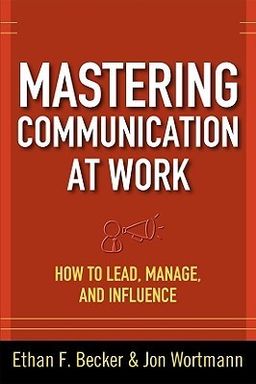
How can you speak and lead in a way that people not only hear you but want to follow you? In Mastering Communication at Work: How to Lead, Manage, and Influence, Ethan F. Becker and Jon Wortmann argue that the ability to communicate—clearly, persuasively, and empathetically—is the defining skill that separates strong leaders from struggling ones. Communication, they claim, is not a soft skill; it is a measurable, trainable, and essential capability that determines both individual and organizational success.
Modern workplaces are flooded with data, clouded by virtual interactions, and divided by diverse communication styles. Becker and Wortmann contend that leaders who can adapt their words, tone, and delivery to different contexts—whether motivating a team, giving feedback, or defusing defensiveness—gain an exponential advantage. The authors ground their method in Aristotle’s classical rhetoric and five decades of communication coaching at the Speech Improvement Company, offering practical frameworks that transform vague advice about “better communication” into learnable techniques.
Across the book, Becker and Wortmann introduce a coherent system: six core techniques that sharpen how you talk and listen, six recurring moments that require leadership excellence (like meetings, delegation, and feedback), and a roadmap for building a culture of communication in your organization. Each concept rests on one powerful idea—communication is behavior. You can measure it, refine it, and practice it until clarity becomes instinct.
Why Communication Is Every Leader’s Currency
The authors open with a simple but profound truth: communication is the ultimate multiplier in business. Even the best ideas fail if you can’t make others understand or care. Becker writes that leaders who “treat communication as seriously as money” outperform those who improvise. This isn’t about charisma—it’s about discipline. Leaders who intentionally plan their messaging and adapt to their audience’s needs are trusted, followed, and remembered. Those who don’t often waste time repairing misunderstandings and rebuilding broken confidence. The book challenges readers to quantify communication’s cost and value in daily life—how many hours are lost to poorly run meetings or unclear directions?
In an era of digital overload and hybrid workplaces, this argument matters more than ever. The authors remind us that while technology changes, human psychology does not. The ancient lessons of Aristotle—ethos (credibility), logos (reason), and pathos (emotion)—still anchor every effective interaction. A strong communicator motivates not by authority but by authenticity. They establish trust, frame ideas strategically, speak to people’s values, and validate contributions so others feel seen and respected. The book insists these are not talents you’re born with; they are habits anyone can master.
The Structure of the Mastery System
The book divides into three sections. The first teaches six techniques that form a complete communication toolbox:
- Match your listener’s tendency (adapting to inductive or deductive thinking)
- Manage your ethos (projecting credibility)
- Speak to motivate (understanding emotional, logical, and status-based drives)
- Frame (setting expectations through intentional language)
- Validate (making people feel valued)
- Add color (using tone, pace, and silence effectively)
The second section applies these methods to the key leadership moments: handling defensiveness, running meetings, delegating, giving feedback, presenting, and conducting interviews. In each, the authors share scripts, real-world examples from executives, and corrective strategies for common communication failures. The format is hands-on; readers are invited to practice drills, measure progress, and adjust their approach.
Finally, the third section expands the focus to organizational communication culture. As workplaces shift to virtual and hybrid settings, leaders must design systems for authentic connection. Becker and Wortmann explore how to lead video meetings with presence, sustain trust remotely, and institutionalize communication as a hard skill—learned, measured, and rewarded, just like technical expertise. They close with examples from Google, Harvard Business School, and even the White House, showing how intentional dialogue drives innovation and engagement.
Why This Book Matters
At heart, Mastering Communication at Work is a leadership manual disguised as a communication book. It argues that you can’t manage performance, motivate teams, or earn loyalty without mastering how your messages land. Unlike typical public speaking guides, it’s less about presentation polish and more about daily influence—the way you email, listen, clarify, and respond under pressure. The authors’ mix of science, Aristotle’s wisdom, and decades of coaching experience turns communication from an abstract virtue into a deliberate craft you can practice at your desk every day.
By the end, you see communication not just as a tool but as your most valuable leadership habit: the art of aligning your intent with others’ understanding. Master that, Becker and Wortmann suggest, and you won’t just be heard—you’ll be followed.