
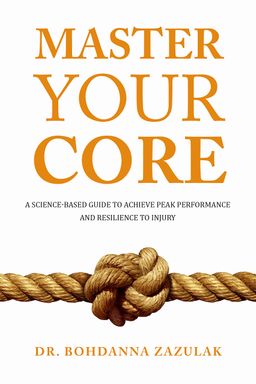
Master Your Core cover

Master Your Core

by Bohdanna Zazulak

Master Your Core offers a comprehensive guide to achieving peak physical performance and resilience against injuries. By combining scientific insights with practical exercises, it empowers you to strengthen your core, improve your mood, and enhance your overall well-being.

Mastering Your Core: The Foundation for Lifelong Strength and Wellness

Have you ever wondered why some people move through life with effortless balance, radiant energy, and resilience—while others seem constantly sidelined by pain, fatigue, or injury? In Master Your Core, Dr. Bohdanna Zazulak, a Yale-educated physical therapist and award-winning researcher, argues that the secret lies not in sculpted abs or a rigid workout routine, but in mastering the true core—your integrated center of physical, mental, and spiritual wellbeing. Drawing on three decades of scientific research, Zazulak contends that core empowerment is the key to preventing injuries, unlocking peak performance, and cultivating holistic wellness. But achieving this mastery requires more than sit-ups—it demands a mind-body-spirit connection that transforms how you move, think, breathe, and live.

The author’s argument is clear: most injuries, chronic pain, and fatigue stem from an unstable, uncoordinated core. Just like a building cannot stand without a solid foundation, your body’s stability and vitality depend on the harmony between your inner core (deep stabilizing muscles and nervous system control) and your outer self (movement, mindset, and emotional resilience). Through her research at Yale and clinical work with athletes and everyday patients alike, Zazulak discovered groundbreaking evidence that core instability predicts injury, while core training dramatically reduces it. The goal of her program—The Core BASE Guide—is to help you build Breathing, Awareness, Stability, and Empowerment (the four pillars of lasting core strength).

From Six-Packs to Science: Rethinking the Core

Forget endless crunches. Zazulak reveals that the ‘core’ isn’t just your abs—it’s an intricate network of 35 muscles that form your body’s central powerhouse, including the spine, pelvis, diaphragm, and pelvic floor. These are the muscles that stabilize you when you stumble, hold you upright when you sit, and allow fluid motion when you run or dance. The true power of the core lies in its stability and control, not appearance. She contrasts the Western obsession with visible muscle tone with the ancient Eastern understanding of the body as a mind-body-spirit organism, integrating yogic breathing, meditation, and movement for inner balance long before modern science proved their benefits.

The Injury Epidemic and the Promise of Prevention

Each year, over 100,000 ACL surgeries are performed in the U.S. alone, many for injuries that could be avoided through core training. Zazulak uses vivid examples—from NFL star Terrell Davis to Olympic champions—to illustrate how poor core control can destroy an athlete’s career. Her research also uncovered an alarming disparity between the sexes: women are four to six times more likely to suffer devastating knee injuries, a difference rooted in anatomy, hormones, and neuromuscular control. Yet the encouraging news is that these vulnerabilities aren’t destiny; they can be mitigated through training programs that target the mind-core connection.

The Core BASE: A Roadmap for Mind-Body-Spirit Integration

Zazulak’s Core BASE methodology—Breathing, Awareness, Stability, and Empowerment—guides readers from physical basics to full integration. You begin by retraining the breath to activate deep inner muscles, then cultivate awareness of posture and proprioception, develop stability through scientifically-proven movements, and finally reach empowerment by integrating holistic practices like yoga, Pilates, meditation, and play. This four-phase approach is both anatomical and emotional: strengthening the diaphragm, glutes, and pelvic floor while also expanding mental resilience and spiritual calm.

Why It Matters

Beyond preventing injuries, core empowerment transforms daily life. It improves posture, reduces stress and back pain, enhances vitality, fosters confidence, and even boosts immune and heart health. By empowering your core, you don’t just build strength—you develop awareness, serenity, and longevity. As Zazulak writes, this is not another 30-day workout challenge; it’s a lifelong reprogramming of body and mind to achieve harmony and resilience. Whether you’re an athlete, a parent, or simply tired of discomfort, this book offers a scientific yet soulful pathway to flourishing from within.


Core Stability: The Science of Movement and Control

Dr. Zazulak begins by dismantling myths about the core. Most people think it’s all about strong abs, but scientifically, it’s your trunk—the musculature of your spine, abdomen, pelvis, and hips—that governs every movement you make. The victory isn’t in how many sit-ups you can do, but in how precisely you can control your center when you move, twist, or stumble. Her research defines core stability as “the foundation of dynamic trunk control that allows production, transfer, and control of force and motion to distal segments of the body.” In layman’s terms: the core generates and manages the energy that animates your every action.

Your Hardware and Software

The body’s stability depends on both its hardware (muscles, bones, joints) and its software (nervous system). Your inner core—made up of the diaphragm, pelvic floor, transversus abdominis, and multifidus—works quietly to stabilize your spine before any major motion. Meanwhile, your outer, or global, muscles—your abs, obliques, and glutes—create visible power and movement. When the inner and outer systems communicate efficiently, you move with agility and grace. But when the software falters, such as from bad posture or stress, the hardware can’t adapt in time—and injuries happen.

Proprioception and Core Awareness

A major insight from the author’s Yale studies is that injury risk increases when proprioception falters. Proprioception—your “sixth sense”—is the ability to sense where your body is in space without looking. You use it when walking in the dark or catching a ball. The book describes real-life lab experiments where athletes with poor core proprioception were more likely to suffer knee injuries. Through exercises like the simple “Trunk Twist Test”—closing your eyes and trying to return to your original position after twisting—readers can measure and improve this essential awareness.

Reactive Stability and Real-Life Application

Every stumble or bump triggers a cascade of neuromuscular responses. The author explains “feed-forward” control (your body anticipating movement) and “feedback” control (your body reacting to unexpected force). Both are vital for everyday activities like walking on uneven ground or regaining balance when someone brushes past you in a crowd. Zazulak’s analogy of the marionette captures it well: your brain is the puppet master, and your nerves are the strings controlling every joint. When one string is slack, the whole system collapses. Her takeaway: stability isn’t stiffness; it’s dynamic adaptability—being supple, not rigid, under pressure.


Gender, Anatomy, and Injury

One of the boldest contributions in Master Your Core is its exploration of why women suffer more core-related and ACL injuries than men. Zazulak does not frame this as weakness but as physiology and opportunity. She traces her inspiration back to her mother’s story—a girl once shamed for riding a bicycle—and links female athletic empowerment directly to equality, biology, and prevention science. The key message: women’s bodies are amazing, but they must be trained for resilience in harmony with anatomy and hormonal cycles, not against them.

Anatomical and Hormonal Realities

Women have wider pelvises, narrower ligaments, and greater joint laxity for reproductive reasons. During puberty, hormonal shifts alter balance, flexibility, and coordination. Estrogen and relaxin loosen ligaments, sometimes compromising joint control. For years, these factors were blamed for high injury rates—but Zazulak’s landmark research showed that the real issue isn’t hormones themselves; it’s how they influence neuromuscular control. The great news is that coordination, proprioception, and strength are trainable. You can’t change your hormones, but you can change how your muscles and nerves respond to them.

Mind-Body and Psychological Health

The author also dives into psychological resilience. Depression, fear, or anxiety—more common among female athletes—can subtly undermine core performance by tightening breathing patterns and disrupting neuromuscular coordination. Through mindfulness, meditation, and confident body awareness, women can become both physically and mentally more stable. Zazulak describes these qualities as “core resilience”—a blend of mental flexibility and inner strength that keeps you upright through emotional and physical turbulence.


Breathing as the Engine of Strength

Most people undervalue breathing. For Zazulak, it’s the invisible spark of core activation. The diaphragm, she writes, is not just a breathing muscle—it’s the roof of your core. When you breathe deeply and fully, your diaphragm, pelvic floor, and abdominal walls synchronize to form a pressurized cylinder of stability. Shallow breath from stress or poor posture interrupts this harmony, leading to fatigue and back pain.

Diaphragmatic Mechanics

To retrain your breath, you must first learn to breathe from the belly, not the chest. Place one hand on your chest and one on your abdomen; the lower hand should rise first. The author cites studies showing that slow, diaphragmatic breathing—4 to 10 breaths per minute—reduces inflammation and activates core musculature more effectively than typical shallow breathing. Her mantra: “Blow as you go.” Exhaling during exertion pre-activates the inner core, engaging the transversus abdominis before movement.

Breathing as Meditation

Through breath control, you can recalibrate your nervous system. Long exhalations trigger the vagus nerve—your body’s relaxation switch—slowing the heart rate and calming anxiety. Zazulak intertwines modern physiology with ancient wisdom, echoing yoga’s pranayama and mindfulness practices. Deep breathing not only builds stronger muscles but also reprograms your software for calm and control, making it the first step toward mastery of your core and mind alike.


Mind-Core Connection and Meditation

To strengthen your body, you must also train your brain. Zazulak’s Mind-Core Connection chapter fuses neuroscience with spirituality. She explains neuroplasticity—the brain’s ability to rewire throughout life—and how meditation and visualization create engrams, or mental models of movement, that translate into physical coordination. When you train your core consciously, you’re literally changing your brain.

Three Forms of Meditation

Zazulak outlines three practices: Focused Attention Meditation (FAM) for concentration and proprioception; Open Monitoring Meditation (OMM) for relaxed, nonjudgmental awareness; and Transcendental Meditation (TM) for deep connection and clarity. Each corresponds to stages of physical training—focus, flow, and transcendence. She illustrates their benefits through patient stories, such as Jessica, a woman who healed from a catastrophic knee injury through breath-centered mindfulness and visualization of recovery.

The Science of Gratitude and Thought

Positive self-talk, gratitude, and body awareness accelerate healing. According to recent brain imaging studies (many cited in the book’s references), meditation increases gray matter density and improves emotional regulation. It also enhances proprioceptive accuracy—meaning you literally get better at feeling where your body is and how it moves. This is why mindfulness isn’t just spiritual fluff—it’s functional training for your nervous system that hardens your resilience from the inside out.


The Heart-Core Connection

The author introduces a fascinating view of the connection between cardiovascular health and core function. The diaphragm’s fibers attach to the pericardium (the sac around the heart), meaning every breath literally massages your heart. Movement of the diaphragm improves circulation, balances blood pressure, and lowers stress hormones. Zazulak’s takeaway: a healthy core equals a healthy heart.

Exercising Smart, Not Hard

She warns against the “no pain, no gain” mindset. Elite endurance athletes improve by training mostly in the moderate “green zone,” not at maximum output. Excess strain increases heart risk and injury rates. The sweet spot is 50–70% of your maximum heart rate for aerobic fitness, combined with occasional bursts of intensity. Simple tests—like being able to talk during exercise—can gauge if you’re in the safe range. This moderate, mindful approach emphasizes longevity over extremism.

The Vagus Nerve: Your Relaxation Superhighway

The vagus nerve, or “wandering nerve,” connects brain to body, controlling your heartbeat, digestion, and emotional calm. You can strengthen it through breathing, humming, cold exposure, and laughter. These activities literally “tone” your nervous system, lowering inflammation and improving mental clarity. Zazulak connects this science to spiritual wisdom—serenity isn’t passive; it’s trained self-regulation through the mind-core-heart axis.


Holistic Nourishment and Self-Recovery

Empowering your core requires feeding it—physically, mentally, and spiritually. Zazulak explores nutrition, hydration, rest, and self-care as integral to core health. Genetics, she reminds us, are not destiny. Through lifestyle choices—what you eat, think, and feel—you can change how your DNA functions, a field known as epigenetics. You inherit potential, but nurture decides whether it blooms.

High-Grade Fuel and Hydration

Your core musculature requires clean fuel: primarily whole, unprocessed plant-based foods rich in antioxidants and healthy fats. Water, too, is key—the body is 60% water, and even mild dehydration weakens muscle endurance and mental focus. Women should aim for 11.5 cups of water daily, men about 15.5. Hydration keeps fascia supple and discs resilient, sustaining your spine’s shock absorbers.

Rest, Recovery, and Sleep

Overtraining distracts healing and destabilizes your core. Zazulak cites studies confirming that sleep regenerates muscle tissue, consolidates neuromuscular learning, and even clears toxins from the brain. “Your night crew,” she writes, “recharges everything you trained during the day.” To restore mind-body balance, she advocates unplugging from technology, napping, mindfulness, and creating restful rituals at bedtime instead of blue-lit scrolling.


The Floor of the Core: Pelvic Stability and Power

In one of the book’s most actionable chapters, Zazulak highlights the pelvic floor—the foundation of your core. Often overlooked, it forms a muscular hammock supporting internal organs. Weakness leads to back pain, incontinence, prolapse, and poor posture. For both men and women, retraining it is crucial for balance, breath, and even sexual health.

Mindful Activation

Deep breathing with pelvic awareness strengthens the “core floor.” On inhalation, the diaphragm descends and the pelvic muscles lengthen; on exhalation, they rise and tighten. This coordinated rhythm stabilizes your trunk. The author introduces exercises like “Ocean Breathing,” “Lion’s Breath,” and “Core Floor Toning,” integrating yoga-like mindfulness with anatomy-based training.

Relaxation Matters

Zazulak cautions against over-clenching—too much tension in the pelvic floor creates just as many issues as weakness. True strength alternates between contraction and release. She even explains the fascinating jaw-pelvis link: when one tightens, the other often does too. Relaxing your jaw can help ease pelvic tension, a concept supported by modern fascia research. As she reminds readers, “Don’t just tighten—enlighten.”


Empowerment Through Movement and Joy

The final stage of core mastery is empowerment—living from your center through joyful activity. Zazulak encourages you to find physical practices that uplift your spirit as they strengthen your body: yoga for balance, Pilates for precision, martial arts for grounding, dance for expression, music for flow, laughter for vibration, and time in nature for connection. Each of these activities integrates movement, breath, and emotion, uniting the body’s kinetic power with inner peace.

Play as Medicine

Playfulness, she insists, is not frivolous—it’s medicine. Laughter engages the diaphragm and obliques, releasing endorphins and strengthening core control. Singing or humming stimulates the vagus nerve. Dancing stimulates coordination and balance, while outdoor activities like surfing, hiking, or skiing awaken adaptive core stability on unpredictable terrain. “Blessed are the flexible,” she writes, “for they shall not be bent out of shape.”

Empowering Future Generations

Core empowerment begins in childhood. Encouraging kids to climb, jump, balance, and explore builds confidence, proprioception, and resilience. Zazulak’s vision extends beyond fitness—it’s a blueprint for a global culture that values holistic movement, equal opportunity, and health for all. By nurturing our cores, we strengthen our communities, one person at a time.

Dig Deeper

Get personalized prompts to apply these lessons to your life and deepen your understanding.

Go Deeper

Get the Full Experience

Download Insight Books for AI-powered reflections, quizzes, and more.