
Idea 1
Faith, Conscience, and the Making of Modern Europe
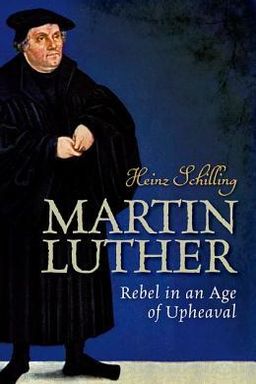
What happens when one man’s spiritual crisis reshapes a continent? In this synthesis of the life and thought of Martin Luther, you trace how an anxious young monk’s struggle for salvation ignited the Reformation and altered the cultural, political, and moral fabric of Europe. The book’s central argument is that Luther’s revolution was not simply theological—it was institutional, cultural, and psychological: a shift from a world mediated through priests and works to one transformed by inner faith, vernacular Scripture, and conscience freed before God.
Formation and Inner Conflict
Luther’s childhood in a prosperous Mansfeld mining family, his education in Erfurt’s mix of scholasticism and humanism, and the famous Stotternheim thunderstorm all plant the seeds of a restless conscience. His entry into the Augustinian monastery in 1505 channels both fear and ambition into a disciplined search for peace with God. His mentor, Johannes von Staupitz, reorients him away from moral self-purification toward the wounded Christ—a change that prepares the ground for his doctrine of justification by faith.
From Personal Struggle to Public Challenge
When Luther confronts indulgence preaching in 1517, theology meets technology. The Ninety-Five Theses, written as an academic query, erupt into Europe’s first media revolution as printers reproduce them across German territories. Early humanist networks amplify his critique, while the curia, legates, and universities scramble to contain it. Augsburg, Leipzig, and the Diet of Worms show how a dispute over sin and grace evolves into a question of authority: who rules Christian truth—Scripture, councils, or pope?
The drama of 1521, culminating in Worms and his defiant stance before Emperor Charles V, captures the birth of the modern conscience: an individual claiming the right to stand by interpretation, not institution. Frederick the Wise’s calculated protection and the Empire’s political fragmentation allow the Reformation to survive its founder’s condemnation.
Ideas that Reshape Europe
Luther’s key doctrines—sola fide (faith alone), sola scriptura (Scripture alone), and the priesthood of all believers—dismantle the late medieval system that bound people to external acts and clerical mediation. His 1520 treatises reconceive church and state alike: temporal rulers become reforming agents in their territories, while sacraments return to scriptural simplicity. Wittenberg becomes the nerve center of print, art, and reform, supported by Cranach’s engravings and the emerging vernacular Bible. The Reformation thus becomes a collaboration between theologians, printers, and princes.
Isolation, Translation, and Institutional Vision
Exile in Wartburg turns Luther from agitator to builder. Disguised as Junker Jörg, he translates the New Testament into clear German, helping forge a shared national language and democratizing access to Scripture. He also outlines practical reforms—liturgies, catechisms, and church orders—that knit biblical principles into the fabric of civic life. Meanwhile, allies like Melanchthon and Bugenhagen devise schooling systems, visitations, and church regulations, transforming communal reform into territorial organization.
Tensions and Consequences
Luther aims for liberty of the Gospel, but his doctrine of two kingdoms forces a delicate balance between conscience and politics. He forbids armed rebellion yet blesses state coercion to defend peace. This stance alienates radicals like Karlstadt and Thomas Müntzer, whose Peasants’ War devastates central Germany. His refusal of violence preserves the Gospel from becoming social revolution, yet it brands him with harshness against the poor.
By the 1530s the movement must organize defenses—the Schmalkaldic League, juristic counsel from Wittenberg, and the political theology that legitimizes resistance within legal limits. Melanchthon’s Confession of Augsburg (1530) crystallizes theology into constitutional form, and the Reformation turns from experiment into confessional system.
Culture, Household, and Legacy
Luther’s home with Katharina von Bora models Protestant marriage as vocation; his hymns and catechisms turn doctrine into song and daily teaching. Yet age brings disillusionment: violent words against Jews and fury toward Anabaptists stain his legacy. His final months in Mansfeld, mediating local disputes, and his peaceful death in 1546 close the circle of a reformer who began and ended as pastor.
The book’s core insight is that the Reformation’s power lay not just in doctrine but in form: in printed word, music, language, and law. Luther’s spiritual breakthrough bonds with Europe’s first media revolution and with a political world hungry for autonomy. Out of this convergence comes the birth of conscience, the vernacular Bible, and the modern state—the enduring legacy of one monk who made the Word public.