
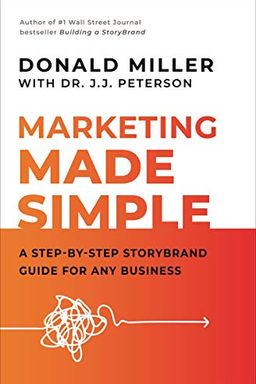
Marketing Made Simple cover

Marketing Made Simple

by Donald Miller

Marketing Made Simple is your roadmap to mastering the art of marketing. This step-by-step guide reveals a five-point plan to draw in new customers and transform your business. Learn how to captivate your audience, craft compelling value propositions, and create a seamless sales funnel that turns interest into action.

Becoming a Value-Driven Professional

What if your worth in the workplace wasn’t defined by degrees or job titles, but by the tangible value you bring to every organization you touch? Donald Miller’s Business Made Simple asks that audacious question and offers a sixty-day roadmap to answer it. The book is framed around a single promise: you don’t need an expensive MBA to master business. You just need clarity, character, and the ability to make and save money for your company. If you can do that, you’ll become what Miller calls a Value-Driven Professional—someone any organization would proudly invest in.

A Radical Rethink of Business Education

Miller opens with a powerful parable: two candidates competing for a promotion. One has a prestigious degree and passion; the other understands how to lead, sell, negotiate, and execute. Guess who wins? It’s the second candidate because they know how business actually works. Throughout the book, Miller argues that traditional education overvalues theory and underteaches the skills that make real businesses grow. Instead of studying case studies of toothpaste ads, students should be learning to manage teams, launch products, and drive profit.

His mission is clear: democratize business knowledge. Through short, actionable lessons—each reinforced by videos and exercises—he promises to give readers a practical business education in 60 days. Each chapter is structured as a mini masterclass on one of the ten universal competencies of business mastery, from leadership to execution.

The Two Pillars: Character and Competence

Before Miller talks strategy, he insists on character. No skill can outpace bad character. You can know every productivity hack in the world, but if you create drama, avoid conflict, or play the victim, you’ll undermine your company and yourself. The first half of the book dives into ten lessons that shape a strong professional identity—from seeing yourself as an economic product to cultivating a growth mindset. Each trait is illustrated with engaging short stories from Miller’s life and well-known leaders.

The second half moves from mindset to execution. Once you think like a value-driven professional, you must act like one. That means building a clear mission, setting measurable goals, understanding business mechanics, and translating those ideas into sales and marketing systems. This pragmatic focus on “what actually drives revenue and morale” distinguishes the book from traditional business self-help titles (similar in tone to The Personal MBA by Josh Kaufman, but livelier and far more structured).

Why These Ideas Matter in Today’s Economy

Miller’s philosophy is born from urgency: the world is crowded with talented but unfocused professionals who mistake passion for performance. In a globalized environment—where others can do the same work faster, cheaper, and more eagerly—the only safe career path is to become a great investment for others. This, he explains, requires thinking like a business owner even if you aren’t one.

Being a terrific investment means you deliver returns: you save your company money, manage resources wisely, and reduce friction. You lead with clarity, market and sell ideas effectively, and handle challenges with calm precision. It’s a shift away from entitlement and toward strategic contribution. Every activity, from client calls to internal meetings, becomes a chance to increase your “economic ROI.”

From Apprentice to Architect

Across eleven chapters, Miller builds a business curriculum that scales from individual to organizational excellence. You’ll start by mastering yourself—through productivity, optimism, and growth—and end by mastering systems that drive whole teams. Each chapter follows a similar rhythm: a story, a framework, and a “Tip of the Day.” This repetition reinforces daily learning and mimics the structure of habit formation.

Ultimately, Miller’s message is both professional and philosophical: your career is your business. You are not an employee; you are an enterprise of one. When you start to see every task through that lens, you’ll naturally become indispensable. Business Made Simple is less about corporate tactics and more about cultivating mastery over your time, behavior, and results. It teaches you to become the person who, in any room or meeting, others instinctively know they can bet on. That’s the essence of being a Value-Driven Professional—and, in Miller’s view, the ultimate strategy for freedom, wealth, and meaning in modern work.


The Ten Traits of a Value-Driven Professional

Miller begins with the foundation: who you are matters more than what you know. Before diving into sales or leadership, he spends ten days shaping the mindset that supports every business success. These aren’t vague moral platitudes; they’re practical habits that predict professional excellence.

1. See Yourself as an Economic Product

Miller argues that professionals must “think like assets.” You are not merely an employee—you are an investment. Your duty is to deliver a measurable return on that investment. He even quantifies it: a company that pays you $50,000 should earn at least $250,000 in value from your work to stay profitable. This reframes work from “doing tasks” to “creating returns.”

2. Be the Hero, Not the Victim

Success starts with personal agency. Miller recounts how his mother, after years of struggle, went back to school in her fifties to show her children the power of resilience. Victims wait for rescue; heroes rise despite odds. Every challenge—an unfair boss, a missed opportunity—is a chance to prove strength and integrity.

3. De-escalate Drama

True professionals calm storms instead of feeding them. Drama drains energy and trust. Miller cites astronaut Neil Armstrong’s unflappable composure as a model—reacting slightly below the level of the situation rather than above it. That self-control builds credibility and followership.

4. See Feedback as a Gift

Children crave unconditional praise; adults grow through constructive critique. Miller’s company holds regular stand-up reviews where employees are coached weekly and compensated annually based on measurable improvement—a cycle inspired by Andy Grove’s High Output Management. Feedback, when used, becomes your secret productivity weapon.

5–10. Traits of Maturity and Momentum

  • Engage Conflict Productively—progress always passes through tension.
  • Desire Respect Over Being Liked—clarity and accountability matter more than approval.
  • Have a Bias Toward Action—ideas only count when executed.
  • Don’t Choose Confusion—uncertainty often masks fear or avoidance; act decisively.
  • Stay Relentlessly Optimistic—optimism fuels perseverance and resilience.
  • Maintain a Growth Mindset—believe you can evolve through effort and learning.

Together, these traits redefine professionalism as a daily discipline, not a job description. They prepare you to handle both success and adversity with composure, maturity, and measurable results.


Leadership Made Simple: Crafting a Mission and Guiding Principles

For Miller, leadership is storytelling applied to real life. Great leaders, he writes, do three things daily: invite their team into a story, explain why that story matters, and assign each person an essential role. Leadership, therefore, is not about titles—it’s about narrative clarity.

Writing a Mission that Moves People

Forget corporate jargon. If William Wallace couldn’t shout your mission statement from horseback, it’s too dull. A real mission should be short, emotional, and tied to a cause. Miller offers a simple formula: We will accomplish [goal] by [strategy] because [reason]. For example, “We will serve 10,000 customers in five years because everyone deserves plumbing that works.”

Defining Key Characteristics and Actions

Once a mission is clear, a leader must define who the team must become to achieve it. Miller differentiates aspirational traits (the people we need to become) from instructive traits (how we act now). For a restaurant, being “fun under pressure” is both—it sets a tone and provides behavioral clarity. Then, every team member should know their three critical actions—daily, repeatable behaviors that advance the mission.

Telling the Story and Explaining the “Why”

People don’t follow history; they follow stories. Miller advises leaders to frame their organization’s story around a problem, a struggle, and a victorious resolution. The key is emotional connection: explain who the “villain” is (the injustice your brand or team fights) and make the mission an act of counterattack. Finally, leaders must define their theme—the “why” that gives purpose. For Business Made Simple, that theme is “everyone deserves a life-changing business education.”

This approach turns leadership into meaning-making. By creating guiding principles—a mission, key traits, actions, message, and theme—you move from managing to inspiring. People no longer merely work; they join a story that matters.


Productivity Made Simple: Designing Days of Purpose

Miller insists productivity isn’t about speed—it’s about focus. Most professionals, he argues, confuse activity with progress. The cure is a disciplined daily system that aligns every action with your mission.

Start with Reflection

Every morning, Miller asks himself a profound question borrowed from Viktor Frankl: “If this were the second time I were living this day, what would I do differently?” This mental reset prevents mindless reactivity and invites intentional living. As in Franklin’s The 5 AM Journal methods, reflection becomes the bridge between meaning and time management.

Prioritize and Protect the Morning

He recommends writing two lists: your top three primary tasks tied to high-return goals, and your secondary tasks for minor chores. Anything that doesn’t support the first list is an “urgent distraction.” Since mental energy peaks in the morning, focus power hours on your most profitable or strategic work. Like “deep work” author Cal Newport, Miller emphasizes guarding this cognitive prime time from meetings and emails.

Block Time, Eliminate Distraction

Time, Miller reminds us, is a finite commodity—worth more than money. Blocking time (for him, Monday through Wednesday mornings reserved for writing) creates rhythm and momentum. Stephen King's writing discipline—same time, same ritual daily—illustrates this principle’s power. The point isn’t rigidity, but rhythm: successful people build systems for consistency.

By ending each day with gratitude and reflection, you reinforce autonomy. Productivity isn’t about doing more—it’s about designing a meaningful story for your day, one deliberate scene at a time.


The Airplane Model: Understanding How Business Works

One of Miller’s most elegant frameworks is his “business as an airplane” model. It distills complex corporate strategy into five simple parts that must work together or the entire machine crashes. When you understand this model, you grasp how every decision impacts profit and sustainability.

  • The Body (Overhead): This is the infrastructure—salaries, rent, insurance. It must be light enough for flight but large enough to carry capacity. If overhead grows faster than revenue, the plane stalls.
  • The Wings (Products and Services): These provide lift. Only profitable, in-demand products can sustain altitude.
  • The Engines (Marketing and Sales): Marketing creates thrust by generating awareness; sales converts that energy into revenue acceleration.
  • The Fuel (Cash Flow): Every flight burns cash. A company can glide briefly without fuel but will eventually crash if revenue doesn’t replenish outflow.

Miller urges leaders to constantly check proportion. A company that moves into a fancy new office without boosting marketing or sales is adding weight without more thrust—a guaranteed stall. Likewise, underpowered products or bloated overhead signal imbalance. The best leaders, like engineers, continually streamline systems to improve the activity-to-output ratio—a term echoing Toyota’s lean manufacturing philosophy.

By viewing business through this airplane metaphor, even non-executives can make smarter choices. Whether managing a department or freelancing, the goal is simple: build an efficient craft that flies farther on less fuel.


Storytelling for Business: Messaging and Marketing Made Simple

Miller’s background as a storyteller shines brightest in his chapters on messaging and marketing. Here, he reintroduces the core idea from his bestseller Building a StoryBrand: people don’t buy the best products—they buy the clearest stories.

Clarify Your Message through Story

Every story has a formula: a hero with a problem meets a guide with a plan who calls them to action and helps them avoid failure. Your customer is the hero. You are the guide. Miller demonstrates this through a bakery’s ad copy: rather than boasting about “artisanal design,” it begins, “Most wedding cakes taste terrible. We bake cakes that guests love so you can enjoy your night.” Simple, emotional, problem-focused.

Building Trust through a Sales Funnel

Once your message is clear, relationships deepen through a sales funnel. He views marketing as a sequence of human relationships: curiosity (first contact), enlightenment (explanation), and commitment (purchase). Tools like one-liners (“I help busy families eat healthy at home”) and lead generators (free PDFs, guides, or videos) nurture trust over time. The goal is to win permission to keep showing up—not to shout louder.

Miller’s approach humanizes digital marketing. Instead of manipulation, it’s conversation. Instead of one-time transactions, it’s long-term connection. When your brand plays the guide—not the hero—you build both loyalty and revenue.


Communication & Sales: Guiding People to Yes

Miller extends his storytelling logic into communication and sales. Whether you’re pitching investors or presenting at a meeting, the same structure engages listeners: define a problem, offer a plan, paint success, and call for action. This formula, borrowed from ancient rhetoric and Hollywood alike, turns any talk into a story worth following.

The Five Questions Every Audience Asks

Drawing on Aristotle’s Poetics, Miller says every audience silently wonders: What problem are you solving? What’s your solution? What will my life look like if I act? What should I do next? And why should I remember this? Great communicators, from JFK to Churchill, answer all five.

Sales as Guided Storytelling

Selling, too, is about guiding a hero through a narrative. A good salesperson qualifies leads, identifies the hero’s problem, lays out a plan, and scripts the happy ending. Proposals, Miller says, should read like children’s storybooks: problem, solution, plan, price, transformation. The tone matters: confident, not desperate. “Don’t make it heavy,” he jokes—rejection is part of life. Believe in your product enough to invite others in boldly.

In both communication and sales, clarity equals confidence. When your message is simple and actionable, the world moves with you.


Negotiation and Management: Designing Win-Win Systems

A master negotiator, Miller borrows from Dr. John Lowry of Pepperdine Law to teach four principles that can save or earn millions. First, know whether you’re in a collaborative (win-win) or competitive (win-lose) negotiation. If the other side flips from collaboration to competition, match their energy to protect your interests. Awareness is half the battle.

Go Below the Line

Not all negotiations are about money. Often, people crave recognition, legacy, or convenience. Unearth these hidden motivations—the “below the line” factors—and you can close deals others can’t. For example, a seller might choose your lower bid because you promise to care for the property they loved.

Anchor the Offer and Stay Unhooked

Always make the first reasonable offer to “set the anchor,” shaping expectations. And never get emotionally hooked; if you want something too much, your leverage disappears. Miller illustrates this when negotiating property—once he explored alternate options, he gained confidence and closed a better deal.

Management as Coaching

In his chapters on management, Miller takes the same logical approach to people. Managers aren’t cheerleaders—they’re coaches. They define clear, measurable outputs, identify key performance indicators, and design processes that increase the team’s activity-to-output ratio. Praise and feedback are vital: they show care and sharpen skill. The best leaders combine accountability with humanity—they build winning systems and winning people.

Together, negotiation and management reveal business as the art of structured empathy: knowing how systems and souls align for mutual success.


Execution Made Simple: Turning Vision into Results

All the strategy in the world is useless without execution. Miller ends with a system that transforms ideas into outcomes—a framework he calls the Execution Made Simple model. Think of it as a blueprint for turning meetings into measurable progress.

From Launch to Celebration

  • Launch Meetings: Begin every initiative by defining success, assigning leaders, listing resources, and setting milestones.
  • One-Pagers: Each person documents their top five department and personal priorities—visible reminders of accountability.
  • Speed Checks: Weekly (or daily) fifteen-minute stand-ups that review what’s done, what’s next, and what’s blocking progress.
  • Scoreboards: Track key metrics transparently so everyone sees the score.
  • Celebrations: Recognize wins publicly and affirm each contributor’s transformation from capable to exceptional.

This ritualized rhythm transforms chaos into cohesion. By memorializing wins, teams reinforce identity and momentum. Miller likens this to the “affirmation of transformation” in storytelling: heroes grow when the guide acknowledges them. The same is true at work. When leaders celebrate real results rather than effort alone, they build cultures of clarity and pride.

The lasting lesson of Business Made Simple is simple indeed: mastery is habit, not magic. Whether you lead a team of fifty or manage only yourself, execution rituals turn professional intent into impact.

Dig Deeper

Get personalized prompts to apply these lessons to your life and deepen your understanding.

Go Deeper

Get the Full Experience

Download Insight Books for AI-powered reflections, quizzes, and more.