
Idea 1
Living a Life That Sparks Joy: The Philosophy of Kurashi
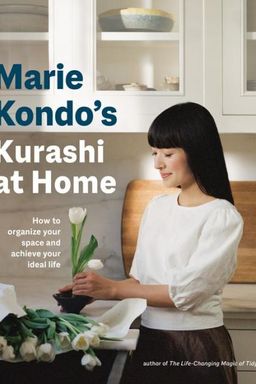
Have you ever wondered why some spaces make you feel instantly at peace while others subtly drain you? Marie Kondo’s Kurashi at Home invites you to look beyond tidying as a simple act of decluttering and to see it instead as a practice of self-discovery and design for the soul. Kondo argues that when you consciously choose what sparks joy in your possessions, spaces, and routines, you don’t just organize your surroundings—you realign your entire life toward what truly matters. This is the essence of kurashi, a Japanese word meaning “the way of spending one’s day.”
Throughout the book, Kondo builds on the global success of her KonMari Method of tidying and expands it into a complete lifestyle philosophy. Instead of narrowly focusing on material organization, she encourages you to visualize your ideal home, create joyful routines from morning to night, and cultivate a relationship with your possessions, environment, and time that nourishes happiness from within. The journey begins with inner reflection, then unfolds outward—to your home, work habits, relationships, and even your spiritual well-being.
From Objects to Essence: The Shift from Tidying to Living
In her earlier work, Kondo helped millions transform cluttered homes into sanctuaries of serenity. In Kurashi at Home, she shifts focus: tidying is no longer the end goal but the starting point for a deeper dialogue with yourself and your surroundings. She writes that tidying is powerful precisely because it trains your ability to choose. Each decision—whether to keep or let go—strengthens your confidence, clarifies your values, and moves you toward a life where every item, habit, and commitment truly sparks joy. In that sense, tidying becomes a mirror for the soul.
Kurashi: The Heart of a Joyful Lifestyle
Where her earlier books focused on the home, Kurashi at Home explores the rhythms of daily life. The word kurashi doesn’t refer to one’s possessions or house but to the act of living itself—how you spend your time, care for your space, and nurture your spirit. Kondo emphasizes that your ideal kurashi can begin anywhere, even in a small apartment. The key is not perfection or wealth but attention: arranging life in a way that reflects gratitude and authenticity. You’re invited to imagine not only your dream home but also your ideal mornings, afternoons, and evenings—each filled with intention, peace, and purpose.
At its core, Kondo’s method merges practical organization with mindfulness. Each chapter reads like a meditation on living beautifully: greeting your home, letting light and air circulate freely, caring for objects as if they were living companions. Tidying thus evolves into a form of respect—toward yourself, your environment, and the invisible energies that sustain everyday life.
From Inner Order to Outer Harmony
The structure of the book mirrors the journey of transformation. It begins with “A Dialogue with Yourself,” guiding you to reflect on your desires and uncover emotional blocks to tidying. Next comes “A Dialogue with Your Home and Possessions,” which teaches you to treat objects as allies and to design spaces that breathe with vitality. Later sections—“Your Joyful Morning,” “Your Joyful Day,” and “Your Joyful Evening”—translate the philosophy into daily rituals that anchor peace: cleaning as meditation, writing to release stress, eating simply, and cherishing family connections. The book culminates with an invitation to practice gratitude each night, ensuring that joy becomes the rhythm of each day.
Kondo’s approach harmonizes with elements of wabi-sabi (the Japanese appreciation of imperfection), feng shui (energy flow through space), and mindfulness philosophies championed by figures like Thich Nhat Hanh. But unlike these traditions that start from spirit toward space, she begins with the physical world—because, she insists, by transforming what’s tangible, your mindset naturally follows. Tidying becomes tangible self-care.
Why This Matters: The Power of Joyful Simplicity
Kondo suggests that the ultimate result of tidying isn’t a clean home—it’s a liberated heart. When you practice choosing joy in physical objects, you begin doing it with relationships, decisions, and time. You stop settling for cluttered commitments and start building a life that feels light and meaningful. The book’s emotional centerpiece is the proposal that falling in love with your home is a rehearsal for falling in love with yourself—and that this affection naturally ripples outward into work, family, and community.
“Through the process of selecting what brings you joy and letting go of what doesn’t,” Kondo writes, “you develop your capacity to choose, to make decisions, to take action—and this, in turn, develops your self-confidence.”
In Kurashi at Home, every drawer straightened and meal prepared becomes an act of artistry—a creation of a life that feels just right for you. The external order reflects inner alignment, and joy emerges not from control but from connection. For readers who seek calm amidst chaos or meaning beyond minimalism, Kondo’s work offers both a philosophy and a practice: a way to live every day as a small miracle of intentional living.