
Idea 1
The Manufactured Revolt: OWS as Trojan Horse
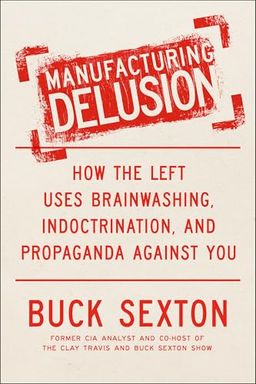
What if a protest that looked like a spontaneous cry against Wall Street was actually a vehicle for something much bigger? In Manufacturing Delusion, Buck Sexton argues that Occupy Wall Street (OWS) isn’t a loose, nonpartisan outburst over bank bailouts and inequality—it’s a carefully staged Trojan horse for a long-standing progressive project to expand state power and erode the primacy of the individual. He contends that anti–Wall Street rhetoric is the entry point, but the destination is a broader statist agenda that spans union muscle, activist media, and radical cells willing to break laws and bend truth to shift American politics left.
Sexton doesn’t ask you to take this on faith; he brings you into the streets. He’s there at Zuccotti Park before dawn on November 15, 2011, as police helicopters beat the air and protestors try to outflank NYPD lines. He trails the crowd to Foley Square to watch the messaging machine spin up: process video, amplify across Twitter and Facebook, and control the narrative. The front-line chaos is theater; the real battleground, Sexton insists, is perception—who defines what the movement is and what America should become.
The Core Claim: A Smokescreen for Statism
Sexton’s core claim is stark: OWS channels authentic anger about crony capitalism into support for policies that grow the state and shrink the individual. He accepts that Wall Street malfeasance and bailouts are real grievances. But he argues the movement’s inner circle is less interested in targeted reform than in a “New, New Deal” moment—using crisis to drive permanent expansions of entitlement and regulation. In his framing, Occupy’s public brand—“We are the 99%”—is political jiu-jitsu: a brilliant way to wrap a minority agenda in the language of an overwhelming majority.
What You’ll See in This Summary
You’ll start with how OWS packaged “direct democracy” and leaderless assemblies to look inclusive, while avoiding a concrete agenda that critics could test. Then you’ll examine why “bankster” talk stuck—because crony capitalism is real—and how Sexton traces primary causes to government policy (lax lending standards, Fannie/Freddie, moral hazard) and global forces like digitized capital flows. You’ll meet three core factions inside OWS—reformers, redistributionists, revolutionaries—and see how unions, NGOs, PR firms, and celebrity patrons amplified the brand while distancing themselves from the messy parts.
We’ll walk through Occupy’s digital insurgency: iPhones, livestreams, and viral arrests that turned small clashes into moral dramas. You’ll also confront the darker side of encampments—assaults, overdose deaths, business losses—and why these “occupational hazards” shifted public sentiment and triggered evictions from Oakland to New York. Finally, you’ll explore how Sexton sees OWS feeding into 2012 electoral strategies, the possibility of black-swan crises accelerating radical aims, and what concrete reforms and civic habits he believes can channel justified anger into productive change—without burning down the system.
Why This Matters to You
If you care about reforming real abuses without empowering new ones, Sexton’s argument matters. He urges you to separate legitimate critiques of Wall Street from sweeping cures that make Washington a bigger referee, redistributor, and censor. He thinks America sits at a fork: accept that concentrated state power—no matter how well-intended—tends to punish success, entrench patronage, and undermine liberty; or double down on government as the arbiter of “fairness.”
Key Idea
OWS, Sexton argues, is less about fixing Wall Street and more about reframing America’s social contract—away from the “right to rise” and toward the “right to receive.”
Sexton’s Lens: From Insurgencies to City Streets
Sexton’s perspective comes from analyzing insurgencies for the CIA and later supporting NYPD Intelligence. He doesn’t equate Manhattan with Mosul, but he borrows the logic: undermine the frontline of state power (police), construct a resistance narrative, and weaponize media to recruit and radicalize. When he hears “We are all Sean Bell” at the very first rally, sees solidarity with convicted cop-killer Troy Davis, and watches a pepper-spray clip go viral, he recognizes a strategy: flood the zone, bait overreaction, and scale the imagery.
The Stakes: Reform vs. Revolution
Sexton says you face a choice: back focused, boring reforms—like cleaning up the tax code, separating commercial and investment banking, and banning congressional insider trading—or romanticize revolution. He warns that revolutions rarely end where they start, and that even small, committed groups (Oakland’s black bloc, for example) can hijack broader movements. As he puts it, “Statism is momentum-driven”—push hard in crisis, then entrench gains while the public catches its breath.
Whether you agree with his politics or not, his field reporting and pattern-matching force you to ask better questions: Who benefits? Who funds? Who controls the camera and the captions? And most of all—what reforms could you support today that fix the rot without giving a blank check to new gatekeepers? That’s the thread this summary follows.