
Idea 1
Finding Meaning Amid Suffering: The Core of Frankl’s Vision
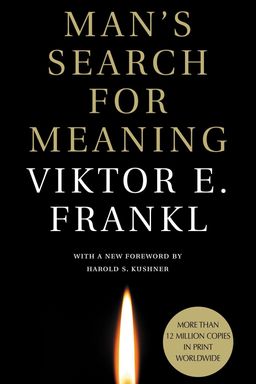
When life feels unbearable—when responsibilities, losses, or uncertainty seem too heavy—what keeps you going? Viktor Frankl’s Man’s Search for Meaning offers one of the most profound answers ever written: the will to meaning. Frankl, an Austrian psychiatrist and survivor of several Nazi concentration camps, contends that your ability to find purpose—even in the darkest moments—is not only your most powerful source of resilience, but the key to true freedom. His work reveals that while you cannot always control what happens to you, you can always choose how you respond to it, and what meaning you extract from your experience.
In Man’s Search for Meaning, Frankl doesn’t just recount his horrific years at Auschwitz; he transforms them into a philosophical and psychological roadmap for living. The book—and this summary of Sapiens Editorial’s interpretation—follows his journey through the camps, his observations of human despair and dignity, and the birth of his signature approach to therapy: logotherapy. Drawing from his lived experience and deep philosophical insight, Frankl shows that even when everything external is stripped away—possessions, family, hope—life retains meaning if you choose to give it one.
The Search for Meaning as a Survival Mechanism
Frankl observed that prisoners who could locate a reason to keep living—something or someone to look forward to—were more likely to endure the unimaginable. For some, it was the hope of reuniting with loved ones. For others, it was an inner calling, like finishing a project, or bearing witness to history. For Frankl himself, meaning became synonymous with responsibility: he felt driven to survive in order to write about the human capacity for hope amidst horror.
As he wrote later, the horrors of Auschwitz proved that “those who have a ‘why’ to live can bear almost any ‘how.’” This idea—borrowed from Nietzsche—sits at the core of the book and forms the basis of Frankl’s therapeutic model. His insight reframes suffering not as an enemy to be escaped but as a potential source of transformation. What matters isn’t whether you suffer, but how you respond to it and what you make of it.
Logotherapy: Meaning as Medicine
In his post-war practice, Frankl’s logotherapy became the “third Viennese school of psychotherapy” after Freud’s psychoanalysis and Adler’s individual psychology. Where Freud sought pleasure and Adler emphasized power, Frankl identified meaning as humanity’s central motivational force. His view was existential rather than purely emotional: depression, apathy, and anxiety, he argued, often arise from the “existential vacuum”—a void where meaning should reside.
Through logotherapy, Frankl offered practical methods for overcoming despair. One of these was the technique of paradoxical intention, in which patients confront rather than flee from what they fear. By deliberately choosing to face anxiety, they remove its power. Another principle is attitudinal value: even when fate denies you choices of action, you still own the freedom to choose your attitude. This freedom—psychological and spiritual, not physical—remains untouchable even under tyranny or torture.
The Emotional Journey from Horror to Apathy to Freedom
Frankl chronicles a grim but recognizable psychological trajectory through suffering. Upon arrival in Auschwitz, prisoners faced shock and terror; then came months of numbness and detachment—an emotional defense mechanism. Eventually, as the end of the war neared, liberation itself felt almost unimaginable. The paradox of freedom, Frankl notes, was that many inmates could no longer feel joy. They had been emotionally blunted by trauma.
Yet in the long recovery that followed, Frankl proved that meaning could rebuild what horror had stripped away. He did not deny bitterness or loss; instead, he transformed them into lessons for living. His faith in life’s inherent potential outlived even the gas chambers. In the face of extreme suffering, Frankl became proof that the human mind—and spirit—can transcend the body’s imprisonment.
Why It Matters to You Today
You may not face a concentration camp, but you likely confront your own hardships—loss, uncertainty, burnout, or existential drift. Frankl’s insight applies universally: life’s meaning isn’t handed to you; you must create it. His story invites you to consider what gives your life purpose right now—and how you can orient around that, especially when circumstances test you. This message has influenced not just therapists but self-help authors, educators, and spiritual leaders worldwide (see also Stephen Covey’s The 7 Habits of Highly Effective People, which drew inspiration from Frankl).
In a world that often measures worth through success or pleasure, Frankl challenges you to look deeper. Do you pursue happiness, or do you pursue meaning? His answer: happiness ensues; it cannot be pursued. By focusing instead on what life asks of you—how you can serve, love, and create—you fill the “existential vacuum” with direction. Frankl’s message is both humbling and liberating: though you cannot always choose your circumstances, you always choose who you become through them.