
Idea 1
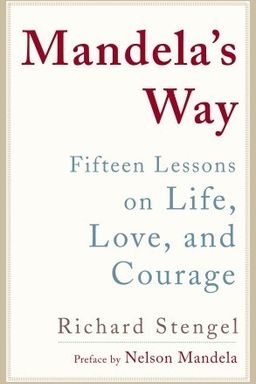
Mandela’s Way: Living with Courage, Principle, and Humanity
What does it mean to live a life of true courage, integrity, and compassion—and could any of us begin to live by example as Nelson Mandela did? In Mandela’s Way: Fifteen Lessons on Life, Love, and Courage, author Richard Stengel reflects on his years working alongside Nelson Mandela to craft his autobiography, Long Walk to Freedom. What began as a professional collaboration evolved into a deep friendship that gave Stengel a unique, intimate perspective on the man behind the myth. Out of their conversations and experiences, Stengel distilled fifteen timeless lessons that capture Mandela’s approach to leadership, forgiveness, resilience, and humanity.
Mandela’s greatness wasn’t divine or mysterious, Stengel emphasizes—it was human, developed through conscious discipline, introspection, and trial. This book argues that Mandela’s moral authority came not from extraordinary gifts, but from extraordinary choices: his ability to cultivate patience, optimism, and calm in the face of injustice and turmoil. Stengel encourages readers to view Mandela not as a remote saint but as a model of attainable wisdom, a reminder that anyone can forge character through perseverance and empathy. Mandela’s life was not free from contradiction—he was proud yet humble, a warrior of peace, a man who loved fame but valued principle above all. Yet those contradictions made him deeply real.
The Art of Becoming Human
At the heart of Stengel’s portrait is Mandela’s belief in ubuntu, an African philosophy that embodies the idea that we are human through our connection with others. It’s a reminder that achievement and moral growth are collective, not individual. Mandela repeated often that “a leader is only a leader through his people.” His humility stemmed from this worldview: he saw himself as part of a broader human story, not its center. And for readers today, this lesson serves as an antidote to the hyper-individualism of modern life. As Stengel writes, Mandela “never felt diminished by lifting others.”
From Fear to Courage
Mandela’s courage, the first of his major lessons, wasn’t about fearlessness—it was about mastery over fear. On a flight in 1994, an engine failed, yet Mandela sat calmly reading his newspaper, later admitting, “Man, I was terrified up there.” This reveals his core approach: courage, he said, is not the absence of fear but the triumph over it. The ability to “put up a front” of calm allowed him to inspire steadiness in others. Stengel draws the reader into these moments, showing that bravery isn’t innate—it’s practiced, often through pretending to be brave until the act becomes real. Mandela believed courage could be cultivated by anyone willing to act with composure despite adversity.
Measured, Calm, and Balanced
Impatience and anger once marked the young Mandela, but prison forged patience, order, and internal equilibrium. His maxim became “Be measured.” Stengel’s vivid accounts—such as Mandela’s ice-cold composure after the assassination of his colleague Chris Hani—illustrate how this quality allowed him to prevent civil war. His calm wasn’t synonymous with detachment; it was an active discipline that allowed him to keep clarity amid chaos. Mandela knew that people crave steady hands when the world feels unsteady. This measured temperament was essential to his power to lead and to heal his nation.
Leadership as Service
Mandela redefined leadership not as domination but as stewardship. Stengel explains Mandela’s dual philosophy of leadership: “lead from the front” by taking responsibility for difficult decisions, but “lead from the back” by listening and empowering others to step forward. This paradox echoes lessons we find in Lao Tzu’s Tao Te Ching or Robert Greenleaf’s concept of “servant leadership”: the strongest leaders make others feel responsible for collective success. Mandela learned this model of leadership observing Chief Jongintaba, who listened to his village before speaking. In boardrooms, families, or communities, Mandela’s principle applies: to lead well, you must first cultivate others’ confidence to lead themselves.
Seeing Good and Playing the Long Game
Another cornerstone of Mandela’s character was his refusal to demonize others. He believed that seeing the good in people—not as naivete but as persuasion strategy—brought out their better selves. His inclination to trust even his oppressors, like the harsh Colonel Badenhorst who later showed him courtesy, reflects this mindset. Prison, Mandela said, “taught me to see men as they might be.” Similarly, his long view of time—formed through twenty-seven years of imprisonment—taught him patience in pursuit of justice. He knew revolutions demand endurance, not immediacy. Playing the “long game” was not complacency but moral diligence.
Principles, Not Perfection
Mandela anchored his life around one core ideal: equality. Everything else—whether political tactics, economic policies, or personal alliances—was negotiable. Stengel reveals him as a “pragmatic idealist”: ethical about ends, flexible about means. That balance of principle and pragmatism gave him unmatched moral gravity and agility. His life argues that moral conviction need not mean rigidity—what matters is discernment about when to bend and when to stand firm. “Quitting,” Stengel notes in one of Mandela’s paradoxical lessons, “is leading too” when it serves a higher purpose.
Why Mandela’s Lessons Matter Now
What makes Mandela’s Way more than a biography is its call for a personal transformation. It reminds you that character isn’t born from comfort—it’s forged in friction. Mandela’s life, far from superhuman, models the habits of humanity: discipline, empathy, dignity, humor, and humility. In an age of ego-driven leadership and instant gratification, Stengel’s lessons invite you to lead through patience, to respond calmly to chaos, and to believe in connection over isolation. As Mandela said, “After climbing a great hill, one finds that there are many more hills to climb.” Stengel’s book helps us learn how to keep climbing—with grace, courage, and hope.