
Idea 1
Making Work Human: The Heart of a People-Centered Revolution
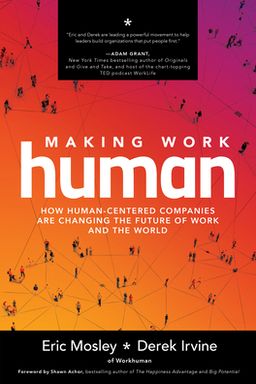
When was the last time you felt truly seen, valued, and appreciated at work—not just as a role or a resource, but as a **human being**? In Making Work Human: How Human-Centered Companies are Changing the Future of Work and the World, Eric Mosley and Derek Irvine argue that the future of work depends on reclaiming our humanity in the workplace. The authors—founders of Workhuman—contend that by centering people rather than profit, gratitude rather than control, and connection rather than competition, organizations can unlock innovation, retention, and lasting purpose.
They call this shift the rise of the human enterprise: workplaces built around networks of trust, belonging, recognition, and shared meaning. It’s not a feel-good fantasy—they back it with data from millions of recognition moments across leading companies like Cisco, Merck, LinkedIn, and JetBlue. In short, what’s good for people is good for business.
From Bureaucracy to Humanity
Mosley and Irvine describe the 20th century company as rigid, hierarchical, and bureaucratic—built to maximize efficiency but silence individuality. Today, that model is collapsing under the pressures of disruption, automation, and global connectivity. The authors argue that survival now depends not on structure, but on human qualities: empathy, connection, creativity, and shared purpose. They dub this shift the transition from bureaucracy to humanocracy, echoing similar calls from thinkers like Gary Hamel and Daniel Pink.
In this new era, technology is a paradox: the more our tools mimic human intelligence, the more valuable our distinctly human skills become. Leadership must therefore focus not on control, but on unleashing the human spirit at work. Work should no longer just extract value—it should generate meaning.
The Three Pillars: Thank, Talk, Celebrate
At the core of this transformation are three deceptively simple practices: THANK, TALK, and CELEBRATE. These pillars make up the foundation of a human-centered culture. THANK represents the deliberate practice of gratitude—recognizing and appreciating contributions. TALK is the art of open feedback and genuine dialogue. CELEBRATE invites people to mark milestones and life events together, reinforcing shared purpose and belonging. Together, they form a culture of positivity that strengthens relationships and builds organizational trust.
Mosley and Irvine show how these everyday human moments ripple across companies, generating hard business results: higher productivity, lower turnover, more innovation, stronger customer satisfaction, and even measurable profitability.
The Human Enterprise in Practice
Across the book’s two parts—“Humans at Work” and “Building a Human Enterprise”—the authors combine research with human stories. We meet a physician who recognizes a groundskeeper at Baystate Health and rebuilds a sense of dignity across ranks; a Merck employee who remodels her bathroom using recognition rewards and joyfully shares the story; and a LinkedIn leader who finds that frequent gratitude creates waves of performance improvement across teams. These vignettes embody what Mosley and Irvine call “human moments that matter”—when care, appreciation, and belonging transform transactional work into meaningful collaboration.
They extend this logic to every domain of business: purpose, performance management, diversity, compensation, and leadership. Data, AI, and analytics, they argue, should now serve humanity—helping us measure empathy, inclusion, gratitude, and belonging as rigorously as we track earnings per share. The authors envision a world where emotional metrics are as real as financial ones.
Why Making Work Human Matters Now
Why now? Because as employees demand authenticity, flexibility, and fairness—and as society loses trust in traditional institutions—the workplace has become the last best place to reconnect across differences. People now turn to companies for purpose, community, and ethical leadership as much as for paychecks. Mosley and Irvine argue that organizations occupy a moral frontier once reserved for churches or governments; they shape not only livelihoods but entire lives.
This isn’t just moral idealism. Research from Gallup, Harvard, and Deloitte supports their case: trust, gratitude, and belonging measurably strengthen engagement and performance. Data from millions of Workhuman interactions confirm that companies investing just 1% of payroll into authentic peer-to-peer recognition reduce turnover and increase productivity dramatically—proving that humanity has ROI.
A Call to Human Leadership
Ultimately, Making Work Human is a call to leadership courage. The authors challenge executives to trade command-and-control for vulnerability, empathy, and shared accountability. They introduce the Workhuman Charter of Workplace Rights—an aspirational standard declaring that every employee deserves respect, equality, voice, and the chance to flourish. It’s a manifesto for the Human Decade, where sustainable business success and social progress go hand in hand.
In essence, Mosley and Irvine aren’t just describing a management trend—they’re launching a movement. They envision workplaces as “villages” that combine profit with purpose, leading companies to ask not just what they make, but what they make possible for human beings. For anyone who’s ever wondered whether kindness and capitalism can coexist, this book answers with a resounding yes—and shows exactly how.