
Idea 1
Making a Life in Acting
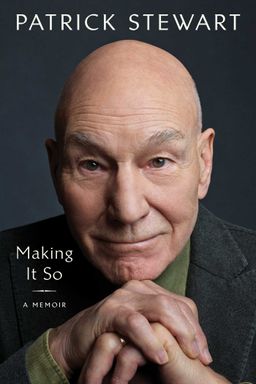
How do you build a lifetime of memorable performances without losing yourself? In his memoir, Sir Patrick Stewart argues—by example—that deep craft, rootedness in place, courageous mentorship, and deliberate reinvention are the sustaining pillars of a creative life. He contends that greatness in performance is not a mystical gift; it is the disciplined layering of early textures (place, family rituals), precise training (voice, movement, ensemble habits), fearless collaboration with directors, and strategic choices across mediums. To see that clearly, you must trace the line from the coal cellar in Mirfield to a soundstage in Los Angeles, from a weekly rep in Lincoln to a trapeze in Peter Brook’s white-box Dream.
In this guide, you’ll discover how Stewart’s childhood in West Riding—the t’bottom field, the single coal fire, the outside privy—seeded his sensory archive and empathy. You’ll then learn how teachers (Cecil Dormand), institutional allies (Gerald Tyler and the West Riding Council), and voice gurus (Ruth Wynn Owen) provided gateways from local am-dram to Bristol Old Vic and beyond. Finally, you’ll see how he translated that foundation into a career pattern: make small roles signal big potential, adapt to directors’ aesthetics, adjust to camera’s demands, steward a defining role like Picard, and reinvent yourself with Dickens, Beckett, and blockbusters.
Place and family as artistic bedrock
Stewart begins by treating Mirfield not as scenery but as an instrument. The coal smell, the lamplighter’s route, the public library’s hush—these details become cues he later uses to summon emotion onstage. Family contradictions—Gladys’s tenderness and Alfred’s volatility—forge his capacity for empathy and moral complexity (the squirrel’s terror in t’bottom field teaches him to feel beyond himself). That mix of love and fear becomes the emotional palette for playing commanders, fathers, tyrants, and clowns.
Mentorship and institutional scaffolding
Stewart shows you what happens when a community decides to back a talent. Cecil Dormand unlocks Shakespeare by insisting the class speak the text aloud; Gerald Tyler bends the rules to slip a “twelve-year-old” into a residential arts course; Ruth Wynn Owen connects breath to thought and normalizes ambition. These people don’t just coach; they widen the room he’s allowed to stand in. (Note: This mirrors models in arts education where access plus rigor creates outsized returns—see also Alan Rickman’s journey through the Royal Academy.)
Training into habit
At Bristol Old Vic, Stewart internalizes a system: Rudi Shelley’s movement resets posture and presence; Daphne Heard’s verse work makes language a living score; improv is framed as safe risk. This is the muscle-building phase, and it matters because later, under stress—weekly rep changes, a cue gone missing, a dog misbehaving—he can rely on drilled habits rather than inspiration. The key claim: discipline creates freedom onstage.
From apprenticeship to calling
Repertory theatres (Lincoln, Sheffield) and the Old Vic world tour with Vivien Leigh function as applied laboratories. You learn to be useful, humble, and resilient—qualities that impress gatekeepers more than ego. The RSC audition with Peter Hall and John Barton formalizes this apprenticeship into identity: an ensemble actor who treats text as action and risk as a principle (Duncan Ross’s maxim: don’t insure against failure).
Small roles as career signals
Stewart’s craft ethic is most visible in how he treats “small” roles. He turns Snout’s line into a comic event by laying bricks; he builds a double act with a rescue dog playing Crab; he deploys a Yorkshire twang to etch character in a breath. Directors notice. Audiences remember. Opportunities follow. (In acting lore, this echoes Alec Guinness’s and Judi Dench’s insistence that detail, not billing, is what lodges in memory.)
Adapting to directors and mediums
Great directors are lenses: Brook’s minimalism, Nunn’s architecture, Barton’s scholarship. Stewart learns to serve each aesthetic without disappearing. On camera, he discovers that the lens photographs thoughts; he scales down, conserves energy, and honors off-camera duties (Rod Steiger’s lesson). A chilly start with David Lynch on Dune teaches him to read temperaments quickly and lean on peers when top-down guidance is sparse.
Stewardship of a defining role
Star Trek: The Next Generation is a hinge. Advised by Ian McKellen to be cautious and by agents to be bold, Stewart signs—then treats Picard with Shakespearean seriousness. He negotiates boundaries, studies Hornblower, and later insists Picard evolve on his own terms (Star Trek: Picard). The result: he rides fame without letting it ride him, even as conventions and paparazzi change daily life.
Reinvention and the human bill
Fame magnifies both opportunity and cost. Marriages strain; privacy thins; guilt lingers. Stewart turns to creation for recalibration—A Christmas Carol (a one-man act born in a church), comic self-sendups on Extras, and roles like Professor X and Logan’s ailing Xavier that marry commercial reach to depth. He also transforms childhood pain into advocacy (supporting Refuge). The throughline: you can keep remaking yourself if you keep faith with the work and accept responsibility for the life around it.
Core promise to you
If you practice daily, honor small chances, collaborate bravely, and choose defining roles with intention, you can build a durable, human-scale career—onstage, on set, and at home.