
Idea 1
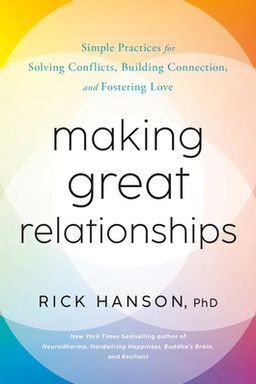
Making Great Relationships: Building Inner Strength and Outer Love
Why do some relationships uplift us while others drain our strength and spirit? In Making Great Relationships, psychologist Rick Hanson, PhD—a researcher at UC Berkeley’s Greater Good Science Center and bestselling author of Buddha’s Brain and Hardwiring Happiness—offers a science-based, heartfelt roadmap for building fulfilling connections. Hanson contends that relationships thrive when we cultivate both inner strengths (self-compassion, calm, loyalty to oneself) and outer virtues (kindness, empathy, fairness, forgiveness). The book is rooted in neuroscience and contemplative wisdom, combining thirty-five years of therapy experience with Buddhist principles and psychological models like attachment theory and nonviolent communication.
Hanson’s core argument is simple yet profound: You can’t make great relationships unless you first become a good friend to yourself. He asserts that our minds are wired for negativity—what he calls the brain’s “Velcro for bad, Teflon for good” bias—so we must consciously train ourselves to let go of harmful thoughts, take in positive experiences, and nurture traits like empathy and patience. Through fifty short, practice-oriented chapters, Hanson teaches specific skills for communicating better, staying emotionally balanced, asserting yourself kindly, and cultivating compassionate love for others and the world itself.
The Two Wolves Within
Hanson opens with a teaching story of an elder who says, “There are two wolves in my heart—a wolf of love and a wolf of hate—and everything depends on which one I feed.” This metaphor drives the book’s premise: relationships mirror what we feed within. Choose love, compassion, and calm, and relationships flourish; feed resentment, fear, and blame, and they wither. Every chapter becomes an invitation to feed the wolf of love through concrete daily actions—listening more deeply, expressing gratitude, regulating anger, and forgiving both yourself and others.
The Structure: Six Parts of Relationship Mastery
Part One—Befriend Yourself: Before improving any external relationship, Hanson insists you must cultivate inner loyalty and acceptance. Practices like “Be Loyal to Yourself,” “Respect Your Needs,” and “Know You’re a Good Person” teach emotional self-care and self-trust through mindfulness and positive neuroplasticity.
Part Two—Warm the Heart: These chapters focus on empathy and compassion. You learn to “Feed the Wolf of Love,” “See the Person Behind the Eyes,” and “Be Kind” to create bonds rooted in mutual understanding. Hanson shows that caring for others actually strengthens your own well-being (a finding echoed in studies by Paul Gilbert and Kristin Neff).
Part Three—Be at Peace with Others: Here, Hanson tackles resentment and conflict. You’ll practice taking things less personally, accepting others as they are, and letting go of mental “wars” in your head. He views peace as an active skill, not passive resignation.
Part Four—Stand Up for Yourself: You’ll learn assertiveness and boundaries through chapters like “Don’t Be Bullied” and “Use Anger; Don’t Let It Use You.” Hanson teaches that calm strength—not aggression—is the power that sustains dignity in difficult relationships.
Part Five—Speak Wisely: Communication, the bedrock of all relationships, gets detailed instruction here: “Watch Your Words,” “Ask Questions,” “Express Appreciation,” and “Say What You Want.” Drawing from Buddhist “right speech,” Hanson offers six principles of wise communication: be well-intended, truthful, beneficial, timely, not harsh, and—when possible—welcome.
Part Six—Love the World: Finally, Hanson expands from personal love to global compassion. He urges readers to “Vote,” “Cherish the Earth,” and “Take Heart.” Here, relationships extend beyond family or friendships to include society and nature itself, suggesting that creating great relationships is also a path toward collective peace and justice.
Why It Matters
In Hanson’s view, relationships are not accidents—they are built through conscious daily practice. Every breath you take, every act of patience, every word of kindness reshapes your brain through neuroplasticity, creating enduring patterns of empathy and calm. This means relational healing is fundamentally neurological and spiritual: as you train the mind toward compassion, the nervous system literally rewires for trust and love. The benefits ripple outward—stronger marriages, better friendships, greater civic unity.
As you read, Hanson’s blend of science, spirituality, and pragmatism offers reassurance: You don’t have to wait for others to change. You can begin today by being loyal to yourself, feeding the wolf of love, and speaking from your heart. It’s a book both for personal transformation and collective healing—a manual for making great relationships that truly make a great world.