
Idea 1
Understanding the Many Masks of Psychopathy
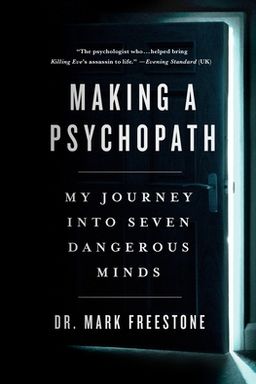
Why are we so fascinated by psychopaths—those cold, calculating figures who seem untouched by empathy or remorse? In Making a Psychopath, forensic sociologist Mark Freestone asks a radical question: if mainstream psychiatry and pop culture have built an image of the psychopath as inhuman, what happens when we start seeing them as people? Drawing on fifteen years of research and first-hand work in prisons and hospitals, Freestone pulls back the masks of seven distinct case studies—each showing wildly different origins, personalities, and dangers. Through stories that range from manipulative con men to remorseless killers, he reveals that psychopathy is not a single thing but many overlapping patterns of personality, emotion, and social failure.
Freestone argues that psychopathy must be understood as a disorder of relationships rather than simply traits. Psychopaths, he suggests, do not exist in isolation—they are shaped by an intricate interplay of brain differences, genetic predisposition, and emotionally damaging childhood environments. Their coldness, charm, and manipulation reflect not pure evil but a missing puzzle piece in understanding human connection. By combining sociological thinking with psychology and neuroscience, Freestone brings fresh light to this misunderstood group, blending case-based storytelling with compassion and hard analysis.
Rethinking the Stereotype
Pop culture’s fascination with figures like Hannibal Lecter or Villanelle (from Killing Eve, on which Freestone consulted) reinforces the myth that psychopaths are brilliant monsters. Freestone dismantles this myth. Most psychopaths, he found, are mediocre manipulators—not masterminds, but people who depend on instinctive tactics because they lack emotional and moral awareness. Rather than cold-blooded geniuses, they are emotionally stunted individuals often trapped in cycles of impulsivity, resentment, and abuse. The difference lies not in intelligence, but in how their environment turns those deficits into violence or exploitation.
The Diversity Behind the Label
Freestone organizes the book around seven composite case studies: Paul the violent hitman, Tony the narcissistic con man, Jason the compulsive liar, Arthur the parasitic dependent, Danny the borderline between psychosis and psychopathy, Angela the remorseless female killer, and Eddie the redeemed offender. Each case unmasks a different way psychopathy interacts with life experience. Their stories show that psychopathy is not uniform—it ranges from impulsive criminal aggression to complex emotional voids. Through these portraits, Freestone illustrates his core thesis: that psychopathy grows from a convergence of neurological differences and broken attachments rather than from innate evil.
A Social and Scientific Lens
Instead of approaching psychopathy as a checklist of symptoms, Freestone merges psychology, neuroscience, and sociology. He references Robert Hare’s Psychopathy Checklist (PCL-R), which defines psychopathy through twenty measurable traits, and counters that there are over 15,000 combinations of those traits—meaning there are 15,000 ways to be a psychopath. He draws on genetic evidence (such as the MAO-A “warrior gene”) and neuroscience showing that psychopaths have diminished activation in the amygdala and frontal cortex—regions critical for moral reasoning and emotional regulation. But he connects this to the social environment: poor attachments, abuse, neglect, and violence amplify genetic vulnerabilities. In other words, we don’t make psychopaths in laboratories—we make them in families and institutions.
Why It Matters to You
Freestone invites readers to move beyond fear and fascination to curiosity and understanding. Understanding psychopaths as complex and varied helps you make sense of manipulation in everyday relationships and workplaces—the subtler shades of psychopathy that appear outside prison walls. He also challenges mental health professionals and society to confront their own role in labeling and discarding these individuals. “If clinicians have nothing to offer someone with psychopathy,” he writes, “it becomes a self-fulfilling prophecy: ‘I can’t help you, so you must be bad.’” His work reminds us that seeing the humanity—or broken humanity—in those labeled psychopaths may be the only way to prevent more of them from being made. That’s what makes this book essential: it’s not about monsters, but about understanding what makes people lose touch with moral connection entirely.