
Idea 1
The Living System of Punctuation
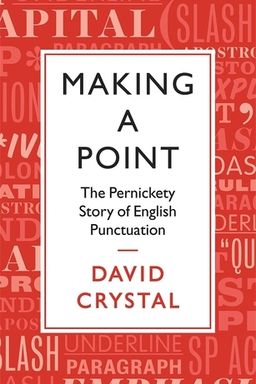
Punctuation is not a mere mechanical aid for writing; it is a living system shaped by culture, technology, and speech. In his sweeping historical narrative, David Crystal shows how marks on the page evolved alongside our ways of thinking, reading, and speaking—from ancient scriptura continua to the complex pragmatics of online messaging. Crystal’s argument is simple yet transformative: every punctuation mark encodes a human decision about rhythm, clarity, and relationship. Understanding punctuation, therefore, requires you to see it as both linguistic infrastructure and social gesture.
From oral culture to silent reading
Crystal begins with the world of scriptura continua, where texts ran together in an unbroken stream of letters. Ancient readers vocalized aloud, guided by rhythm and prior memory, rather than visible divisions. St Augustine famously remarked on the rarity of silent reading—a private act that did not become widespread until the early Middle Ages. When Anglo-Saxon monks started learning Latin through glossed manuscripts, they needed visual cues. Word-spaces appeared first as pedagogical tools, then as reading aids, transforming writing from script-for-performance to object-for-study.
This cultural shift—reading privately instead of publicly—created punctuation as we now know it. Once text became silent thought rather than spoken performance, writers demanded boundaries, pauses, and clarity. Christianity’s emphasis on precise scriptural meaning accelerated the process. Augustine recommended marking divisions to avoid theological ambiguity and even allowed individual methods when sense was uncertain. That willingness to adapt—marking based on meaning, not just form—set the stage for centuries of creative variation.
Oral marks, grammatical marks, and the medieval divide
Medieval scribes used systems like the positurae: dots and strokes aligning with tone and breath. Marks such as the punctus versus, elevatus, and interrogativus cued how readers should raise or lower their voices, turning manuscripts into music scripts for the voice. By the twelfth century, universities and grammarians began reinterpreting these marks as structural separators rather than performance cues. The twin traditions—elocutional vs. grammatical—never fully reconciled. (In modern punctuation teaching, this tension resurfaces every time we debate whether commas reflect breathing or syntax.)
Printing, professionalization, and control
Printing promised uniformity but instead introduced chaos. William Caxton and early printers inherited inconsistent manuscript systems but had to standardize visual types. Because metal types were finite, shapes stabilized faster than meanings. Compositors often improvised: First Folio texts reveal flipped semicolons used as missing question marks. Printers gained authority, re-pointing manuscripts according to house habits. By the sixteenth century, the phrase “printers know best” summarized the power shift. Authors such as Jane Austen and Mark Twain discovered that their punctuation could be overwritten by editors and printers who preferred grammatical conventions to personal style.
Grammar and elocution in modern instruction
Eighteenth- and nineteenth-century treatises—Mulcaster, Sheridan, Lowth, Murray—recast punctuation as either physiological (map of breathing) or syntactic (map of meaning). The elocutionists prized punctuation as interpretive rhythm; the grammarians prized it as precision. Crystal demonstrates that modern style manuals still inherit this divide. To reconcile both, he advocates a pragmatic synthesis: use marks to balance readability, flow, and intent. Teaching punctuation, then, must focus on choice rather than rule.
Hierarchy and design
Crystal reminds you that punctuation operates within layout hierarchy—from title spacing to paragraphing to sentence-level marks. White space functions like punctuation; it organizes thought visually. Decisions about sections, indentation, and spacing determine how readers experience pauses even before commas appear. Historically, printers used dinkuses or fleurons to separate sections—choices mirrored by digital conventions today in hashtag headers and blank-line paragraphing.
Punctuation’s living continuum
From dashes to emoji, punctuation continually reinvents itself to suit communication needs. Dashes and ellipses convey rhythm and omission; semicolons and colons articulate relations and logic; exclamation and question marks perform social and tonal signalling; hyphens and apostrophes negotiate identity and precision; brackets and italics frame perspective and emphasis. Each mark answers a question: how clear, how emotional, how formal, how relational should this line be?
Finally, the Internet reimagines punctuation altogether. In chat, the period can seem abrupt; multiple exclamation marks signal friendliness; hashtags and @ signs repurpose punctuation as metadata. Crystal proposes “pragmatic tolerance”: appreciate variation, teach students to shift registers, and stop treating punctuation as morality. It is human craft—adaptive, expressive, and context-sensitive.
Crystal’s central lesson
Punctuation, like language, evolves through use. Each mark encodes a compromise between technical precision and social judgment. The real mastery lies not in obeying rules but in making conscious, context-aware choices that respect both reader and medium.
In short, Crystal’s work reveals punctuation as a cultural mirror—from monastic marks to memes. When you look at a dash, a comma, or even an emoji, you see a thousand years of negotiation about how thought becomes visible. Treat punctuation, therefore, not as correction but as conversation.