
Idea 1
The New Industrial Revolution: How Making is Democratizing Manufacturing
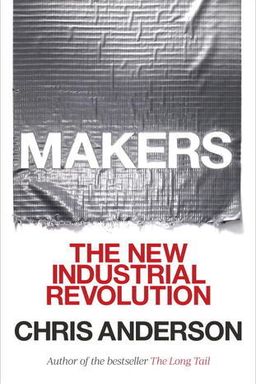
What would happen if you could design, manufacture, and sell your own products from your laptop? Chris Anderson’s Makers: The New Industrial Revolution invites you to picture a world where individual creativity and digital tools are rewriting the rules of industry. Anderson argues that we are living through a new industrial revolution—one powered not by steam or electricity but by bits, code, and connected Makers. Just as the Internet democratized information and entrepreneurship in the digital realm, the Maker Movement is now doing the same for the physical world of products and manufacturing.
Anderson’s central claim is that the combination of inexpensive digital fabrication tools (like 3-D printers, CNC machines, and laser cutters), online communities, and open sharing platforms has shifted power from giant corporations to individuals. You no longer need a factory or millions in investment to bring ideas to life. You just need a computer, a design, a community, and access to what Anderson calls “factories in the cloud.” By connecting passionate creators through the internet and equipping them with accessible manufacturing tools, Anderson contends we are witnessing a profound reinvention of capitalism itself—a move from mass production to mass participation.
From Atoms to Bits and Back Again
In Makers, Anderson builds on his earlier works (The Long Tail and Free) and extends his argument that the power of the many can transform global industries. Whereas the Internet revolution unleashed creativity in the realm of bits, the Maker Revolution is doing the same for atoms. The key enabler is that making things has gone digital. Design files on a screen can now be as easily shared, modified, and re-manufactured as a digital photograph or song.
Anderson distinguishes between the world of bits (information, media, and code) and the world of atoms (physical products, factories, and supply chains). For most of the 20th century, these two worlds were separate. The digital revolution democratized bits—but atoms remained the domain of large corporations with expensive equipment. Now, as both design and production become digital, the same democratizing forces that powered YouTube, blogging, and open-source software are flooding into manufacturing. The result? Ordinary people are becoming entrepreneurs, Makers are forming global networks, and ideas can be commercialized faster than ever before.
Why This Matters Now
Anderson grounds his argument in both personal experience and history. He begins with a portrait of his inventor grandfather, Fred Hauser, who created the automatic sprinkler system in the 1940s but was constrained by the limited industrial tools of his time. Hauser had great ideas, but he lacked the means to mass-produce them. In contrast, Anderson shows that today’s garage inventor can not only design and prototype but also distribute and sell products globally. His grandfather’s struggle epitomizes the old industrial model; his own company, 3D Robotics, symbolizes the new one—a Maker startup built on open hardware and community collaboration.
This transformation matters because it opens up opportunities for innovation, inclusion, and economic renewal. The West’s traditional manufacturing economies, hollowed out by globalization, can now rebuild a new form of middle-class productivity based on small-scale, high-tech entrepreneurship. The Maker Movement, Anderson argues, can help solve our job crisis by creating new types of work that mix digital expertise with physical creation. Small businesses can once again grow—this time with global reach from their garages or workshops.
The Book’s Scope and Structure
Makers combines storytelling, technology analysis, and business insight. Across its chapters, Anderson traces the evolution of personal making from his childhood tinkering in his grandfather’s Los Angeles garage to the rise of global networks of Makers. He compares this moment to the birth of the first Industrial Revolution in Manchester, England, and identifies parallel shifts in technology, entrepreneurship, and culture. The book unfolds in two broad parts: first, how the new revolution began, and second, how it’s shaping our future industries, tools, and economies.
In the opening chapters, Anderson blends anecdotes—punk zine culture, the birth of indie rock, and Silicon Valley startups—to show that every great revolution begins when tools of production fall into ordinary hands. He then transitions to modern fab labs, open hardware communities like Arduino, and platforms like Etsy and Kickstarter that are lowering barriers to design, funding, and manufacturing. Later chapters explore how open innovation is transforming industries from cars (Local Motors) to aerospace (Scaled Composites) and how even giants like Ford and Tesla are adopting Maker-style methods.
The Promise of “Democratized Production”
To Anderson, the term “democratized production” captures the heart of the Maker ethos. Just as the printing press made everyone a potential publisher, and the Internet made everyone a potential broadcaster, digital fabrication makes everyone a potential manufacturer. 3-D printers, once the stuff of industrial labs, are becoming household devices, allowing you to print your own jewelry, spare parts, or custom toys on demand. Makerspaces—shared workshops like TechShop—function as the new factories for the masses. Within them, collaboration replaces competition, and open-source design replaces proprietary secrecy. This cultural shift—from ownership to sharing, from patents to participation—is, in Anderson’s view, a hallmark of the coming industrial order.
Ultimately, Makers argues that the economic and cultural potential of this revolution mirrors the transformative power of the Web itself. It’s not merely about machines—it’s about mindset. The story of manufacturing is no longer the story of scale; it’s the story of access, creativity, and community. As Anderson puts it, we are all designers now. Whether you’re coding, crafting, or creating, the tools of industrial power that once required millions are now at your fingertips—and that changes everything.