
Idea 1
Making Creativity Matter: Turning Ideas Into Lasting Impact
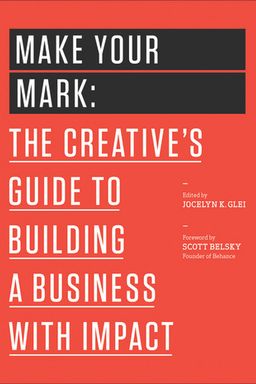
Have you ever wondered why some brilliant ideas change the world while others fade into obscurity? In Make Your Mark: The Creative’s Guide to Building a Business with Impact, editor Jocelyn K. Glei and contributors from the 99U community argue that creativity only matters when it is executed with structure, purpose, and authenticity. Creativity may spark transformation, but only business principles—execution, leadership, storytelling, and service—can make that transformation endure.
The authors contend that making a meaningful impact goes beyond artistic inspiration. As Scott Belsky writes in the foreword, “creation must be made accessible for consumption.” In other words, your creative ideas only matter when they reach and move others. This book teaches you how to do that: to build organizations and products rooted in purpose, refined through iteration, and sustained through trust, participation, and leadership.
A Playbook for Purpose-Driven Creativity
99U’s core argument is simple but profound: creativity must be supported by business discipline to make an impact. The world no longer rewards merely smart ideas—it rewards those who can execute them. Across its four major sections, the book provides lessons for anyone who wants to turn creativity into a sustainable enterprise: defining your purpose, building your product, serving your customers, and leading your team.
The first section, “Defining Your Purpose,” explores how authentic businesses and personal missions emerge from understanding both your unique talents and what the world needs. Keith Yamashita frames this as locating your “true north”: the intersection of who you’ve been, who you can become, and what the world hungers for. Similarly, Warren Berger, author of A More Beautiful Question, reminds us that asking better questions—not having brilliant answers—drives game-changing innovation.
Entrepreneur Aaron Dignan expands this perspective by describing the “Responsive Operating System,” a model for agile, purpose-driven organizations. These companies (like Google, Airbnb, and Tesla) adapt quickly, work transparently, and learn constantly. In this way, the first section gives you the philosophical blueprint: define your “why,” align your mission with global needs, and embrace agility rather than rigid control.
From Purpose to Product: Turning Vision into Things That Work
Once your purpose is clear, the next challenge is turning it into a product or service that people actually love. In “Building Your Product,” contributors like Andy Dunn (Bonobos) and Scott Belsky emphasize simplicity, empathy, and iteration. Dunn insists that you must “get one thing right”—in Bonobos’s case, men’s pants—before you earn the right to expand. Belsky redefines design as stewardship, not invention: you are managing a user’s experience, not just producing an object. Both stress the humility of focusing on one great product and refining it through constant prototyping and feedback.
Other contributors like Jane ni Dhulchaointigh (Sugru) and Julie Zhuo (Facebook) show that successful products are co-created with users and designed to feel invisible—so seamless that they “work like magic.” These sections echo Steve Jobs’s principle that design is not what it looks like, but how it works.
Serving Customers and Building Relationships
“Serving Your Customers,” the book’s heart, presents a modern philosophy of listening, humility, and storytelling. Chris Guillebeau and Sean Blanda remind you that your customers are your allies—real humans deserving care and conversation. They highlight brands like Amazon, Airbnb, and Charles Schwab, which grew by focusing on people, not profit. Craig Dalton demonstrates how his company DODOcase turned craftsmanship and narrative into community engagement. And Neil Blumenthal of Warby Parker outlines how empathy and transparency inspire confidence with every transaction.
These stories converge on a timeless truth: people do not just buy products, they join stories. Great brands invite customers into a shared mission—and foster trust by being relentlessly human and transparent.
Leadership That Amplifies Impact
Finally, the “Leading Your Team” section flips traditional hierarchy on its head. Rich Armstrong dissects the “reluctant manager syndrome,” arguing that management done well is a noble act of service. Joel Gascoigne of Buffer champions radical transparency—sharing salaries, revenues, and even investor decks—to fuel trust and innovation. David Marquet, a former nuclear submarine captain, recounts turning followers into leaders by giving control rather than taking it. Together, they redefine leadership as humility in action: servant leadership that fosters autonomy, fairness, and open communication.
Communicator William Allen emphasizes that clarity and repetition are the lifeblood of collaboration, while John Maeda reframes leadership as another form of creative making—crafting teams, relationships, and movements instead of objects. And Seth Godin closes the book with a challenge we all need to hear: “You’re never ready.” The artist, entrepreneur, or leader who waits for perfect readiness will never make an impact. You lead by shipping your work into the world before you feel prepared.
Why It Matters Today
In an age of constant disruption, Make Your Mark is both manifesto and manual for makers who want to lead with integrity. It shifts the narrative from chasing funding or fame to building meaningful products, cultures, and relationships. It replaces the myth of the lone genius with the reality of the responsive organization and the servant leader.
Whether you’re a designer, start-up founder, or creative professional, this book invites you to blend vision with discipline—to turn inspiration into sustained impact. At its core lies a simple but urgent question: Will you just make, or will you make your mark?