
Idea 1
Making Trouble With Purpose
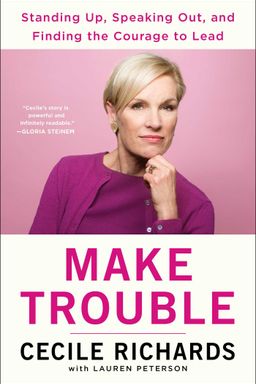
What does it mean to make trouble that matters? In Cecile Richards’s memoir, making trouble isn’t rebellion for its own sake—it’s moral resistance in the face of complacent power. Richards argues that when leaders, institutions, or policies harm vulnerable people, citizens have a civic duty to challenge authority and make a little noise. Her life—from childhood dissent to national leadership—illustrates how righteous disruption creates accountability and progress.
Troublemaking as a moral stance
Richards was raised in a home where debate was dinner conversation and civic engagement was everyday work. Her father, David Richards, fought civil rights battles in court while her mother, Ann Richards, evolved from volunteer to governor. When sixth‐grade Cecile refused to recite the Lord’s Prayer in class, it wasn’t defiance—it was her first act of moral independence. That seed of dissent matured into a lifelong conviction: you protect people by questioning systems.
From organizing to leadership
Richards’s years organizing hotel housekeepers and nursing‑home workers taught her that power lives in relationships, not rhetoric. Listening to people at bus stops or in living rooms, she learned that practical empathy and discipline move institutions. Later, those same skills powered bigger fights—from her mother’s gubernatorial campaign to founding the Texas Freedom Network and running Planned Parenthood.
Each phase taught a different layer of troublemaking: coalition building, defending under attack, and institutional innovation. You can trace a clear arc—grassroots organizing builds courage, campaign life teaches scale, national leadership demands resilience, and legacy work sustains the movement for the next generation.
Trouble under fire and in purpose
Richards’s defining moment—the 2015 congressional hearing—shows what happens when the troublemaker becomes the target. Accused with doctored videos, she sat for five hours before a hostile committee but kept her focus on patients. Her binder held evidence and a photo of her children—a reminder that each act of defense is personal. (Note: This kind of composure echoes lessons from Mandela’s trials and King’s testimonies—calm refusal undermines theatrics.) The hearing vindicated her approach: the smear unraveled, and truth reclaimed the narrative.
Building durable power
Making trouble long-term means building structures that outlive outrage. Richards founded TFN to defend public schools against religious censorship and America Votes to coordinate national movements. Each began in a living room or meeting but evolved into lasting infrastructure. This pattern—react, organize, institutionalize—defines her approach to social change.
In the years after her mother’s death and the political shocks of 2016, Richards modeled how grief can become resistance. From honoring Ann’s legacy through the Ann Richards School to mobilizing millions for the Women’s March, she shows you that energy born of loss can fuel new civic creation. “The world only spins forward,” she reminds us—progress relies on ordinary people who refuse silence.
The book’s enduring promise
Across chapters, Richards gives you a toolkit: question authority, organize locally, prepare for backlash, modernize legacy institutions, nurture youth leadership, protect safety, and turn emotion into sustained policy work. The moral throughline—impact demands discomfort—invites you to act with both empathy and rigor. Trouble, she teaches, is not obstruction but renewal. When you risk reputation to stand for justice, you make civic life honest again.
Guiding conviction
“To make a difference, you have to make a little trouble.” This isn’t a call to chaos—it’s an invitation to conscience. Every generation inherits a choice: comfort or change.
Richards’s journey reframes activism as stewardship. You don’t just stir controversy; you plant new institutions, train new leaders, and protect those who cannot speak. Trouble—the kind rooted in compassion and courage—becomes both legacy and method.