
Idea 1
Designing Time for What Matters
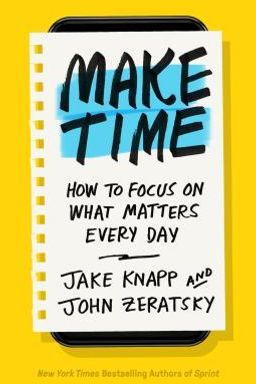
Do you ever look back at your day and wonder where the time went? That feeling—of days blurring together in a rush of to-dos, notifications, and meetings—is exactly what Jake Knapp and John Zeratsky set out to fix in Make Time: How to Focus on What Matters Every Day. Drawing from their experiences designing products like Gmail and YouTube, they contend that modern life is designed to pull your attention in a thousand directions. Our technology and workplace norms encourage constant busyness, distraction, and reactivity. In short, our default settings are broken. But, they argue, by redesigning your defaults—your calendar, your devices, your routines—you can make time instead of losing it.
Knapp and Zeratsky’s central claim is that time isn’t something you save; it’s something you make—through deliberate attention, focus, and energy choices. Their framework integrates decades of design thinking and real-world experiments into a four-step daily loop: Highlight (choose what matters today), Laser (focus your attention), Energize (build energy through physical well-being), and Reflect (adjust and improve through daily feedback). This isn’t a productivity manual for squeezing more hours out of your day. It’s a guide for designing your days around meaning, satisfaction, and control.
Unlearning the Busy Bandwagon and Infinity Pools
Knapp and Zeratsky frame modern life as dominated by two forces: the Busy Bandwagon—our tendency to fill every moment with busyness—and the Infinity Pools—apps and services that deliver endless streams of content. The Busy Bandwagon rewards constant motion but rarely meaningful progress, while Infinity Pools keep us perpetually distracted with notifications and novelty. The result is burnout and blur: we’re always doing, but rarely noticing what we’ve done.
Their antidote? Design your time the way great designers build products—by questioning every default. Why must meetings be 60 minutes? Why should you check email first thing in the morning? Why keep social media apps on your phone at all? By applying design principles to everyday life, Knapp and Zeratsky believe you can turn your attention into an intentional, renewable resource rather than a reactive one.
The Four-Step Loop for Intentional Days
The heart of the book lies in its four-step daily system, inspired by the design sprints the authors led at Google Ventures. Each step addresses a different dimension of human experience—focus, attention, energy, and reflection:
- Highlight: Pick one meaningful task or experience to be the “bright spot” in your day. It could be finishing a project, taking your kid to the park, or baking a cake. The goal isn’t volume; it’s satisfaction.
- Laser: Develop intense, deliberate focus by redesigning your environment to minimize distraction. That may mean deleting apps, logging out, blocking sites, or even wearing a watch to avoid checking your phone.
- Energize: Recognize that your mind is powered by your body. Move daily, eat well, rest deeply, and spend time with your “tribe.” The authors borrow lessons from evolutionary psychology to restore our natural energy rhythms.
- Reflect: End each day by taking brief notes on what worked—your energy, focus, and gratitude—and tweak tomorrow based on today’s results. Like a scientist, you continually adjust your system.
Together, these four steps form a sustainable feedback loop—a daily design sprint for your own life. Rather than chasing a perfect system or single hack, Make Time encourages ongoing experimentation. If you fall off the wagon, you simply start again tomorrow. This adaptability makes it powerful: each day is a clean slate.
Why Energy Matters More Than Willpower
Unlike many time-management systems, Make Time emphasizes that attention depends on physiology, not heroism. You can’t force focus when your energy is depleted. To sustain attention, you need to live like a “modern hunter-gatherer”: move often, eat real food, and rest deeply. This “Energize” philosophy stands out for its practicality and humanity—it’s permission to work with, not against, your biology.
A Framework, Not a Formula
Knapp and Zeratsky make it clear that Make Time isn’t about perfection. They’re refreshingly open about failing to follow their own methods all the time. Instead of rigid scheduling, they offer a menu of 87 tactics you can mix and match to fit your lifestyle. Like a cookbook, it invites play and personalization. The mantra is “Pick, Test, Repeat.”
Compared with Cal Newport’s more austere Deep Work or David Allen’s comprehensive Getting Things Done, Make Time is minimalist, humorous, and humane. It’s not about optimizing your every minute—it’s about ensuring that some minutes each day actually matter to you. The result is a quietly radical idea: that meaning, not metrics, should be your measure of productivity.
“Most of us don’t need more time; we need more focus. When you choose one meaningful thing each day, time expands around it.”
Through patient reflection and small daily wins, Make Time helps you turn your life’s autopilot off. It teaches you to question the defaults that govern your attention, redesign them for intentional living, and build momentum one Highlight at a time. It’s not about doing more; it’s about remembering what you’re alive to do.