
Idea 1
Making Possibilities Happen: Turning Imagination into Reality
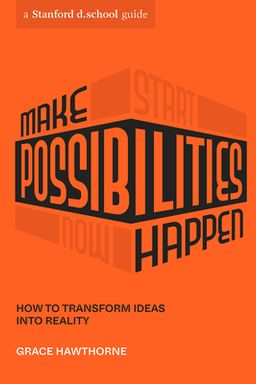
Have you ever looked at a great invention, a work of art, or a bold new idea and thought, “I wish I could create something like that”? Grace Hawthorne’s Make Possibilities Happen argues that you already can—and probably have. The power to transform imagination into reality lives inside all of us; it simply requires understanding how our brains, habits, and environments affect creativity and action. Hawthorne’s book, born from her decades of study and teaching at Stanford’s d.school, offers a practical guide that demystifies creativity by showing how ideas move from mental sparks to finished results.
The book’s core argument is simple yet radical: creativity is not a rare gift reserved for a few—it’s a trainable, learnable capacity of every human being. But unlocking it means working with both your brain and your behaviors. Most people are trapped by psychological comfort zones, evolutionary habits that resist risk, and false boundaries built by fear or routine. Make Possibilities Happen teaches you how to break those barriers systematically through four stages—SEE, START, DO, and FINISH—each supported by research, stories, and exercises drawn from Hawthorne’s Stanford workshops.
Seeing and Believing: The Vision Behind Creativity
Possibility begins with perception. You have to see a potential outcome clearly enough that your brain treats it as real. This visualization process, backed by neuroscience and elite athlete studies, primes the mind for success and gives direction to attention. Hawthorne encourages you to visualize not only the result but the feeling of completion—the emotions, people, and context that make it vivid. By consciously choosing how you see the world, you build what she calls a personal “matrix” of purpose, vision, and goal. Seeing isn’t passive—it’s active imagination harnessed as a creative engine.
Starting: From Dream to First Step
Once you have a clear vision, the next challenge is starting. This seems simple but is often the hardest part. Hawthorne uses examples from time management and psychology (including Daniel Kahneman’s prospect theory) to explain why humans favor safety over risk, even if it means stagnation. Her advice? Replace wishing with working. A goal without work is just a wish. You must choose action over attachment, focusing on process rather than fixed outcomes. Starting is a mental muscle—and the moment you take that first small step, momentum begins to form.
Doing and Momentum: The Discipline of Progress
“Nothing happens without doing.” This mantra echoes throughout the book. Hawthorne blends neuroscience and design research to show that creativity grows with action. In Stanford’s creative capacity studies, participants’ brains physically changed after timed, hands-on training. Doing triggers learning loops; thinking alone does not. Her advice—build energy with intention, stay flexible like water, and develop habits of proactivity such as the “3-15-60 minute” rule for tackling tasks—keeps ideas moving toward realization. Progress isn’t about perfect execution, but about maintaining momentum under tension.
Finishing: Reflection and Renewal
Finishing, according to Hawthorne, isn’t an endpoint but a momentary pause in creation. Possibilities are infinite because the act of completing one project inevitably generates ideas for the next. She explains concepts like the point of diminishing returns and self-measurement—reminding readers that only you can define success. Perfectionism, she insists, is the enemy of progress. Instead of striving for flawless outcomes, celebrate what you’ve achieved, learn from failure, and keep going. This is how creativity sustains itself as a lifelong rhythm.
Why It Matters: Creativity as Human Survival
Beyond self-improvement, Hawthorne frames creativity as essential to human flourishing. Every rocket launch, architecture marvel, or homemade gadget begins as possibility. When we activate our innate creativity, we design not only better products but better futures—for ourselves and others. The d.school philosophy makes creativity a verb, a way of actively improving the world. Whether you are an entrepreneur, teacher, artist, or simply curious soul, Make Possibilities Happen is a modern operator’s manual for unleashing the imagination that’s waiting within you.
Through its combination of scientific insight, design thinking techniques, and empowering philosophy, Hawthorne’s guide helps you transform imagination into tangible reality. The message is clear and deeply optimistic: you are already creative, and with awareness, practice, and persistence, you can make anything possible.