
Idea 1
Mastering the Options Game: Risk, Strategy, and Psychology
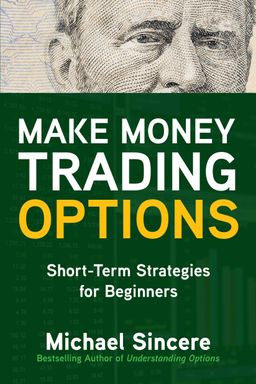
Have you ever wondered why so many people lose money trading options, even when they think they know what they’re doing? In Make Money Trading Options: Short-Term Strategies for Beginners, veteran trader and author Michael Sincere exposes the traps that swallow new traders and reveals practical, tested methods to turn options trading into a disciplined, strategic endeavor—one where protecting your capital is just as important as making profits.
Sincere contends that the key to success in the options market isn’t about forecasting the future or finding a secret formula—it’s about managing risk, thinking like a scientist, and trading small until you know what works. The book’s central promise is simple: anyone can learn to make money trading options if they develop the right mindset, use verified strategies, and build habits of disciplined experimentation.
Why the Options Market Is a Dangerous Playground
Sincere begins by painting a vivid picture of the modern options market—a fast-moving, emotion-charged arena filled with seasoned professionals, powerful algorithms, and an endless stream of noise. Many newcomers, he warns, enter this world underprepared and overconfident. They believe that reading a few books or watching online tutorials equips them to compete with hedge funds and market makers armed with supercomputers. As he bluntly puts it, “You wouldn’t fly a plane after watching YouTube videos—you’d need real flight hours. Trading is no different.”
That’s where his teaching style stands out: rather than overwhelm you with abstract theories, he tells a story. In Part One, we meet Sam, a retired teacher who loses nearly a third of his savings in a single week because he breaks every rule of sound trading—trading too big, chasing hot tips, and letting emotions replace logic. Through Sam’s misadventures, Sincere turns complex trading principles into memorable lessons: set a plan, manage risk, ignore the hype, and protect your account before thinking about profits.
From Mistakes to Mastery: The Scientist’s Approach
Sincere redefines what it means to learn trading. Instead of gambling on luck, you become a scientist running experiments. You test hypotheses using a paper trading account—a risk-free simulation environment that lets you practice under real market conditions. “Think of the market as your laboratory,” he writes, “and your trades as experiments that reveal what works.” By treating each trade as data rather than drama, you remove ego and emotion from decisions.
This mindset precedes his signature strategy: the Test Trading Strategy. It’s a structured way to find “true winners”—stocks or ETFs that show consistent strength during the day—without risking real money. It teaches you to identify momentum, confirm direction, and only then commit to small trades. Sincere insists that this daily discipline develops instinct through observation, so when you do trade live capital, you’re reacting from training, not guesswork.
Why Risk Management Comes First
A recurring theme throughout the book is this warning: if you can’t manage risk, you can’t survive. Every strategy, chart, and indicator means nothing if you blow up your account. He emphasizes trading small—both in position size and total capital allocation—so losses are bearable. You’ll never eliminate risk, but you can control it. Protecting your money means you live to trade another day.
“Your first goal as a trader,” Sincere insists, “is not to make money—it’s to avoid losing it.” Once you internalize this paradox, you’ll trade with patience instead of panic.
A Toolkit for New and Intermediate Traders
The book moves from philosophy to practicality. You’ll learn how to set up a Watch List of high-quality, liquid stocks; use simulated trades to identify consistent winners; and apply behavioral analysis to read the market’s mood. In Stock Market Behavior Analysis, Sincere introduces intuitive patterns like the “Bullish Steamroller,” “Rocky Road,” and “Sideways Sucker”—memorable names for daily price behaviors that help you spot danger or opportunity long before indicators confirm it.
In later chapters, he builds on foundational skills with targeted methods—like trading SPY and QQQ, applying off-the-wall strategies such as the “long shot” or “countertrend” plays, and integrating basic technical tools like moving averages and RSI. Each strategy reinforces the same framework: observe, test, trade small, and act with discipline. The book’s final sections serve as a crash course for beginners on option mechanics, decoding technical signals, and applying historical wisdom from legendary trader Jesse Livermore.
Why This Matters
Sincere’s mission isn’t to sell certainty but to build competence. He wants you to stop gambling and start learning. By showing you how to recognize your psychological triggers—greed, fear, revenge trading—you gain control over your worst enemy: yourself. Through small-scale experimentation, journaling, and awareness, you turn chaotic markets into manageable systems.
Ultimately, Make Money Trading Options is about self-mastery as much as market mastery. It argues that success in options trading isn’t a destination but a practice—a disciplined pursuit of knowledge, pattern recognition, and emotional balance. Whether you’ve never traded or have lost thousands like Sam, Sincere’s conversational guidance gives you both realism and hope: the market will always be dangerous, but with preparation and patience, it can become your lifelong classroom rather than your downfall.