
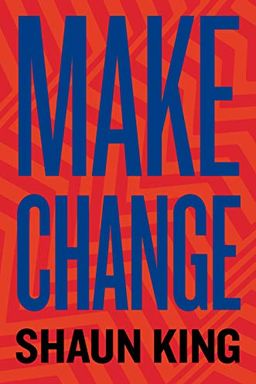
Make Change cover

Make Change

by Shaun King

Make Change by Shaun King is a powerful guide for aspiring activists. Learn how to leverage personal stories, understand historical patterns, and mobilize resources effectively to combat systemic injustice. With practical advice and inspiring examples, King equips readers to become agents of meaningful, lasting change.

Making Change When the World Feels Broken

Have you ever looked at the world and wondered where to even begin fixing it? In Make Change, activist and writer Shaun King argues that meaningful, systemic transformation doesn’t happen by accident—it happens when ordinary people make deliberate choices to act. Through a blend of memoir, history, and strategy, King shows how personal conviction can evolve into collective power, offering a blueprint for anyone who feels overwhelmed by injustice yet determined to make a difference.

King contends that change begins with both a decision and a deep understanding of history. You can’t fix what you don’t understand, and you can’t sustain activism without knowing why you're fighting. The book traces his own life—from surviving racial violence as a teenager in Kentucky to covering police brutality and building nationwide campaigns like the Injustice Boycott and Real Justice PAC—as a way of demonstrating how outrage must become organization. He insists that moral outrage alone is not enough; to truly move mountains, people must channel that energy through systems, coalitions, and disciplined self-care.

Understanding the Dip of History

At the heart of King’s philosophy is the idea of “the Dip,” inspired by 19th-century historian Leopold von Ranke. King uses Ranke’s analysis of human history—oscillating between peaks of progress and valleys of regression—to explain our current moment. We are, he says, in a deep historical dip, characterized by inequality, police violence, and political corruption. But the Dip also holds possibilities: what goes down can rise again, if people organize strategically enough to push humanity toward its next peak.

According to King, this understanding changes how we respond to crises. Instead of assuming that the world naturally improves over time (the myth of evolutionary progress), the Dip reminds us that regression is part of the human story. Change has to be forced upward through struggle. Like Dr. Martin Luther King Jr. and the civil rights activists who faced setbacks before breakthroughs, we, too, are called to climb out of the Dip through sustained energy, organization, and strategic action.

From Moral Outrage to Organized Action

The book mirrors the structure of a movement: first comes the emotional ignition, then the organization, and finally the plan. In the beginning, King recounts the moment he saw Eric Garner’s death on video and recognized it as a modern lynching. That spark turned into a lifelong mission. He emphasizes that “moral conviction” must evolve into collective, coordinated energy—otherwise, outrage burns out.

For King, activism isn’t about personality—it’s about systems. Real reform comes from building “energized people,” “organized people,” and “sophisticated plans.” Having one of these without the others leads to burnout or failure. When protesters in Ferguson shouted in the streets, their passion disrupted the status quo, but sustaining that energy required discipline, data, leadership, and resilience. King learned this lesson firsthand through victories and failures in movements like Black Lives Matter and later through political efforts to elect reform-minded district attorneys.

The Personal Cost of Changemaking

King refuses to romanticize activism. He candidly shares the trauma, public mistakes, and burnout that come with living in the crosshairs of social conflict. Racism, online hate, and the weight of others’ pain nearly broke him. From therapy to family time to intentionally disconnecting from technology, he describes how self-care became political survival. Drawing on writer Audre Lorde’s words—“Caring for myself is not self-indulgence, it is self-preservation, and that is an act of political warfare”—King reframes activism not just as a fight for justice but as a fight to remain human.

Why It Matters Now

The world King describes—rife with white supremacy, inequality, and political apathy—feels painfully recognizable. But Make Change insists that despair is not an option. Whether you are an angry teenager, a burned-out teacher, or a hopeful grandmother, King calls you to make a choice: pick one problem that breaks your heart, commit your life to it, and organize strategically toward its solution. “It’s on us,” he reminds readers—not governments, not corporations—to rebuild the world into something more humane.

Through deeply personal stories and historical context, King offers both realism and hope. He shows that the arc of history does not bend toward justice unless people pull it that way. And pulling it takes clarity, courage, and community. Make Change is, above all, a manual for enduring activism—and a reminder that the fight for a just world belongs to all of us.


The Dip: Understanding History's Cycles

King begins with a history lesson that reframes how you see progress. Learning from the 19th-century German historian Leopold von Ranke, he argues that human history doesn’t follow a straight upward curve toward improvement—it moves in waves. For every peak of freedom, equality, and democracy, there are plunges into oppression, war, and violence. King calls these downturns “dips,” and he asserts that we are living in one right now.

Why the Dip Happens

Each leap of progress provokes a backlash. After Reconstruction, the U.S. plunged into the era of Jim Crow. After the victories of the civil rights movement, Nixon’s “war on drugs” criminalized Black communities. After Barack Obama’s election symbolized multicultural hope, the Trump era unleashed racist nationalism. The Dip, King explains, is not proof that progress is impossible—it’s proof that progress threatens entrenched power, which fights back fiercely.

Recognizing the Dip Changes Everything

When you see the Dip clearly, you stop being surprised by setbacks. You recognize Trumpism, mass incarceration, and climate collapse as part of an ancient pattern. This doesn’t excuse injustice—it mobilizes you to fight smarter. “You are either in a dip, coming out of one, or heading toward one,” King writes. That perspective grounds your hope not in naïve optimism, but in hard-earned realism.

(This echoes the perspective of historian Howard Zinn, who argued that history is shaped by millions of small acts of resistance, not by inevitable progress.)

What Escaping the Dip Requires

Escaping a Dip isn’t spontaneous or peaceful—it takes warlike organization. King uses Reconstruction, the Civil Rights movement, and the Obama years as examples of how grassroots action—organized people, funded movements, strategic pressure—push humanity upward. If activists want to reverse this new dip of racial violence, inequality, and authoritarianism, they must commit to sophisticated, long-haul organizing, not momentary outrage. This historical lens becomes the intellectual foundation for the rest of the book: you can’t make change if you misunderstand what kind of moment you’re in.


Choosing Your Cause and Making a Commitment

Before you can build movements, King insists, you must choose. “To make change, you must first make a choice,” he writes. Lasting activism starts when you decide which problem in the world breaks your heart enough to own it. This process demands brutal honesty and relentless focus—it’s not about dabbling in every issue but devoting your life to one. King builds this argument through his own story of deciding to fight police brutality after seeing the murders of Eric Garner, Michael Brown, and Sean Bell.

Finding the Cause That Chooses You

King’s turning point came in 2014 when he realized that his outrage over police killings wasn’t a passing reaction—it was a calling. His advice: look for the issue that keeps you awake at night, the one you can’t stop thinking about. It might anger or grieve you, but it should compel you. Whether it’s climate change, mass incarceration, or education inequality, your purpose emerges when emotion meets need.

Choosing One Cause—Not Twenty

It feels almost unkind to pick one injustice when the world is on fire, but King stresses that scattered energy leads to burnout and ineffectiveness. “To fight for everything is to win nothing,” he warns. Focus transforms compassion into power. You can care about many issues, but you can truly fight for only one at a time. This disciplined commitment echoes advice from leadership scholar Peter Drucker, who observed that focus is the difference between success and performance.

From Caring to Strategy

King teaches that choosing a cause is only step one—you must also decide how to fight. He tells the story of a Muslim student who asked how she could focus on one issue when she faced racism, sexism, and Islamophobia simultaneously. King sympathized but explained that intersectional awareness doesn’t mean divided focus. You can connect causes, build coalitions, and stay informed about all struggles while choosing one battlefront to lead from. That’s how movements scale.

In essence, your change-making begins with a vow: to solve one problem with the same urgency you’d bring to saving your own home from fire. Once you decide, King says, the rest of your life should align around that purpose.


Learning by Doing: The Path of Imperfect Action

King rejects the idea that you need perfect preparation to start changing the world. Like parenthood, he says, activism only makes sense once you begin doing it. He describes becoming a father at twenty-one—terrified, broke, reading every manual, yet unprepared for the real thing—as a metaphor for learning to organize. You can’t intellectualize your way into leadership; you learn by doing.

Stop Waiting for the Perfect Moment

Most people delay activism with excuses: “I need more time,” “I don’t know enough,” or “Someone else will do it better.” But progress requires motion, not mastery. King urges you to volunteer, even in small, unglamorous ways—handing out flyers, taking phone calls, knocking on doors. Every meaningful change began with people willing to take the first imperfect step. Like making a child’s first bath slightly too cold, your early mistakes are how you calibrate your effectiveness.

Respect the Process of Growth

From church basements to political campaigns, King learned that great organizers start humbly. His “learn by doing” philosophy aligns with thinkers like Paulo Freire, who argued that liberation arises from “praxis”—reflective action followed by reflection again. Activism is a muscle that strengthens only through repetition. By researching organizations, attending local meetings, and following up consistently, you build both credibility and courage.

Leading Without Titles

King warns against ego-driven activism. He reminds readers that movements aren’t corporate hierarchies; they’re ecosystems. Real contribution may look like cooking food, organizing rides, or cleaning up after protests. “Don’t make rising through the ranks the goal,” he says—impact outweighs recognition. The path from follower to leader happens naturally when you prove reliable, compassionate, and consistent.

Most important, King tells you not to romanticize activism—it is messy, tedious, and often thankless. But in the act of doing, you evolve from spectator to participant, from intention to influence.


Energizing People and Harnessing Outrage

Every movement starts with fury. But passion alone is like a lit match without kindling: bright for a moment, quickly extinguished. King explains that the first ingredient in making change is energy—sustained, collective outrage that transforms apathy into motion. He compares an energized movement to a “portal” blasted through a force field of the status quo. The challenge is keeping that portal open long enough for real change to pass through.

Why Energy Matters More Than Policies

In 2014, after the killings of Eric Garner, Michael Brown, and Tamir Rice, millions protested under the banner of Black Lives Matter. King notes that for one year, the media, politicians, and global audiences framed police brutality as a national crisis: that was energy. Yet when indictments failed and no reforms materialized, disillusionment set in. The lesson: emotion begins the movement, but planning sustains it. Without structure, passion becomes burnout.

From Hashtags to Human Bonds

Social media, King warns, can simulate activism without accountability. Likes and shares create illusions of progress, while the real system remains untouched. True energy grows from relationships—people marching, risking, sacrificing together. The “invisible civil rights movement,” he says, was powered by unseen meetings, shared meals, and lifelong trust networks. If social energy isn’t converted offline, it evaporates.

Momentum Is Fragile

The system banks on protesters’ exhaustion: “They will wait us out.” Therefore, energy must evolve into organized infrastructure before it cools. King frames it as physics—outrage must be transferred into motion through systems of communication, leadership, and logistics. He credits his movement failures to mistaking intensity for durability. You can’t build justice on adrenaline alone.

In short, energized people ignite revolution—but only organized people sustain it. Without disciplined follow-through, a trending hashtag becomes tomorrow’s silence.


Building Organized People and Deep Connections

King argues that the difference between a moment and a movement is organization. To convert passionate crowds into lasting power, you need to know who’s doing what, why, and how. Drawing from the hidden logistics of the civil rights era, he describes two kinds of work: the visible (protests, speeches, media) and the invisible (community meetings, spreadsheets, phone calls). Most of the movement’s mass lies beneath the surface.

Organizing Is Humanizing

Technology tempts organizers to treat people like data points—emails and likes to be collected. But King insists that organizing deeply means knowing people as individuals: their skills, schedules, and stories. He shares an example from a Kansas City gala where he discovered that a single table of attendees—a caterer, teacher, banker, and writer—had more potential to transform a cause than all the donors combined, if they coordinated strategically.

Turning Strangers into Teams

To organize is to connect roles, not just recruit bodies. Ask what each person can give, how much time they have, and whom they know. King recalls teaching volunteers to list five people in their network who could contribute something tangible—money, influence, or skills. This method multiplied the movement’s capacity exponentially. In his Real Justice PAC, he refined this into small “teams of hundreds,” creating scalable intimacy across thousands of volunteers.

Winning as a Community, Not as Heroes

King dismantles the myth of the lone savior. The most successful change-makers are communities with overlapping trust—relational ecosystems robust enough to survive conflict. He admits that modern movements often lack this depth, relying instead on fickle online connection. To move forward, activists must return to relational organizing—church-basement conversations, neighborhood canvassing, shared meals. Systems may exploit isolation, but movements thrive on belonging.

Organization, then, is not bureaucratic—it is spiritual and strategic. It transforms empathy into execution.


Crafting Sophisticated Plans that Win

Energized and organized people still fail, King warns, without a sophisticated plan. He tells the story of organizing post-earthquake aid to Haiti—sending 25,000 tents in an outpouring of compassion that inadvertently became long-term housing because there was no blueprint for rebuilding. “We built an enormous porch for a tiny house,” his seminary professor once told him—a metaphor for activism without architecture. Passion is the porch, but the plan is the home.

From Reaction to Design

King defines a plan as “a thoughtful, research-driven strategy that matches the scale of the problem.” To illustrate, he chronicles the Raise the Age coalition in New York, which united 100 organizations to stop children from being prosecuted as adults. Their success came from division of roles—some activists befriended Governor Andrew Cuomo, others like King applied public pressure. The strategic duality—good cop and bad cop—created momentum that passed the law after a decade of failures.

A smart plan assigns clear responsibilities, employs experts, and sustains collaboration. Emotion can stir people, but planning gives them a map.

Planning Like the Powerful

King points out that corporations and think tanks plan their domination meticulously; activists often improvise. The wealthy build five-year strategies, social movements build hashtags. To win, you must plan like a CEO but fight like a citizen—marrying precision with passion. This includes crafting measurable goals, evaluating outcomes, and building documentation that survives leadership transitions.

In King’s later work with Bernie Sanders’s team, strategic planning evolved into full-scale policy design, proving that activism and politics must merge to institutionalize change.

Planning as Hope

Plans, King insists, are not bureaucratic red tape—they are psychological lifelines. They transform chaos into coherence, showing weary activists that their work adds up. A good plan doesn’t guarantee success, but it guarantees movement.

“Without a plan,” he writes, “we’re just bringing forks to soup-eating contests.” Strategic design is what turns moral clarity into measurable victory.


Failing Forward: Learning from Defeat

Failure, in King’s view, is a painful but necessary stage of growth. After years of organizing, he confesses to overpromising justice and underdelivering—especially to grieving families seeking accountability for police killings. His hard-earned wisdom: you will lose most battles before you win one. The key is to fail reflectively, not destructively.

The California Losses

King details how his Real Justice PAC, founded to elect progressive district attorneys, lost crucial races in San Diego and Sacramento. Their error was assuming that moral messaging alone could win; they underestimated how voters associate reform with danger. Even Democrats chose conservative candidates out of fear. For King, this shattered his illusion that righteousness ensures victory—change also requires persuasion.

He compares his misstep to “building a revolution that forgot to ask people what they actually wanted.” After revising their messaging to emphasize community safety, the team went on to help elect transformative DAs like Larry Krasner in Philadelphia, Wesley Bell in St. Louis, Rachael Rollins in Boston, and Chesa Boudin in San Francisco.

Reframing Failure as Data

Every failure, King argues, is a case study. The question isn’t “Did we lose?” but “Why did we lose?” That reflection breeds stronger strategy. He calls for “radical honesty” among activists—willingness to admit mistakes publicly to sustain credibility. (This aligns with Brené Brown’s idea that vulnerability builds trust.) Winning movements are self-critical, not self-righteous.

Persistence as a Strategy

King cites Bernie Sanders’s multiple election losses before eventual victories to illustrate perseverance. Failure becomes fuel when you refuse to detach identity from outcome. Activists, he says, must treat setbacks as tuition for wisdom. “Most of the dreams of changing the world die in our minds before we even start,” he warns. The cure for failure is motion—failing better, smarter, and together.

In short, failure is the compost of revolution: it stinks, but it fertilizes the future.


Staying Human: Burnout and Radical Self-Care

In one of the book’s most vulnerable sections, King exposes the emotional cost of activism. Fighting daily against injustice, absorbing others’ trauma, and enduring hate created a psychic toll he could no longer ignore. “Saying yes to everyone became saying no to my family, to my sanity, to my cause,” he writes. This chapter transforms from confession to counsel: self-care is not selfish—it’s survival.

The Weight of Empathy

King calls his empathy his “superpower” and weakness alike. Highly sensitive to suffering, he took every mother’s grief personally until compassion became exhaustion. Over time, online harassment and death threats hardened him into numbness—alienating him from his wife Rai and children. Healing began only when he re-humanized himself through therapy, counseling, and connection. His mantra: “It was my best. It was my best.”

Lessons from Audre Lorde

Quoting Lorde’s assertion that “caring for myself…is an act of political warfare,” King reframes self-preservation as resistance. Activists cannot sustain movements if they treat rest as betrayal. He prescribes therapy, unplugged dinners, and “phone-free zones” as revolutionary habits. He also highlights music and comedy as medicine—listening to Richard Pryor or Bob Marley to restore joy. Even a simple haircut, he admits, helps him feel renewed and strong.

Creating Boundaries as Activism

King likens digital addiction to a form of surveillance capitalism that feeds anxiety. He sets strict boundaries—no calls after 7 p.m., no phones at dinner, family time sacred. “We teach people how to treat us,” he reminds readers. Saying no compassionately but firmly protects both your purpose and your peace.

Ultimately, he concludes, sustained change requires sustained humans. Self-care is not retreating from the fight—it’s ensuring you live to fight again.


It’s On Us: Turning Hope into Collective Action

King closes with a simple truth: nobody is coming to save us—it’s on us. Governments protect power, corporations protect profit, and charities often preserve the status quo. Real transformation emerges only when citizens unite to act. He illustrates this with the extraordinary campaign to save Rodney Reed, an innocent man on Texas death row. By combining every lesson of the book—energy, organization, planning, and persistence—King and a coalition of activists stopped his execution days before it was scheduled.

The Anatomy of a Victory

When his wife showed him Reed’s story, King mobilized instantly: he built a website, launched a petition, and within days gathered over 3 million signatures. Celebrities amplified it; volunteers called government offices; bipartisan legislators pressured Texas officials. By merging moral urgency with tactical brilliance, the campaign succeeded where decades of appeals had failed. Each step—digital storytelling, emotional imagery, organizing “phone storms,” recruiting “validators”—was a masterclass in movement architecture.

Solidarity Without Permission

King and civil rights attorney Lee Merritt made “It’s on us” their mantra because they learned the painful truth: when you wait for institutions to act morally, people die. Instead, they built a decentralized ecosystem of volunteers that bypassed bureaucracy. This, King argues, is the model for transformative citizenship in any domain—from climate action to education reform.

Building the Future Ourselves

King ends where he begins—with choice. You can watch the world collapse under injustice, or you can help rebuild it. Making change is neither mystery nor miracle; it is method. Energize people. Organize deeply. Plan boldly. Care for yourself. Then act. “We must imagine and force the future into existence,” he writes. The task sounds daunting, but King insists that history proves it’s possible—and now, it’s on us to prove it again.

Dig Deeper

Get personalized prompts to apply these lessons to your life and deepen your understanding.

Go Deeper

Get the Full Experience

Download Insight Books for AI-powered reflections, quizzes, and more.