
Idea 1
Making a Life on the Edge
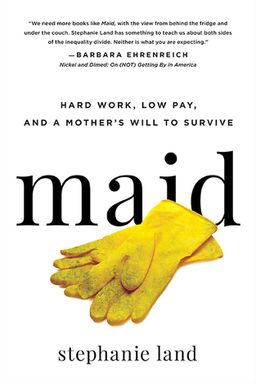
How do you build a life when everything—from housing to work to health—rests on uncertainty? In Maid: Hard Work, Low Pay, and a Mother’s Will to Survive, Stephanie Land argues that poverty is not just an economic condition but a sustained state of precarity woven through systems of labor, domestic life, and bureaucracy. Land’s memoir reveals how survival under scarcity demands constant negotiation—between caseworkers and clients, between motherhood and work, between self-worth and social judgment.
You follow Land’s journey as she leaves an abusive partner, navigates shelters, earns minimum wage cleaning wealthy clients’ homes, and sustains hope through education and writing. The narrative dismantles the idea that poverty comes from personal failure; instead, it shows a web of structural contradictions that force the poor to continually prove their need while performing invisible labor that sustains others’ comfort.
The System of Survival
Land’s early chapters immerse you in shelters with probation-like rules—curfews, urine tests, and inspections—that function as both refuge and surveillance. Being poor, she writes, feels like probation, where your “crime” is inability to afford stability. Every form—court filings, housing vouchers, Section 8 applications—becomes a mirror of bureaucratic exposure. Poverty demands transparency that others are never asked to offer.
You see poverty not as chaos but a labor system of constant management. To survive, Land fills binders with documentation for seven forms of assistance: SNAP, WIC, Medicaid, Pell Grants, childcare subsidies, LIHEAP, and TBRA housing vouchers. Each program gives short-term relief but also extracts time and dignity to keep the benefits. Paperwork replaces time that could otherwise be spent working or parenting.
Invisible Labor and the Economy of Cleanliness
At Classic Clean, Land wipes down strangers’ counters and toilets for $8.55 an hour, clocked by landline, without travel pay or sick days. Cleaning becomes both intimate and anonymous—you touch every inch of clients’ homes, learn their secrets, and vanish before they return. The rhythm of scrubbing mirrors an economy built on invisibility: the cleaner’s body absorbs pain so that others may inhabit perfection. Her scoliosis, nerve damage, and reliance on ibuprofen mark the hidden toll behind polished surfaces.
Land also exposes class paradoxes. Clients live amid abundance—lobster dinners, designer furnishings, hidden loneliness—while the cleaner barely affords milk. Yet she finds meaning in these encounters, noticing humanity amid objects, forging quiet intimacy with the unseen side of affluence. (Barbara Ehrenreich’s Nickel and Dimed offers similar commentary, but Land adds maternal perspective—how the worker’s exhaustion doubles when paired with childcare.)
Motherhood as Resistance
Throughout, motherhood anchors Land’s choices. You watch her tape calendars on walls, establish bedtime rituals, and invent routines—baths, bedtime phrases, tickle monsters—that secure her daughter Mia emotionally when nothing else is stable. These small acts of consistency become resistance against systemic chaos. They allow Land to enact control and love even when institutions erode autonomy.
Motherhood amplifies guilt: society reads poverty through the lens of moral failure. When a pediatrician tells her to “do better,” Land internalizes blame that should fall on policy deficiencies—lack of housing, absence of sick leave, environmental hazards like mold. Yet maternal love drives survival; she takes classes, accepts assistance, and uses each ritual to shield Mia from the stigma attached to aid and low-wage work.
Community and Self-Reliance
Family offers mixed support. Land’s mother and stepfather judge as they help; her father’s emotional collapse forces independence. In their place, community fills the gap—friends like Sarah, landlords like Gertie, and clients like Henry offer small gifts that become lifelines: cribs, PayPal donations, lobster dinners. These gestures prove that survival depends as much on informal networks as on formal institutions. Land learns to barter, trading cleaning for housing and landscaping for rent reduction—a pragmatic form of agency when cash fails.
Education and writing also extend community. Land’s Women’s Independence Scholarship (WISP) and blog Still Life with Mia let her turn private struggle into public narrative. Writing becomes both livelihood and therapy, translating invisible care work into evidence of endurance. It is her bridge from subsistence to identity—an act of witnessing that transforms her anonymity into voice.
Trauma and Healing
Moments of crisis—Jamie’s violence and the car crash with Ruby—illuminate fragility. Each event collapses progress overnight, demanding new bureaucratic and emotional recovery. Land’s resilience lies in how she re-creates stability through paperwork, advocacy, and ritual, turning trauma into impetus for forward motion. Therapy, scholarships, and community replace silence with articulation.
Central Message
Poverty is an ecosystem that turns endurance into expertise. Land’s memoir teaches that survival under scarcity is not passive—it’s a full-time occupation requiring bureaucracy navigation, emotional management, and invisible labor.
Ultimately, you learn that poverty and motherhood in America are intertwined systems of care and constraint. Land’s story shows that hope does not emerge from rescue—it grows from persistence, documentation, and love practiced daily. You finish understanding that survival itself is work, and that telling the story—making it visible—is the first step toward structural change.