
Idea 1
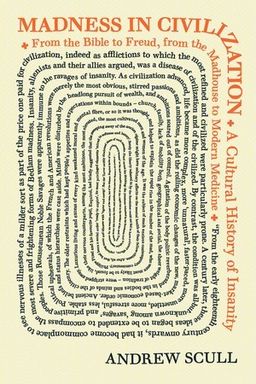
Madness and Civilization: The Human Struggle to Explain Unreason
Why do societies create categories for unreason? In Desperate Remedies: Psychiatry's Turbulent Quest to Cure Mental Illness, Andrew Scull traces two thousand years of efforts to define, explain, and control what Western and global traditions have called madness. He argues that this story is not only medical but deeply moral and cultural: it tells you what societies fear, condemn, and hope for. Across eras—from sacred healing to asylum reform to drug revolutions—Scull shows how explanations of mental disorder mirror changing ideas about the self, authority, and the boundary between normality and deviance.
Scull deliberately uses the old word “madness,” not because it is neutral, but because it reveals how each age negotiated stigma and sympathy. He warns that when you sanitize history by calling everyone “mentally ill,” you erase real cultural differences. Madness was once possession, sin, genius, or prophecy; later it became pathology, chemical imbalance, or neural circuit error. You cannot understand its long history without recognizing those shifting meanings.
From sacred to natural explanations
In ancient and medieval worlds, madness was entangled with the divine. Hebrew prophets like Saul and Nebuchadnezzar showed divine punishment or spirit possession. Greek physicians countered with humoral medicine, explaining melancholia or mania as imbalances of bile. Scull makes you see that both systems coexisted: the physician’s rational account did not erase the priest’s. Instead, the tension between naturalistic and supernatural explanations became a permanent feature of how humans respond to mental suffering.
Outside Europe, parallel traditions developed. Islamic hospitals admitted the insane for both medical and religious treatment; Indian Ayurveda fused body and soul through the doshas; Chinese physicians located spirit disturbance in imbalances of qi. None separated mind cleanly from body. These global frameworks remind you that medical pluralism—scientific, ritual, familial—was the norm, not the exception.
Christian charity and medieval institutions
In Christian Europe, saints, relics, and shrines became therapeutic centers. Pilgrims at Canterbury or Gheel sought miraculous cures. Church exorcism and theatre dramatized moral order through demoniacs. Yet the same culture created early hospitals that blended charity with control. Families, clergy, and civic authorities shared the uneasy task of managing the disturbed—often by containment more than cure. You begin to see the sociological pattern: every era mixes compassion, fear, and the need for order.
Reason, enlightenment and asylum reform
From the Renaissance onward, madness entered art, philosophy, and anatomy. The early modern period celebrated melancholy as genius and gave rise to stage dramas that turned insanity into moral spectacle—Shakespeare’s Lear and Ophelia are archetypes. But by the eighteenth century, physiology and commerce joined the story: private madhouses, the rhetoric of nerves, Mesmer’s magnetism, and Quaker moral treatment together marked the birth of psychiatry. The “mad-business” became a trade, and the asylum became the public emblem of humane reform.
Scull’s central contention is that these transitions were never simple scientific progress. The rise of psychiatry required the Great Confinement: the building of massive asylums, backed by the state, which promised cure but quickly filled with incurables. Out of this apparatus came both the profession of psychiatry and its ethical dilemma—how to treat human beings who cannot consent, yet whose suffering demands response.
Modern fragmentation and contested authority
In the twentieth century, psychiatry swung between biological and psychodynamic poles. Somatic therapies like malaria fevers, insulin shocks, ECT, and lobotomy sought mechanical cures for unmanageable patients—often with tragic results. Psychoanalysis then reinterpreted madness as meaning, offering the talking cure and reshaping Western culture. War trauma introduced the mass politics of psychiatry: shell shock, PTSD, and military screening institutionalized new forms of suffering. Later came the drug revolution—Thorazine, Valium, Prozac—and the diagnostic revolution of the DSM, which redefined illness through checklists. Each wave redrew the boundaries of professional authority and human dignity.
The human cost and enduring questions
By the twenty-first century, asylums have closed and pharmaceutical capitalism dominates. Yet homelessness, prisons, and untreated illness show the limits of deinstitutionalization. Scull’s long arc warns you that psychiatry’s progress is never linear: each reform solves some problems and creates new ones. His ultimate lesson is historical humility. Madness is inseparable from the societies that name it. To understand it, you must confront both sufferers’ pain and the institutions, ideologies, and hopes built around that pain. (In spirit, Scull’s approach echoes Foucault’s Madness and Civilization but grounds it more firmly in archival, medical, and material realities.)