
Idea 1
Spectacle Politics and a Broken House
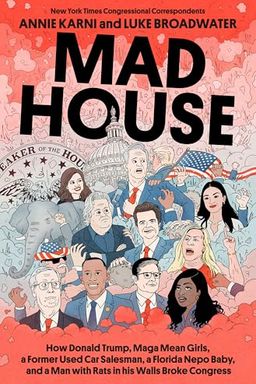
What happens when a razor-thin majority collides with a media ecosystem that pays for drama? In this book, you watch the 118th Congress turn lawmaking into performance. The core argument is blunt: a four-seat Republican margin plus attention-driven incentives transformed the House into a stage where spectacle beats substance. A handful of hard-right members leveraged procedures, outside media, and donor pipelines to hold leadership hostage; Kevin McCarthy won the gavel by giving away guardrails, then governed under constant ransom until the very concessions he made were used to depose him.
Across chapters, you see a system under stress: the debt ceiling showdown reveals how competent negotiators can still avert catastrophe; the post-McCarthy speaker fight shows a party unable to consolidate power; oversight morphs into theater; censures and purges normalize payback; and the human toll—threats, burnout, a wave of retirements—shrinks the talent pool. The book is not just a chronicle of chaos; it’s a field guide to how modern incentives, platforms, and procedural design choices can unmake governing coalitions.
A structural bind: math meets media
Start with arithmetic. With only a four-seat majority, leadership needed near-perfect unity to control the floor. That math, familiar to anyone who counts votes for a living, gave outsized leverage to a small, organized minority—Matt Gaetz, Marjorie Taylor Greene, Lauren Boebert, Jim Jordan, and allies. Layer on a media economy that rewards provocation—Fox, Newsmax, Steve Bannon’s War Room, podcasts, and virality—and you create a marketplace where disruption is a rational career strategy. A shouted floor speech or viral confrontation can bring more power than a subcommittee chairmanship. As Liz Cheney put it, “We’re electing idiots”—not as an insult, but as a diagnosis of perverse incentives.
Performance as power
You learn how procedures once used sparingly became power tools. The motion to vacate—restored as a concession to holdouts—let a single member force a vote to evict the Speaker. Rules Committee seats in the hands of hard-liners let them choke the floor. Even voting down the “rule,” a norm that was once sacrosanct, became a tactic. Each lever multiplied in potency because it could be paired with public pressure campaigns: phone trees lit up by Hannity segments, Bannon’s amplification of five-minute floor stunts, and social feeds that doxed colleagues as “RINOs.” The insurgents blended parliamentarian savvy with content creation and fundraising funnels.
Leadership caught in a vise
Kevin McCarthy’s leadership style—pleasing people, trading favors, reading the room—worked until it met this insurgent toolkit. He won the gavel after 15 ballots by giving away the very instruments that ensure stability. Governing then demanded further concessions: to pass the debt ceiling deal (the Fiscal Responsibility Act), he relied on Democrats for key rules votes, emptying his “red meat tank” and enraging his right flank. A single Sunday show misstep—blaming Democrats after they’d helped him avert a shutdown—cost him the goodwill that might have saved him when Gaetz pulled the motion to vacate. The lesson is unforgiving: trade away guardrails, and you’re governing on borrowed time.
Coups, paralysis, and an external veto
McCarthy’s fall wasn’t the end—it was the beginning of weeks of paralysis that exposed a party split between MAGA insurgents and institutionalists. Steve Scalise briefly won an internal vote, only to be kneecapped by Jordan loyalists who refused to honor the result. Jim Jordan then ran a public pressure campaign—repeated floor votes, escalated harassment (Don Bacon’s office fielded 31,000 calls; Ken Buck’s office got 20,000 voicemails), and media intimidation—that backfired as colleagues dug in. Tom Emmer’s bid collapsed within hours after Trump called him a “Globalist RINO” on Truth Social. Exhaustion, not consensus, produced Mike Johnson—a low-profile figure acceptable to enough factions. You see how a single external figure’s post can override internal majorities, making the conference less sovereign than its bylaws imply.
Real-world costs, not just vibes
The chaos had consequences. Ukraine aid stalled for months; Senate border talks (Sinema–Murphy–Lankford) died under MAGA pressure; impeachment became theater (Alejandro Mayorkas impeached in the House, dismissed in the Senate); and the House increasingly needed Democratic votes for core functions. Oversight veered into spectacle—James Comer’s probes chased headlines while Greene displayed explicit photos of Hunter Biden in committee—prompting Democrats like Jamie Raskin and Jasmine Crockett to fight spectacle with spectacle. The human price rose: threats, swattings, families sleeping with guns nearby, and a stream of retirements—Patrick McHenry, Mike Gallagher, Ken Buck, Blaine Luetkemeyer, Greg Pence—that drained institutional memory (compare to earlier eras when seniority and craft anchored stability).
Key Idea
Modern Congress behaves according to its incentives. If attention is currency and procedural chaos yields leverage, you’ll get more of both—until leaders rebuild guardrails and rebalance rewards.
By the end, you hold a coherent map: how narrow math empowered a media-savvy insurgency; how McCarthy’s concessions and missteps set the trap; how Trump’s posts functioned as vetoes; how competent negotiators (Shalanda Young, Patrick McHenry, Garret Graves) could manage crises but not fix incentives; how oversight and censure became content; and how the human toll hollowed out expertise. If you manage teams or care about institutions, the book doubles as a governance manual: don’t give away procedural weapons; put agreements on paper (as Young says, “Serious people put shit on paper”); build internal legitimacy before going public; and treat media incentives as a design variable, not a sideshow. Otherwise the show runs you.