
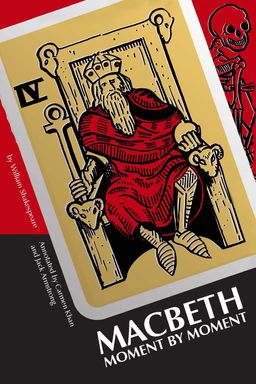
Macbeth cover

Macbeth

by William Shakespeare

Macbeth, a classic tragedy by William Shakespeare, delves into the dark side of ambition through the tale of a Scottish general''s quest for power. Guided by prophecy and consumed by guilt, Macbeth''s rise and fall explores themes of madness, betrayal, and the psychological impact of unchecked desires.

Ambition, Fate, and the Unraveling of the Human Soul

What drives a good person to commit terrible acts? In Macbeth, William Shakespeare plunges us deep into the human psyche to explore ambition, temptation, and the fatal intersection of moral weakness and supernatural influence. This tragedy, written around 1606, places readers in a dark, turbulent Scotland ruled by prophecy, guilt, and blood. It’s a story about power—how far one will go to gain it, and the monstrous consequences of holding onto it.

At its core, Macbeth examines the corrosive nature of unchecked ambition. Shakespeare’s protagonist begins as a loyal warrior and a noble thane, celebrated for his valor. Yet when the Weird Sisters spark an idea that he might be king, Macbeth is consumed by a fevered longing that quickly poisons his morals. Shakespeare crafts a chilling portrait of a man who, urged by his wife's ruthlessness and his own insecurities, murders his way to the throne—only to find that paranoia and guilt destroy what he hoped to gain.

Fate and Free Will

Right from the start, fate dangles a tantalizing promise: “All hail, Macbeth, that shalt be king hereafter!” The witches’ prophecy doesn’t dictate his actions—it simply awakens what is already dormant within him. Shakespeare leaves us questioning how much of Macbeth’s downfall is predestined and how much is his own making. You, like Macbeth, may wonder where destiny ends and decision begins. Even when the prophecy unfolds as foretold, every step Macbeth takes to make it happen feels like an act of free will. The tension between these forces fuels the story’s central moral conflict.

The Power and Psychology of Lady Macbeth

No less compelling is Lady Macbeth—the embodiment of ambition untempered by conscience. When she reads her husband’s letter about the witches, she immediately calls upon dark spirits to “unsex” her, stripping away feminine tenderness to achieve ruthless purpose. She manipulates Macbeth’s insecurities, mocks his masculinity, and drives him to commit regicide. Yet her transformation from iron-willed instigator to guilt-ridden somnambulist shows how ambition devours even the strongest wills. In many ways, Lady Macbeth mirrors the psychological decline her husband endures, both consumed by what they’ve unleashed.

Guilt, Madness, and Moral Decay

Once Duncan is murdered, Macbeth and Lady Macbeth’s descent into guilt-induced madness begins almost immediately. Macbeth hears voices crying “Sleep no more!” and hallucinates a bloody dagger leading him toward his victim. Lady Macbeth’s later sleepwalking scene—rubbing her hands in vain to wash away imaginary blood—echoes his earlier delirium. Through their unraveling minds, Shakespeare reveals that moral corruption has physical and psychological costs. Ambition may propel them to greatness, but conscience ensures they cannot enjoy it.

The Natural Order and the World in Chaos

Shakespeare also uses symbolism to depict Macbeth’s crime as a tear in the fabric of nature itself. Following Duncan’s death, Scotland is plunged into darkness and disarray: the day refuses to dawn, horses eat each other, and the falcon falls to the owl—a poetic inversion of moral and natural order. In this way, Macbeth becomes not merely a story about personal downfall but a cautionary tale about political legitimacy and cosmic balance. When rightful kings are murdered, the entire universe revolts.

Why It Matters

Few works dissect the anatomy of ambition as viscerally as Macbeth. In an age of corporate competition or political deceit, Shakespeare’s tragedy feels eerily modern: ambition remains seductive, self-justification easy, and guilt unavoidable. By the end, Macbeth’s life resembles the “walking shadow” he so bitterly describes—an illusion of grandeur undone by his inner void. When you examine Macbeth, you’re not only witnessing a historical drama; you’re confronting the universal temptation to seize what we desire most—no matter the cost.


The Temptation of Prophecy

The three witches, or Weird Sisters, represent the mysterious forces that awaken Macbeth’s ambition. They appear in thunder and lightning, speaking in riddles that blur the line between truth and deception. Their cryptic prophecies—hailing Macbeth as Thane of Glamis, Thane of Cawdor, and future king—are like sparks landing in dry grass: they ignite what was already smoldering in his heart.

The Allure of Knowing the Future

Who among us hasn’t wondered what would happen if we could glimpse our destiny? For Macbeth, knowledge of a possible future becomes a snare. The witches never tell him how he will become king—only that he will. The ambiguity fuels his imagination and justifies his choices. By leaving out crucial details, they manipulate him into doing their work. It’s a brilliant psychological trap: once you believe destiny favors you, every unethical action feels like a necessary part of fate.

Banquo as a Moral Contrast

Shakespeare presents Banquo as a foil to Macbeth. Both men hear the witches’ prophecy, but Banquo’s skepticism contrasts sharply with Macbeth’s credulity. Banquo warns, “The instruments of darkness tell us truths…to betray’s in deepest consequence.” Where Banquo resists temptation, Macbeth succumbs. The result is that Banquo’s lineage—the very one prophesied to rule—endures, while Macbeth destroys his own. His fatal error is mistaking supernatural suggestion for divine approval.

Prophecy as Psychological Mirror

Ultimately, the witches do not control Macbeth—they reveal him. Their words are mirrors reflecting his buried cravings. Shakespeare uses prophecy as a metaphor for how ambition distorts perception: once we fixate on a goal, we begin to see everything as a sign confirming our desires. The witches may vanish “into thin air,” but the idea they plant grows into the root of chaos.


The Corruption of Power

Once Macbeth seizes the throne, his life becomes a cautionary tale about the curse of power built on fear. His first murder—Duncan’s—creates an unquenchable need for control. From that point, he kills not to gain power, but to keep it. Loyalty means nothing, friendship becomes a threat, and humanity dissolves into brutality.

From Noble Hero to Paranoid Tyrant

When we meet Macbeth, he is “valour’s minion,” a celebrated defender of his king. But by Act III, he is plotting to erase Banquo’s family to secure his legacy. His paranoia grows rabid—every shadow holds danger, every whisper hints at betrayal. Shakespeare vividly shows the psychological cost of tyranny: Macbeth can command armies but not his conscience. Like modern despots or manipulators, his every action is guided by fear of losing what he stole.

Lady Macbeth’s Decline

Interestingly, as Macbeth hardens into cruelty, Lady Macbeth softens into guilt. Once the bold strategist, she becomes haunted by remorse, unable to “wash” her conscience clean. Her sleepwalking confession exposes what repression cannot hide: that the cost of power is spiritual decay. While Macbeth suppresses emotion to survive, she is consumed by it. The balance between them shifts tragically—love turns to estrangement, passion to mutual isolation.

A World Built on Fear

By the time Macbeth faces rebellion, his rule is sustained only by violence and illusion. He clings to the witches’ second prophecy—that “none of woman born” shall harm him—as if it were armor. Yet this false security is precisely what the witches promised Hecate would use to destroy him. In the end, power gained by betrayal collapses by the same means. Macbeth’s castle becomes his prison, his subjects his enemies. What began as ambition ends as isolation and despair.


Guilt, Madness, and the Collapse of the Mind

One of Shakespeare’s most insightful achievements in Macbeth is his portrayal of guilt as a psychological contagion. The human mind can rationalize atrocity only for so long. After Duncan’s murder, both Macbeth and Lady Macbeth unravel in different but equally revealing ways.

The Haunted Imagination

Macbeth’s hallucinations—the floating dagger, Banquo’s ghost, and the voices crying “Sleep no more!”—manifest his fractured consciousness. These visions are not divine punishment but internal rebellion. In modern terms, they echo what psychologists might describe as intrusive thoughts or trauma-induced guilt flashbacks. Shakespeare was centuries ahead in understanding that the mind punishes itself far better than any external force could.

Lady Macbeth’s Sleepwalking Confession

Her final scenes show guilt transforming into madness. Walking in her sleep, she relives Duncan’s murder, lamenting that “the perfumes of Arabia will not sweeten this little hand.” It’s one of the most devastating moments in all of Shakespeare—proof that the human conscience, once awakened, cannot rest. Unlike Macbeth, she has no supernatural delusion to comfort her; her reality is pure torment.

Conscience as Shakespeare’s True Judge

Macbeth ends his days resigned to nihilism, declaring that life is “a tale told by an idiot, full of sound and fury, signifying nothing.” Yet, this despair is the ultimate consequence of moral collapse. Shakespeare suggests that punishment doesn’t arrive from heaven or hell but from within. Guilt transforms human greatness into self-destruction, proving that no kingdom can protect one from the tyranny of the mind.


The Restoration of Order and Meaning

Every Shakespearean tragedy ends with the restoration of moral and political harmony—and Macbeth is no exception. After the chaos of Macbeth’s reign, Scotland’s salvation lies in Malcolm, the rightful heir, and Macduff, the avenger of innocence. Together, they embody justice and renewal, closing the circle that ambition opened.

Macduff as Moral Counterpoint

Macduff represents the play’s moral compass—brave, loyal, and motivated by genuine love for country. His discovery of Duncan’s body, and later his grief at the slaughter of his family, give the play its emotional center. His vengeance against Macbeth is not just personal; it’s restorative. When he reveals that he was “from his mother’s womb untimely ripped,” he fulfills the prophecy by annihilating the tyrant through paradox: fate’s riddle unravels by natural justice.

Malcolm’s Ascension and Renewal of Faith

Shakespeare ends not with vengeance but with renewal. Malcolm’s coronation symbolizes the rebalancing of divine and earthly order. The imagery of light and healing returns, contrasting sharply with the darkness of Macbeth’s rule. It reminds audiences that, while ambition may corrupt individuals, goodness can still restore nations. The moral fabric frayed by greed is rewoven through integrity and rightful succession.

Why It Endures

Shakespeare’s Macbeth survives not simply as a tale of witches and murder but as a profound meditation on ethical choice, inner torment, and redemption. For modern readers, it’s a reminder that success without conscience is always hollow, and that power built on fear inevitably collapses. Whether in politics, business, or private life, everyone has a bit of Macbeth in them—the impulse to grasp what should not be grasped—and the power to resist it.

Dig Deeper

Get personalized prompts to apply these lessons to your life and deepen your understanding.

Go Deeper

Get the Full Experience

Download Insight Books for AI-powered reflections, quizzes, and more.