
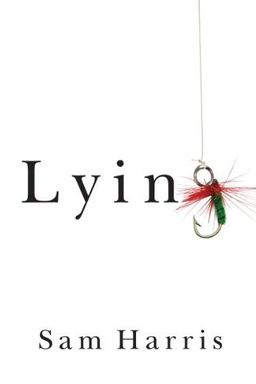
Lying cover

Lying

by Sam Harris

Lying by Sam Harris delves into the pervasive nature of deceit, highlighting its destructive consequences on personal relationships and society. By advocating for truthfulness, Harris offers a compelling argument for honesty as a means to enhance trust, reduce stress, and foster a more authentic world.

The Moral Power of Telling the Truth

Have you ever told a small lie—a white lie—and believed it was harmless, or even kind? In Lying, Sam Harris invites you to reconsider that assumption and confront an uncomfortable possibility: that every lie, no matter how trivial or well-intentioned, erodes trust and fractures the moral fabric of your relationships and society. Harris argues that truth-telling isn’t just a nicety—it’s a radical act of clarity in a world built on self-deception and social pretense. For him, honesty is not simply about morality but about psychological liberation. When you lie, he says, you construct tiny prisons of your own making; when you commit to truth, you free yourself—and others—from confusion, mistrust, and unnecessary suffering.

Harris opens with a deceptively simple premise: lying is the root of chaos. He recalls a transformative college seminar, “The Ethical Analyst,” led by Professor Ronald A. Howard (Stanford University), which challenged students to justify any lie as virtuous. Harris found that most examples—lies to spare feelings, to avoid embarrassment, or to smooth social frictions—faltered under scrutiny. Even seemingly benign falsehoods created ripples of harm. That revelation, he says, changed his life. After the course, he could see the subtle devastation caused by dishonesty everywhere—from personal relationships to political discourse—and vowed to live differently.

Why Lying Matters More Than You Think

At the heart of Harris’s argument lies a simple but profound insight: lies aren’t just false statements; they’re violations of trust and autonomy. When you lie, you manipulate another person’s reality—you decide what they’re allowed to know, and therefore, what choices they can make. This breach reverberates far beyond a single moment of conversation. It corrodes intimacy, fuels suspicion, and perpetuates cycles of deception. You may intend kindness, but what you deliver is ignorance. Harris calls lying “the royal road to chaos,” because it leads, predictably yet invisibly, to regret, guilt, and disconnection.

He also dismantles the old defense that lies can be harmless or compassionate. “White lies,” he observes, actually deny people access to reality. When you tell a friend “No, you don’t look fat” or “Your project is great” to spare discomfort, you might deprive them of information they need to improve—or simply to align their self-image with truth. In withholding truth, you treat others like children, not equals. Harris invites you to imagine relationships anchored so strongly in honesty that flattery and pretense disappear. Those bonds, he insists, would be deeper, freer, and more enduring.

The Hidden Costs of Everyday Deception

Most lies are born from convenience or fear. We lie to avoid embarrassment, smooth disagreements, or escape obligations. But Harris argues that such lies are deeply inefficient—they demand memory and maintenance. Once you lie, you must remember the falsehood and guard it against collision with reality. Telling the truth requires no effort of recall: reality itself does your remembering. In contrast, lies multiply stress and cognitive load. Over time, liars become alienated from truth itself, trapped in webs of their own creation. They often lose track of what’s real and what’s fiction, breeding paranoia and mistrust even toward those they deceive. (Psychological studies confirm this pattern—liars consistently report lower trust and satisfaction in relationships.)

Harris illustrates this decay through vivid examples—like a woman who lies about the source of a gift, only to be exposed by her child’s innocence, or friends who overhear small deceit and suddenly distrust the liar in all matters. Each anecdote underscores his thesis that dishonesty chips away at credibility far faster than most people realize. Once trust is broken, it rarely fully recovers.

Honesty as Freedom, Not Burden

Paradoxically, Harris insists that radical honesty simplifies life. When you always speak truthfully, you eliminate the need to track lies, remember versions, or anticipate exposure. You can “simply be yourself in every moment.” Telling the truth, even when awkward, is ultimately less painful than the anxiety of concealment. He compares honesty to a mirror: it forces you to see yourself clearly—your motives, flaws, and priorities. That mirror can reveal uncomfortable realities, like broken relationships or personal failings, but it also clears space for integrity and accountability. In his view, honesty is a practice of self-awareness. You cannot lie to others without simultaneously lying to yourself.

From this liberation comes genuine simplicity: social interactions, contracts, and commitments become transparent. You waste less energy managing appearances and more energy living authentically. For Harris, this isn’t naïve idealism—it’s a pragmatic moral technology. Truth-telling optimizes human connection because it aligns our internal and external worlds.

From Private Lies to Public Deceit

While most of Lying focuses on personal ethics, Harris also explores collective dishonesty—government propaganda, corporate fraud, and media manipulation. Large-scale lies, he warns, corrode institutional trust and spawn conspiracy theories. He cites historical and modern examples: government misrepresentations during wartime, scientific fraud in pharmaceutical trials, and false reports of vaccines causing autism. These distortions infect public discourse and erode confidence in truth itself. Once the collective faith in honesty collapses, the social cost becomes immeasurable. Yet Harris believes even these vast systems begin with individual moral failures—the decision, by ordinary people, to hide or distort reality for convenience or gain.

In the end, Harris poses a radical challenge: imagine a life—and a culture—where lying simply isn’t an option. What would it change? He predicts greater empathy, clarity, and cooperation, because truth builds bridges where falsehood builds walls. Honesty may sometimes hurt, but deception poisons everything. And in his closing words, Harris invites you to “find out” for yourself—try living without lies, and see what kind of person you become.


White Lies and Their Hidden Damage

Sam Harris devotes much of Lying to dismantling one of society’s most cherished illusions: that white lies are harmless. Whether you’re telling a friend she looks great in an unflattering outfit or pretending to enjoy a bad gift, these fabrications often masquerade as kindness. But Harris insists they’re anything but. White lies, he says, replace authentic connection with manipulation, degrading both self-respect and trust. They’re small in scale but massive in moral consequence.

How White Lies Work

Imagine a friend asking for feedback on a creative project or appearance. You want to protect their feelings, so you soften your response or tell them what they want to hear. Harris argues that at this moment, you’re not protecting them—you’re depriving them of reality. When you say, “You look beautiful,” though you don’t believe it, you are redesigning their world according to your comfort, not their truth. Lies like these subtly assert, “I know better than you what you should know.” This paternalism denies others agency and hinders growth.

In his examples, small dishonesty spirals outward. One friend hides her illness from family; another conceals an affair; parents withhold medical truths to avoid anguish. In each case, the lie sabotages intimacy and understanding. Harris illustrates one painful episode: a woman whose family lied about her mother’s multiple sclerosis. Each relative kept the truth private to avoid distress, but everyone ended up isolated in parallel silence. Instead of uniting in support, they suffered separately, robbed of shared compassion. Harris’s conclusion is stark: even lies told “to protect” generate loneliness and emotional distance.

Why ‘Kind’ Lies Fail

White lies rarely achieve their intended kindness. They create short-term comfort but long-term harm. A friend reassured about her weight loses the motivation—or opportunity—to make healthier choices. An employee praised for poor performance wastes effort rather than redirecting talents. A partner falsely consoled about betrayal never gets the chance to reconcile honestly. These lies erode trust even when undiscovered. The deceived person senses falseness—through tone, timing, or instinct—and the relationship grows more guarded.

Harris reminds you that lies of compassion are still lies. He writes, “Sincerity, authenticity, integrity, mutual understanding—all sources of moral wealth—are destroyed the moment we misrepresent our beliefs.” Compassion must come through truth, not distortion. A father telling his daughter on her wedding day that she looks beautiful is not lying about the dress—he’s telling the deeper truth of love and pride. Harris calls this a “shift of focus”: honesty isn’t about blunt critique but sincere affirmation of what is truly good. You can be kind without fabrication.

Friendship Built on Truth

One of Harris’s most compelling arguments is that honesty reshapes friendship. True friends want the truth, even when uncomfortable. If your friend is pursuing a hopeless career, encouraging him with false praise isn’t loyalty—it’s theft of time and potential. Harris compares false encouragement to robbery: it steals energy that could have been spent pursuing something more meaningful. (Similarly, psychologist Sissela Bok’s classic work on lying echoes this moral point—many lies disguise cruelty as kindness.) Harris’s own experience as a writer reinforces this lesson: he values friends who tell him when his work fails, because their praise then becomes real currency, not politeness.

The Social Cost of White Lies

The smallest lies ripple through community life. When you hear a friend fabricating an excuse—“My child’s sick,” instead of “I’d rather not meet”—you now doubt her honesty in other contexts. Harris’s anecdotes show how minor deceit shifts perception permanently. People withdraw emotionally from those they know can lie effortlessly. Even when the deception doesn’t harm you directly, it diminishes your faith in authenticity itself. The liar remains unaware, but the damage is done. Harris argues that ending this cycle begins with one simple, brave commitment: never lie, even when tempted by politeness. Instead, speak the truth graciously. Honesty, he concludes, is not cruelty—it’s compassion equipped with courage.


Honesty as a Mirror for Self-Discovery

For Sam Harris, honesty isn’t just a social virtue—it’s a psychological discipline. Living truthfully requires confronting who you really are, and not everyone is ready for that. In Lying, Harris shows how honesty holds up a mirror to your own life. When you stop lying, you can no longer hide from the things lies protected—whether fear, insecurity, or denial. In that reflection, uncomfortable truths often surface. But Harris insists those same truths are the foundation of growth.

Seeing Yourself Clearly

Most lies are defensive—“I’m fine,” “I’m too busy,” “I’ll call you soon”—used to conceal dissatisfaction or avoidance. Harris says honesty forces awareness. Once you commit to truth, you notice patterns of conflict and avoidance in your own life. Perhaps your friendships depend on polite falsehoods; perhaps your job demands pretend enthusiasm. When you realize these patterns, you invite change. A commitment to honesty doesn’t just reveal reality—it demands integrity to act on it.

Harris gives personal examples: moments when truth illuminated hidden fears. As a valedictorian in high school, he declined to give his graduation speech, claiming someone else deserved it. In reality, he was terrified of public speaking. His lie delayed personal growth for years. Had he admitted his fear, he might have overcome it sooner. Such small dishonesty, Harris notes, can divert life’s course. Truth often feels painful, but it opens a path toward authenticity.

Addiction and Self-Deception

Harris connects self-deception to broader dysfunctions, especially addiction. “Lying is the lifeblood of addiction,” he writes. Addicts hide behavior, minimize damage, and fabricate excuses. Without lies, addiction cannot sustain itself. Radical honesty exposes denial and forces accountability. In therapeutic contexts (note: echoing truths found in Alcoholics Anonymous), confession and self-honesty are prerequisites for recovery. When you strip away excuses, you face the raw data of your choices, enabling change.

The Freedom of Living Transparently

Harris describes the freedom of “having nothing to hide.” Once you decide to live without deceit, complexities fall away. You no longer spend mental energy maintaining personas or fabricating stories. Truth becomes your memory; life becomes simpler. This simplicity is not asceticism—it’s clarity. You can move through relationships and work with confidence, knowing no contradiction will surface later. Harris views this as the ultimate relief: an end to the anxiety that deceit inevitably produces. It’s the mental clarity of congruence—your thoughts, words, and actions finally match.

Integrity in Action

To live honestly, you must stay close to reality. Harris connects integrity with continuous truth-telling: you cannot have integrity while maintaining secrets that demand lies. He quotes examples from public scandals—Tiger Woods, John Edwards, Eliot Spitzer—men ruined not merely by bad actions but by deception. Lies, not behavior, magnified their downfall. This principle scales universally. Whether in public or private life, transparency is what shields dignity. Integrity, therefore, isn’t perfection but consistency between belief and behavior. Honesty purifies error; lying compounds it.

Living truthfully doesn’t mean oversharing or brutal candor—it means committing to reality. As Harris notes, tact can exist alongside honesty. Steering conversations carefully differs from falsifying them. You can choose silence without deceit; you can choose discretion without falsehood. In that careful balance lies the spiritual discipline Harris offers: a life where truth isn’t just spoken, but inhabited.


The Ecology of Trust

Trust, according to Sam Harris, is the invisible currency of all human relationships, and lying is economic sabotage. In Lying, he argues that once trust breaks—even from a minor falsehood—it rarely recovers fully, and relationships begin to decay. Honesty, then, isn’t just about moral purity—it’s about social efficiency. When everyone tells the truth, communication becomes predictable and effortless; when lies abound, every interaction demands suspicion and verification, increasing friction across society.

How Lies Erode Trust

Harris recounts stories of casual deceit that destroy confidence between friends. A woman overhears her friend fabricating an excuse for canceling plans—a small, irrelevant lie. But hearing that effortless deception, she can never fully trust that friend again. Next time a plan is canceled, doubt surfaces. The friendship continues, but faith erodes unseen. Harris calls these “micro fractures” of integrity. Each lie weakens relational structure; each truth repairs it.

Research backs Harris’s observation. Studies show married partners deceive each other about 10 percent of the time, college peers during 38 percent of conversations. Yet every lie, regardless of size, creates tension between candor and suspicion. We instinctively prefer honest people because they stabilize our emotional world—they eliminate hidden agendas. Harris calls honest individuals “a refuge”: you know exactly where you stand with them, making genuine bonds possible.

Children and the Training of Lies

Children learn to lie at age four, once they grasp that others have separate minds. From then on, culture teaches subtle deceit as social skill—white lies, deflections, politeness. Harris challenges this conditioning. He believes we should aim higher: a community where children learn that truth itself is kindness. His anecdotes—like Daniel being contradicted by his own daughter when he lies to guests—show how children instinctively reveal hypocrisy. Every moment a child witnesses deceit, they learn that dishonesty is permissible. Harris’s lesson is clear: teach honesty not as moral theory but as everyday behavior. Integrity grows through example, not lectures.

Honesty Creates Efficient Relationships

Harris reframes honesty as pragmatism. Lies demand maintenance; truth doesn’t. With truth, communication costs drop—you don’t have to cross-check information or manage suspicion. In friendships or business, honest communication saves time and emotional energy. Harris cites journalists and politicians as examples where deception multiplies chaos. Only transparency sustains cooperation. In this sense, honesty isn’t just virtue—it’s optimization. Societies and families thrive when trust flows freely, because it enables shared decision-making without paranoia.

Trust is fragile but regenerative. Each truthful act—especially when inconvenient—strengthens it. Harris invites you to treat honesty as investment: each truth adds capital to the shared moral economy. Every lie withdraws from that account. A bankrupt relationship, like a bankrupt bank, may never recover. To ensure social wealth, he concludes, you must “spend truth like money,” knowing its value increases the more it circulates.


Lies in Extremis: Ethics Under Pressure

At the edge of human morality lie situations where honesty seems impossible—saving lives, protecting the innocent, confronting evil. Sam Harris explores these crucibles in his chapter “Lies in Extremis,” asking: is it ever right to lie? His answer, nuanced yet resolute, affirms that truth remains ideal but admits exceptions when survival or justice demands deception.

From Kant to Common Sense

Harris confronts philosopher Immanuel Kant’s unwavering stance that lying is always wrong—even to prevent murder. Harris finds that position absurd in practice. Ethical absolutism collapses when applied to emergencies. If violence is justified in self-defense, why not verbal deception to prevent harm? Lying, Harris argues, sometimes functions as the least destructive weapon available. Against a murderer at your door, false speech might be more humane than gunfire. Yet Harris cautions that even necessary lies carry moral cost—they close off opportunities for honest transformation. Truth might occasionally redeem evil; lies never can.

He illustrates with a scenario: sheltering a child from a murderer. The lie “He went that way” might save a life but lead the killer elsewhere. A more courageous response—refusing cooperation—could confront evil directly. Harris admits most people couldn’t risk this, but encourages reflection: ethical courage might sometimes produce better outcomes than reflexive deceit. Moral greatness, he suggests, involves creative truth, not convenient falsehood.

Practical Exceptions

Through dialogue with Ronald A. Howard, Harris refines the principle: in extremis, lie only as minimal distortion necessary to prevent harm. A lie becomes ethically permissible when facing danger or incompetence so severe that communication is impossible. Howard likens it to the use of “minimum effective force.” Against irrational actors—murderers, terrorists, or oppressors—truth may be futile. In those moments, deception becomes defense, not betrayal. Yet even here, both thinkers stress restraint. Lying should never become habit or self-justification; it must remain last resort.

The Emotional Edge Cases

Readers challenge Harris with heartbreaking scenarios—a dying child, a grief-stricken parent, a spouse on her deathbed. Perhaps, they argue, false comfort is mercy. Harris replies that such deception often rings hollow. If a nurse assures a burn victim, “This will be painless,” the betrayal of trust can deepen suffering later. Instead, “skillful truth-telling” should offer reassurance without falsehood—“You have great doctors; we’ll help you through this.” The goal is empathy through truth, not denial through deception.

This ethic of restraint also applies to cultural and situational dilemmas—lying to protect oneself in oppressive societies or navigating relationships built on fear. Harris accepts that extremity reshapes ethics: survival may sometimes trump transparency. But he insists that environments requiring lies are themselves diseased systems in need of reform. A humane world, he concludes, doesn’t need deception for safety—it needs honesty for transformation.

Ultimately, Harris reframes lying in extremis not as moral permission but as moral emergency. It’s a sign of broken communication, failed empathy, or systemic coercion. Whenever possible, truth remains the most courageous path—even against danger—because, as Harris reminds us, “Lying may protect life today, but truth builds civilization tomorrow.”


Secrets, Silence, and Boundaries

Can honesty coexist with privacy? Sam Harris acknowledges a nuanced answer: yes, but only through careful distinction between truth-telling and secrecy. Not every undisclosed fact is a lie, he says—but agreeing to keep secrets can quickly turn into deception if silence demands dishonesty. The ethics of privacy often rest on whether concealment misleads others, intentionally or not.

The Burden of Secrets

When you keep a secret, Harris explains, you assume responsibility for managing truth. Secrets demand memory, vigilance, and tactical misdirection. Over time, this management becomes exhausting. He illustrates with a story of infidelity whispered through social circles—each acquaintance knows but pretends ignorance for “compassion.” Eventually, the lie isolates everyone, especially the deceived partner. In another account, friends conceal an affair from a woman named Gina, protecting her husband’s duplicity until friendship itself disintegrates. Harris shows how secrecy acts as social poison: silence masquerades as loyalty but ends as abandonment.

Professional confidences—doctors, lawyers, therapists—differ, he clarifies, because confidentiality forms part of ethical duty, not deceit. In those contexts, silence protects dignity and consent. But private secrets preserved through lies harm all participants. They distort communication and require continual hypocrisy. When truth would relieve suffering or restore integrity, silence becomes complicity.

Privacy Without Deception

Harris encourages boundaries without lying. You owe others honesty, not total transparency. If someone asks your income, “I’d prefer not to say” is truth, not pretense. Privacy can coexist with sincerity when your silence doesn’t create false impressions. The ethical line appears when nondisclosure implies deceit—when hiding a past affair means pretending fidelity continues unbroken. In that case, ongoing concealment becomes an active lie. Harris offers the Golden Rule to navigate these boundaries: if you would want to know the truth in the other person’s place, honesty is obligatory.

Living Without Hidden Corners

Ultimately, Harris champions a life “with nothing to hide.” This doesn’t require full exposure of private life; rather, it’s freedom from shame and pretense. When all your secrets could safely be revealed without catastrophe, you live ethically integrated. He recognizes this as an ideal state, rare but worth pursuing. Every confession, candid conversation, or honest acknowledgment moves toward that equilibrium. For Harris, a world without deception doesn’t erase intimacy—it deepens it, because authenticity itself is the foundation of love, trust, and meaningful privacy.


Cultural and Systemic Dimensions of Honesty

Harris concludes Lying with a broad reflection: honesty is not only personal—it’s systemic, cultural, and political. Individual truthfulness can’t thrive in societies built on perverse incentives to deceive. Through reader dialogues and his conversation with Ronald A. Howard, Harris explores how institutions and cultural norms—business, media, religion—either sustain or destroy the practice of honesty.

Systems That Corrupt Ethics

Everywhere Harris looks, he finds systems that reward dishonesty. Politicians pander to short-term interests; insurance companies exploit fine print; professionals lie for career survival. In prisons, for instance, ethical norms collapse entirely—people must join gangs, commit violence, or lie to survive. Harris uses this extreme example to show that moral codes can fail under corrupt incentives. When honesty becomes disadvantageous, even good people bend their ethics. This recognition leads him to advocate systems that make integrity easier than deceit.

Cross-Cultural Complexities

Cultural norms complicate honesty. Harris responds to a reader from Japan who describes “honne” (private truth) and “tatemae” (public pretense). In such contexts, lying can be considered social grace. Harris respects these differences but argues that human flourishing depends on universal truthfulness. Cultures that normalize deceit increase psychological distance between individuals and weaken cooperation. Even politeness loses meaning when built on false speech. While honesty might challenge traditions, Harris holds that it ultimately fosters intimacy and empathy across boundaries.

Institutional Truth: Journalism and Governance

In journalism, Harris discusses Janet Malcolm’s insights from The Journalist and the Murderer—the moral ambiguity of interviewing subjects whose trust you might betray. Harris warns that normalizing manipulation in media diminishes collective confidence in truth itself. Similarly, when governments or corporations lie—about war, health, or science—they infect entire societies with cynicism. He links this to modern crises like vaccine denial, where distrust born from previous lies undermines genuine truth later. The solution, Harris argues, isn’t more control but more transparency. Systems must encourage honesty at every level—from reporters to CEOs to public officials.

Building Systems That Promote Truth

Harris and Howard end their dialogue envisioning ethical redesign: institutions that make “peaceful, honest people’s right to be left alone” the guiding maxim. For them, honesty requires structural support—education, workplace norms, and justice systems that reward transparency rather than secrecy. Harris likens these reforms to moral engineering: just as technology improves efficiency, ethics must improve integrity. Only when honesty becomes easier—socially, professionally, politically—will individuals consistently practice it. In short, personal truth requires cultural reinforcement.

Lying, Harris concludes, is more than a personal choice—it’s a reflection of societal design. To live honestly, you must not only tell the truth but help build environments where truth thrives. Each act of integrity, therefore, contributes to collective repair. Honesty, at every scale, is humanity’s most powerful form of altruism.

Dig Deeper

Get personalized prompts to apply these lessons to your life and deepen your understanding.

Go Deeper

Get the Full Experience

Download Insight Books for AI-powered reflections, quizzes, and more.