
Idea 1
Making Your Own Luck from the Unthinkable
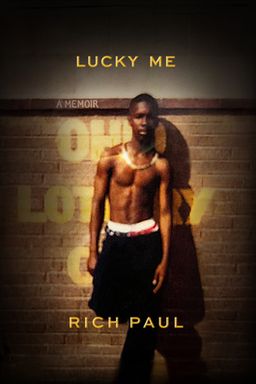
What would it take for you to turn the hardest thing you’ve ever lived through into your greatest professional edge? In Lucky Me, Rich Paul argues that the very forces that should have broken him—the crack era’s chaos in Cleveland, a mother he adored but often lost to addiction, and a childhood spent working a corner store lottery machine at age seven—became the precise training that later made him the most disruptive agent in basketball. Paul contends that “luck” is rarely random. It’s something you assemble—choice by choice—using street-taught rules about people, pressure, preparation, and purpose.
For Paul, the core claim is bold: the ghetto can be a brutal classroom, but it’s a classroom nevertheless. If you pay attention, it grants an unrivaled playbook for high-stakes decision-making, relationship management, and value creation. But to turn the wounds into wisdom, you have to own your story without romanticizing it, and convert survival skills into systems that uplift others. He shows you how those unwritten rules—learned behind a candy counter, a dice circle, and a padlocked speakeasy door—map directly onto boardrooms, negotiations, and brand-building.
What You’ll Learn in This Summary
You’ll see how Rich’s father, Big Rich, ran R&J Confectionary as a community nerve center—and as a leadership lab where a child learned math, risk, and character in real time. You’ll walk Cleveland’s East Side in the crack years, not as a spectacle but as context: redlining, disinvestment, and militarized policing that made neighborhoods feel like a warzone (a sobering echo of Ta-Nehisi Coates’s lens in Between the World and Me). You’ll learn how craps and tunk became crash courses in probability, composure, and leverage—skills Rich later used to outwait the Phoenix Suns in Eric Bledsoe’s negotiation and to build Klutch Sports against a white-shoe establishment.
You’ll also discover how style—down to a perfect jean crease or a well-timed sneaker switch—worked as armor, communication, and strategy, years before Paul consulted Tommy Hilfiger (compare with Jay-Z’s Decoded on the aesthetics of hustle). And you’ll see a pattern repeat: when Rich needed to pivot from danger, he did it by “going out the trunk”—selling Hardwood Classics jerseys hand-to-hand, then graduating to the manufacturing plug at Mitchell & Ness (a throughline readers of Phil Knight’s Shoe Dog will recognize).
Why It Matters for You
This isn’t a tale about beating the odds because of one famous friend. It’s a manual for converting constraint into capability. Paul shows you how to build an “ecosystem of empathy,” tell uncomfortable truths to power, neutralize anger under provocation, and turn showmanship into strategy without sacrificing integrity. He also exposes gatekeeping—epitomized by the short-lived “Rich Paul Rule” that required agents to have a college degree—and reframes credentials: experiences can be better than badges when you know how to use them (think Malcolm Gladwell’s Outliers, but with an underground syllabus).
Across the chapters, you’ll meet the rules—capital R—that governed life-and-death choices on St. Clair: “Take Care of Your People,” “Leave Nothing to Chance,” “Discipline Your Approach,” “Never Submit to Your Surroundings,” and more. You’ll see how those rules scale: from spotting dope fiends at the register to reading a room of billionaire owners; from giving a broke loser a “gapper” after a dice game to giving a client the uncomfortable advice nobody else will say; from ironing your jeans at six to ironing out contractual clauses at thirty-six.
Core Move
Transform survival lessons into leadership systems. Don’t glorify the pain, but don’t waste it either.
The Arc You’ll Follow
We’ll start inside the store that doubled as a school, then step onto blocks where gun smoke floated in daylight and baseball diamonds once drew whole neighborhoods. You’ll watch a kid become “the Kid” at a churchyard dice game; a teenager hit his ceiling on the court, get humbled, and choose to be a star in his role; a young man cross a moral line after his father dies, then claw back to purpose, hand-to-hand, jersey-to-jersey, until a Warren Moon throwback at an airport sets off a brotherhood with LeBron. Finally, we’ll track how Rich built Klutch by betting on the same rules that once kept him alive—and how you can apply them in your career, your family, and any room you hope to enter.